Earth Exploration: When Learning Comes to Life

One of my favorite things about being a guide is when I witness learners making connections between their learning and the real world. This session, Spark has been studying the Earth, what makes it special, and ways to take care of it. From investigating their carbon footprint to making their own rain cloud to exploring insects and their life cycles through caterpillar observations, Spark learners have been knee-deep in hands-on learning. Through this learning, I have seen countless connections being made. I want to share a few of these connections that were made on our most recent field trip to the Smithsonian Museum of Natural History. 
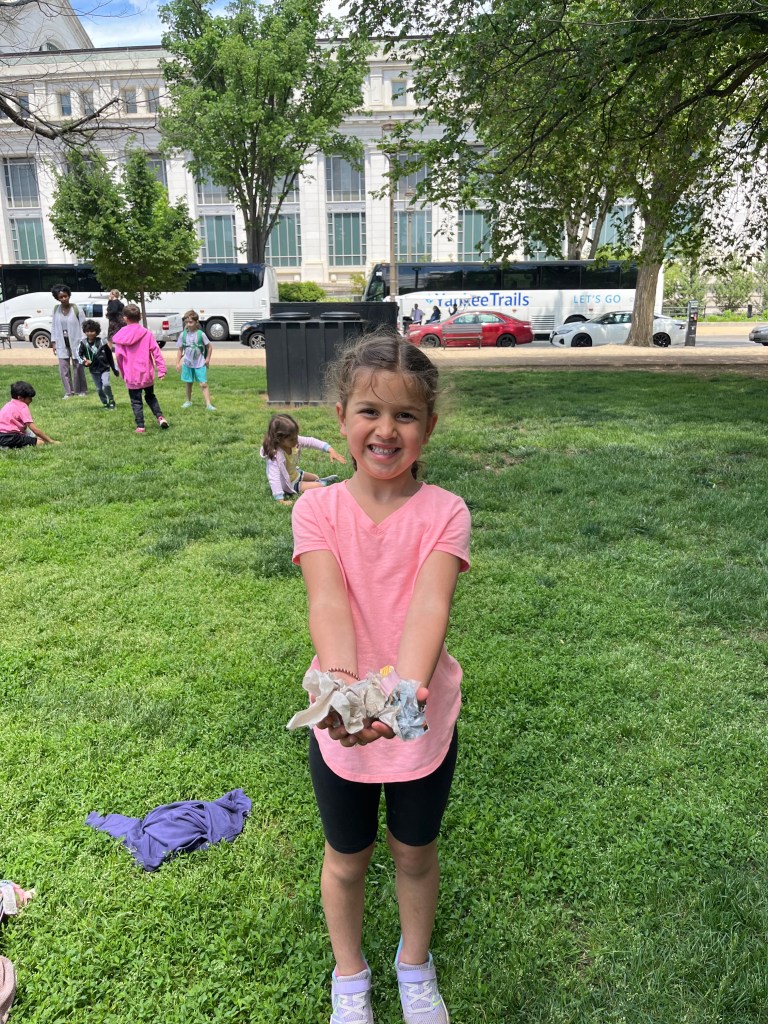
On the walk from school to the Metro station, a learner stopped walking to pick something up from the ground. I gently nudged her to keep walking so as not to hold up the line. She caught up and yelled “I was trying to pick up some trash!” I continued hearing learners calling out when they noticed trash on the ground and listened as they brainstormed ways to address this problem. By the end of lunch, one learner had collected a handful of trash and was so proud to show it off.  
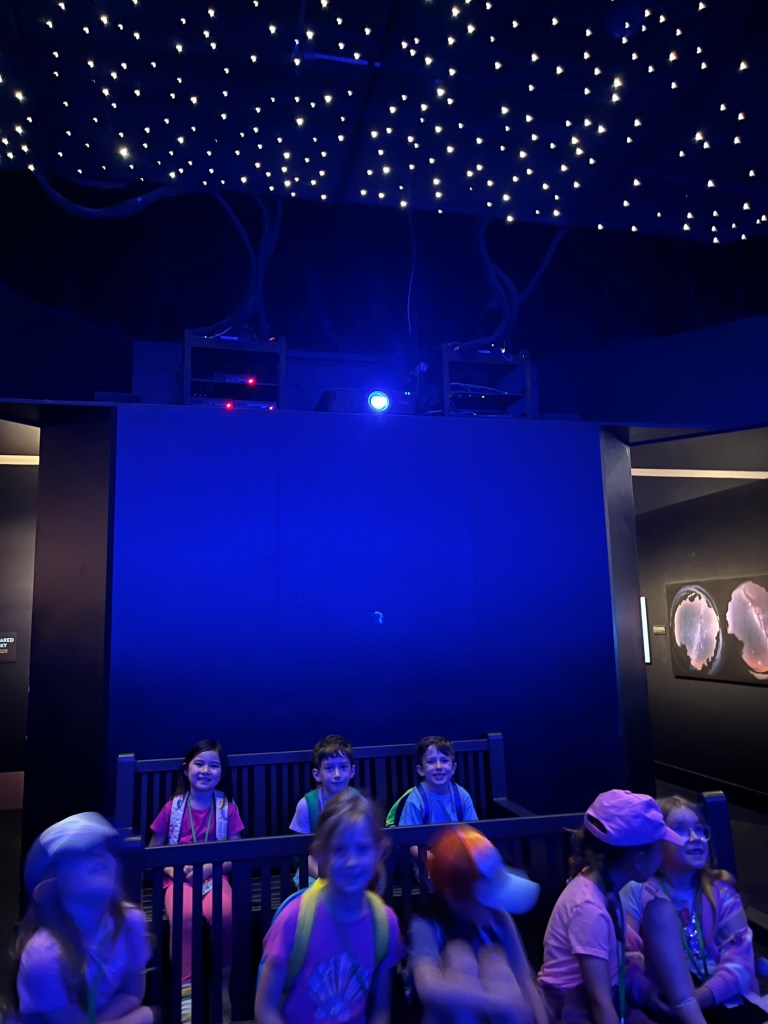
While strolling through the Lights Out exhibit, learners came across a section noting the dangers of lights on migration patterns. As they read about birds getting distracted by the lights from skyscrapers, one of our youngest learners remembered The Adventures of Theo, a story we had recently read about protecting the sea turtles. He said “It is just like the sea turtles!”, making the connection that lights lead sea turtles away from the ocean just like city lights distract the birds from their flight path. I often wonder how much is being comprehended during our read-alouds at the end of the day. We’re tired, hungry, and ready to go home. But this learner was engaged and walked away with knowledge that they wanted to hold on to. 

Near the very end of their self-tour, a group of learners came across a giant globe that was playing a video. It was all about the impact humans have on the environment. One of the learners watching said “We need to get all of Spark to see this. This is what we have been talking about all session!” I smiled with excitement. Not only was I excited that she was making the connection to our session-long study of the environment, but that she wanted to share with the rest of the studio. I can’t think of a better way to show someone is curious and involved in their own learning than someone who is eagerly demanding everyone else know what she just learned. 

I’m so grateful to be a part of The Village School, where learning beyond the classroom is valued. I have learned the projects we create, the launches we share, and the stories we read hold more weight than we give ourselves credit for. Children are listening. They are observant. I encourage you to slow down from the hustle and bustle of daily life and listen. You might get the chance to hear one of these connections. They can be so easy to miss–but the joy that comes when you hear one made is immense. 
Loose Part Play: Reimagining Recess

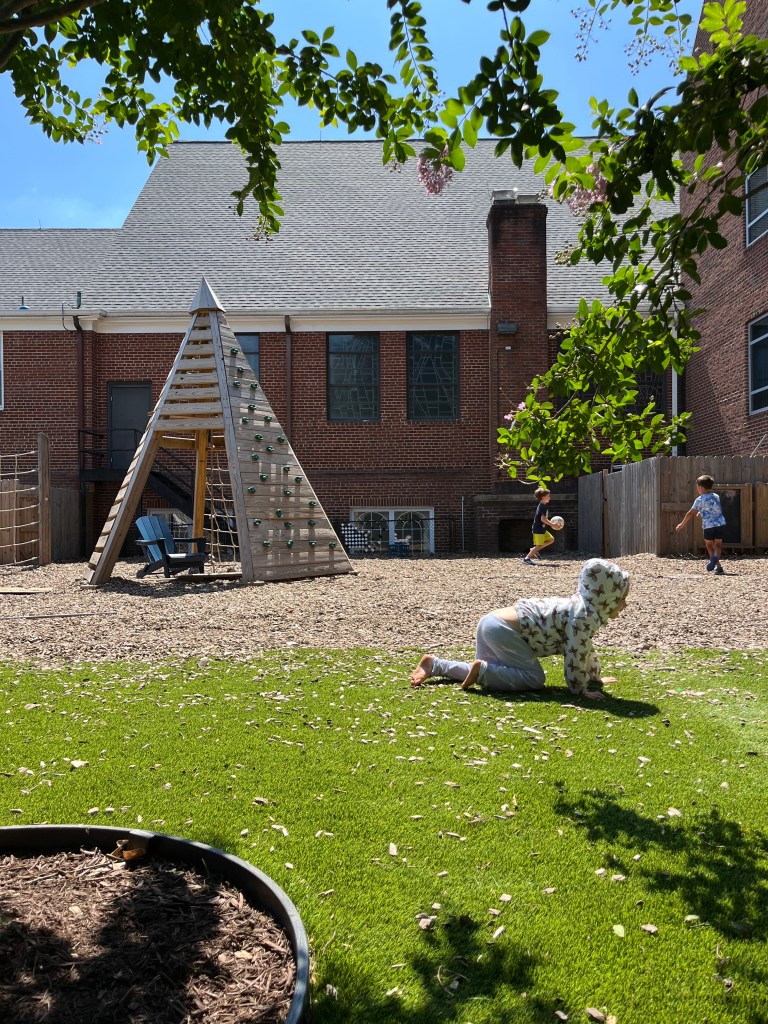
When I visited The Village School for the first time, I was surprised to see such a bare playground. I expected to see the classic jungle gym with multiple slides, large steps, climbing walls, and monkey bars, or even a blacktop with four-square or basketball. All I saw were monkey bars and a climbing wall. Little did I know the magic that could happen on this “empty” playground.

The “empty” playground

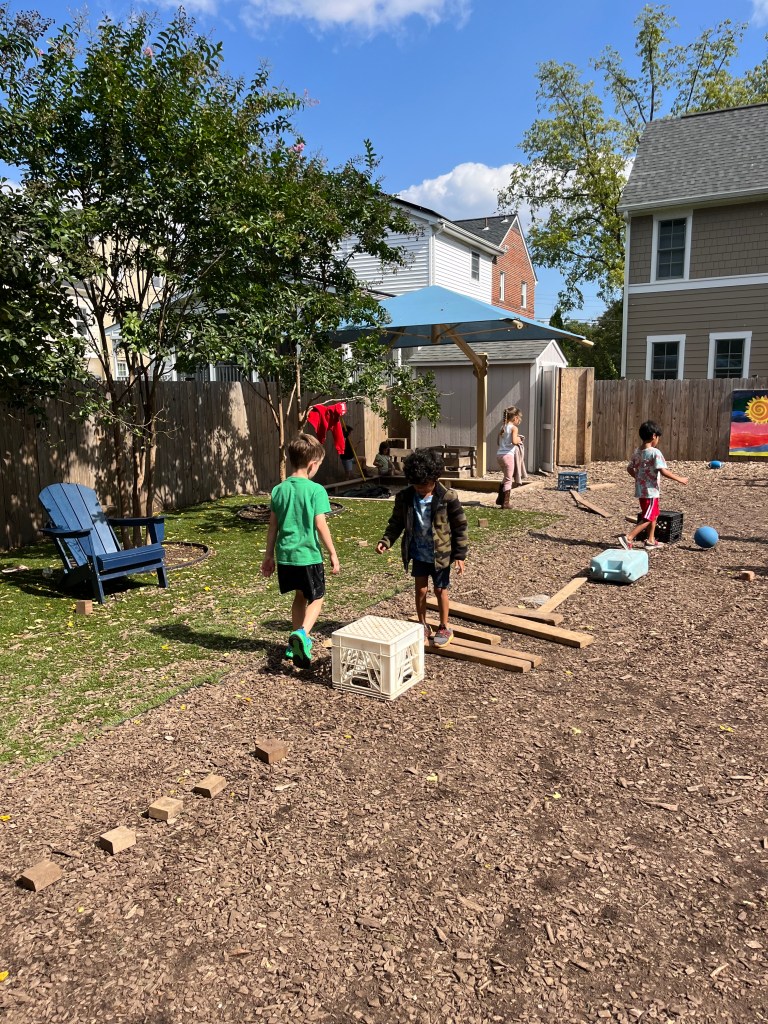
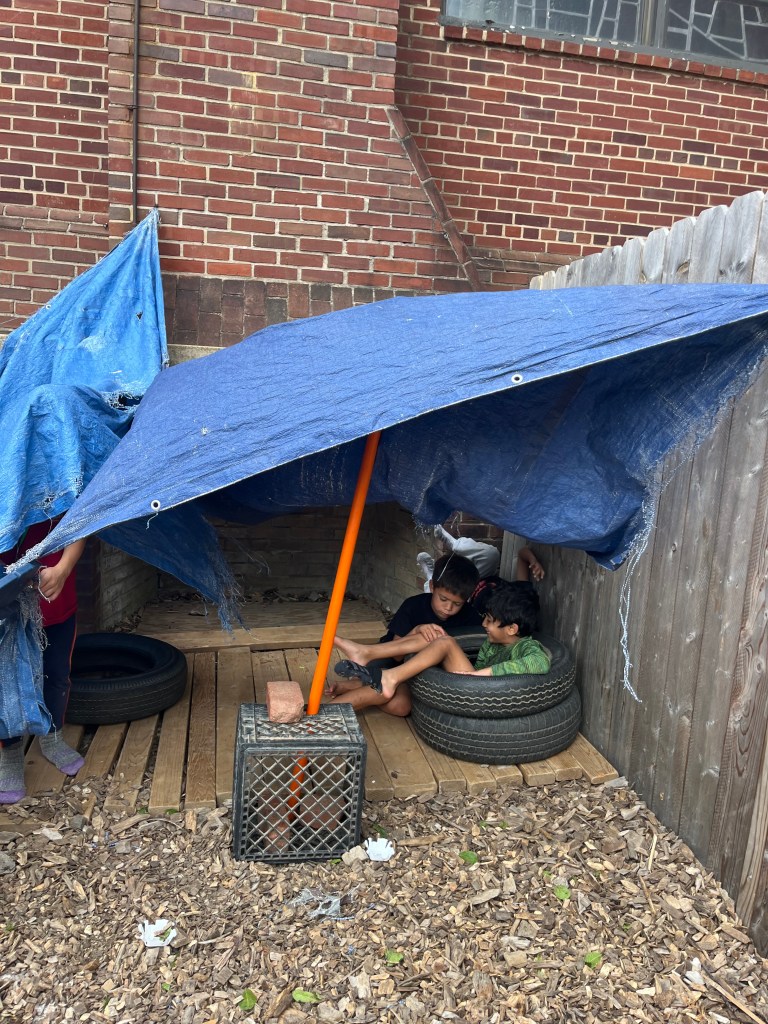
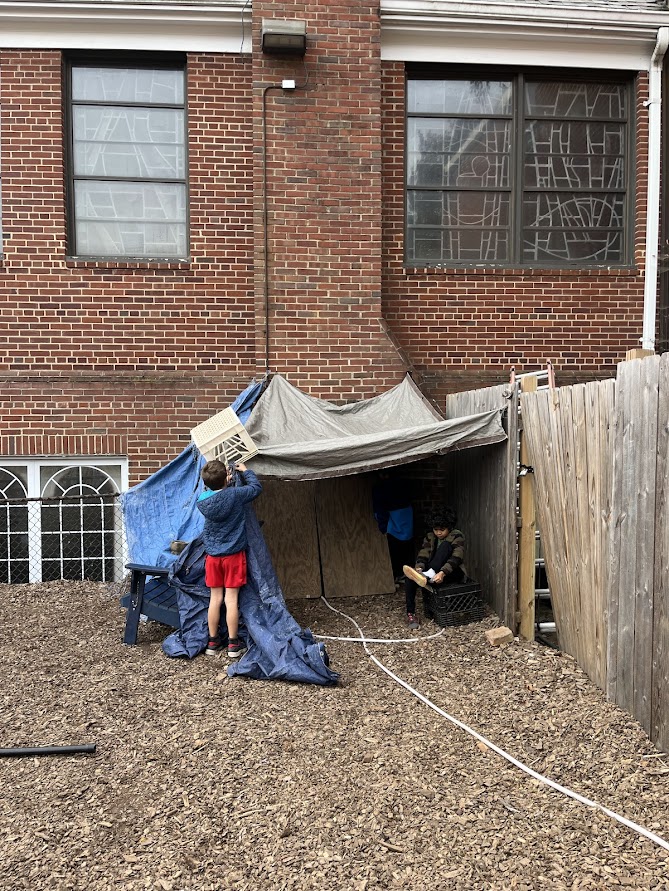
You see, at TVS, we value the power of “loose parts” – open-ended and interactive materials that children can manipulate to use in many different ways. The value of loose parts is based on the belief that children are creative and resourceful. Instead of classic playground equipment like slides, swings, or balance beams, our learners have boards, milk crates, tires, and PVC pipes. Some might look at the playground and think about all the dangers and “what could go wrong.” But our learners look at the playground with endless possibilities.

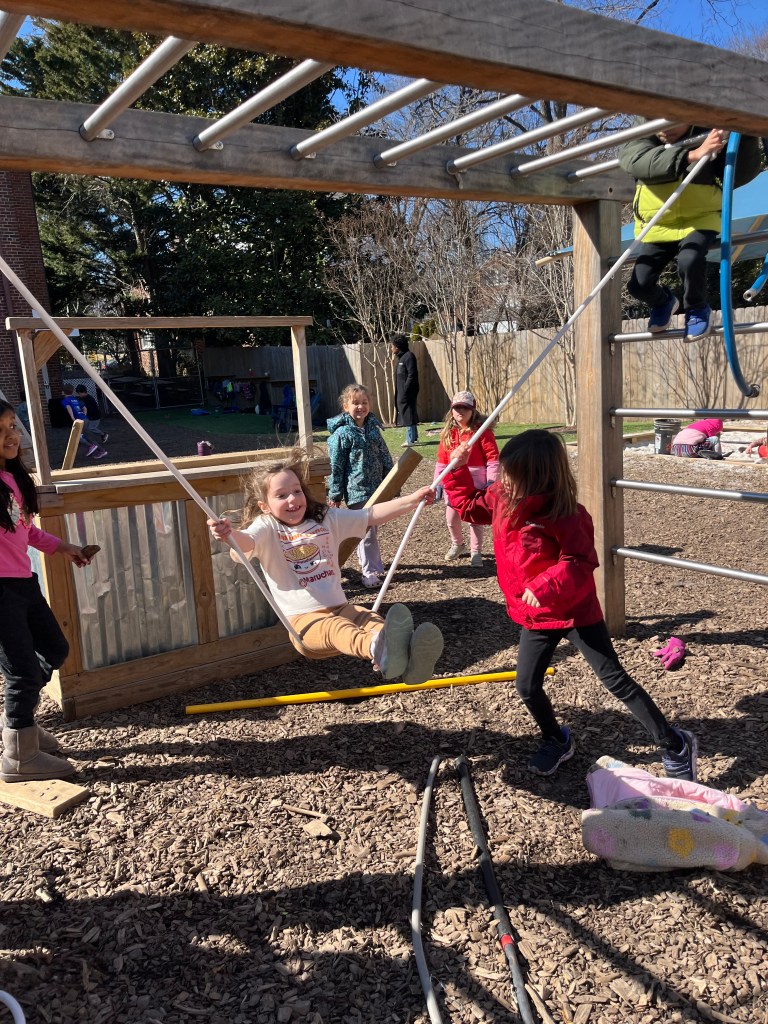
One day they might play a game of kickball, using boards as bases. Another day, they might create an incredible obstacle course using buckets, planks, boards, blocks, tires, and crates. No swing? No problem! Spark learners decided to put an old leaky hose to use. They tied it to the ends of the monkey bars so that one learner could swing while other learners worked to keep it safe and secure.

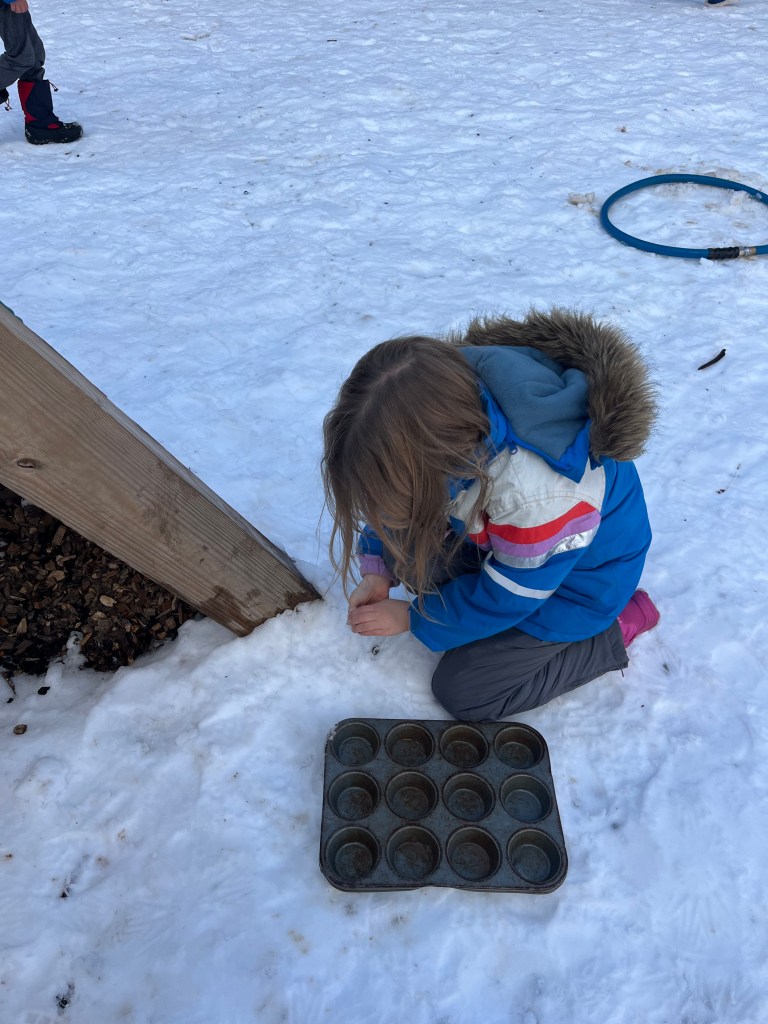
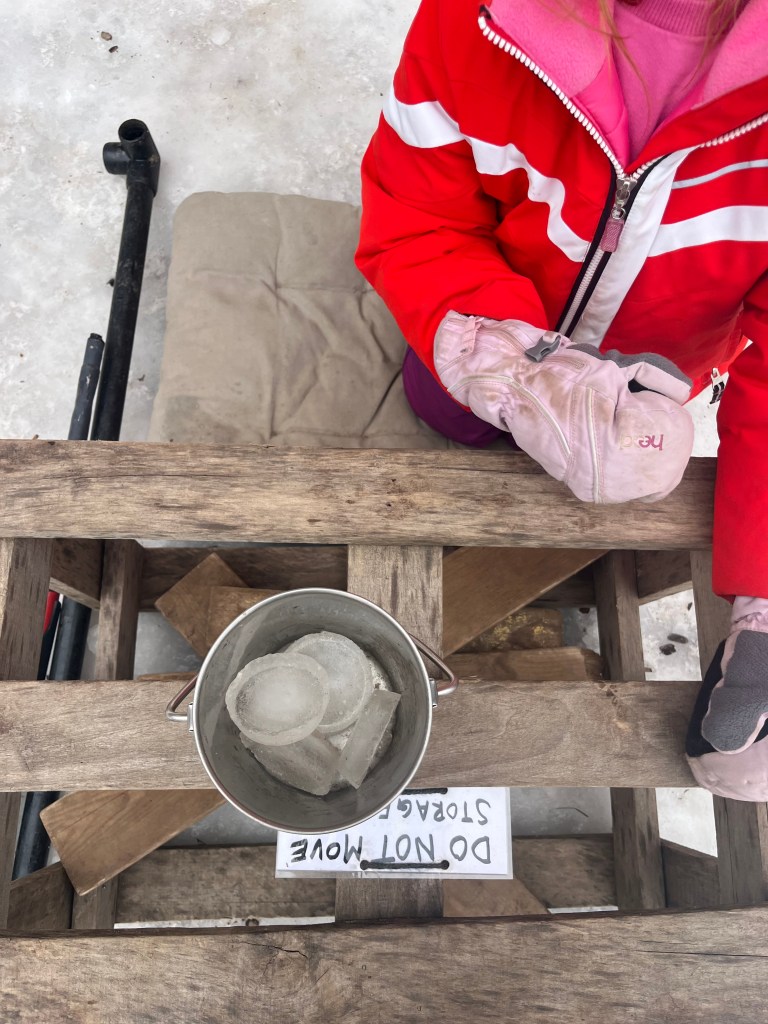
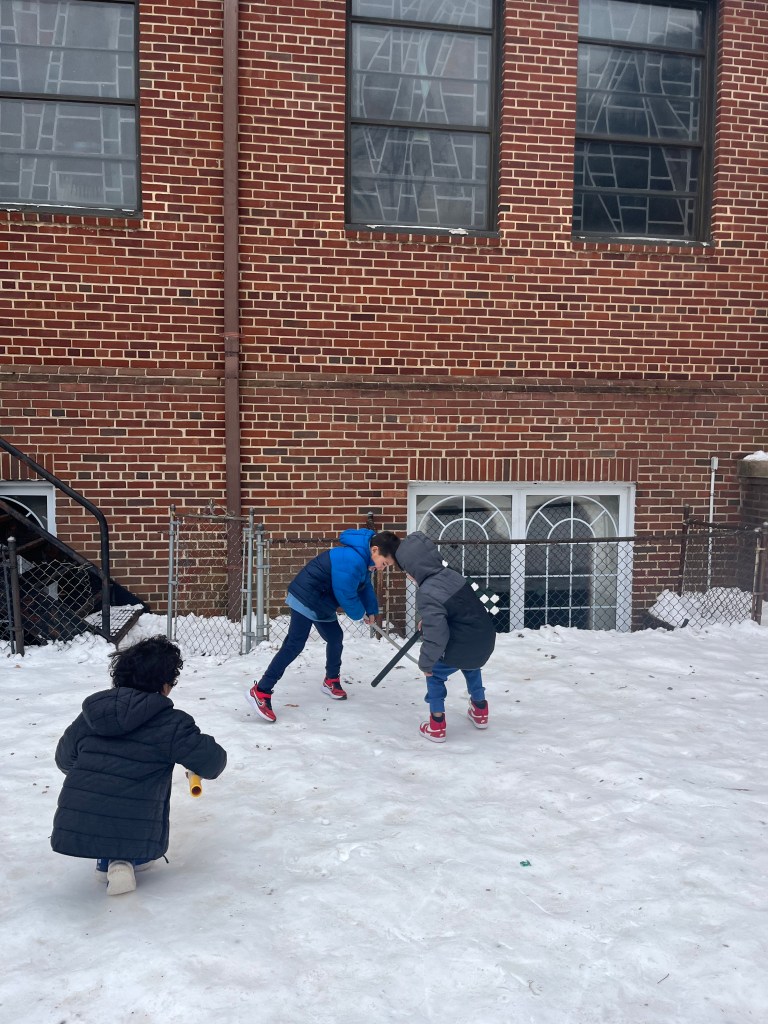
These loose parts on the playground are not just an opportunity for creative play but for learning. During a very cold January, and after some heavy snow, our playground was essentially an ice rink. Some learners discovered that water would freeze if left out long enough in cold temperatures. This inspired these learners to pour water into a muffin tin and freeze it overnight. The next day, they had some incredible “hockey pucks” made of ice! Using some PVC pipe as “hockey sticks,” some learners had a fun game of hockey, all created from loose parts found on the playground. I could share so many stories like this from the seven-short months I have been at TVS. From this time, my eyes have been opened, and I have found a new value of time spent outside.

Prior to working at The Village School, I taught second-grade in a traditional school setting. Each day my students got 25 minutes of recess, but it was never enough time. While my school had a large jungle gym to play on and lots of grass to run on, the 20 minutes served simply as a break, not as a vessel for creativity, imagination, building resiliency, or problem-solving that loose parts play brings. Here at TVS, our learners get about 5x the average amount of play in schools across the country. 

I’m not saying the traditional playground equipment is bad–our learners have big hopes for our playground, like having a swing set or slide. But children are innovative. They are resourceful. They are resilient. We must give them the opportunity and time to do so. 

Each day, a new idea emerges from learners looking at the loose parts in a different way. Each day, I leave The Village School feeling inspired by what I watch these four-, five-, six-, and seven-year-olds do with simple, random objects. My hope is that one day all children have access to this type of playful learning in schools. It is what they deserve.

A Day in the Life of a Spark Learner

Imagine a community where learners help each other navigate an outdoor play space with climbing structures that they’ve never challenged themselves to before. Imagine the excitement of going to new heights while keeping safety first for all. The usage of building materials such as wooden planks have endless possibilities that lead to careful planning and successful problem solving. The sandbox provides an area where creativity has the opportunity to grow. Cakes are baked, holes are dug, sand is sifted, tiger statues are designed…there is no end to the imagination.

Think of thriving older learners walking alongside younger learners to help them acclimate to their learning environment and inspiring joy deep within from their responses that illuminates throughout our circle times.

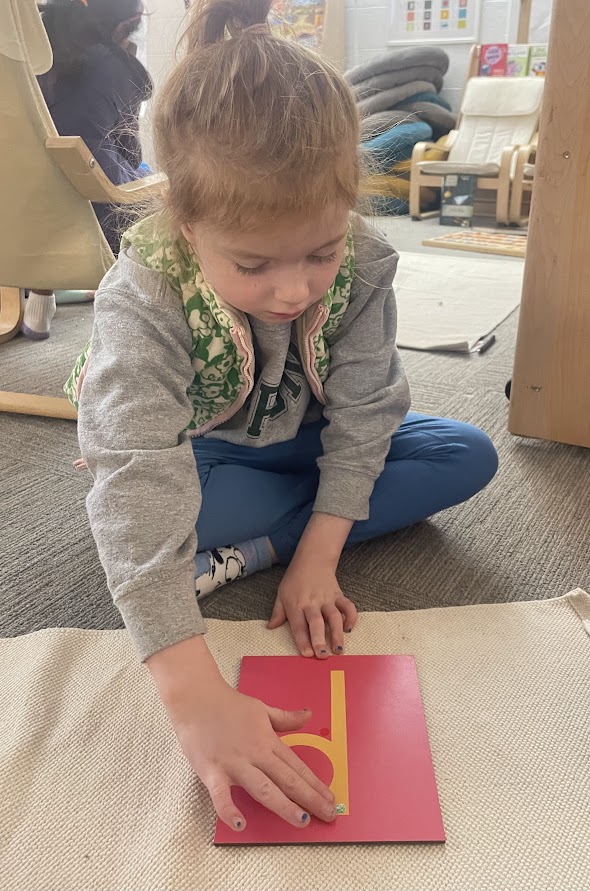
Imagine perfecting the sounds of individual letters as they roll off of the tip of their tongue. Learning each unique sound brings laughter and smiles to small group lessons.

This is just a glimpse of the joy found in Spark Studio. Read along to see what a learner-centered, self-directed, play-based environment looks like with our youngest learners.

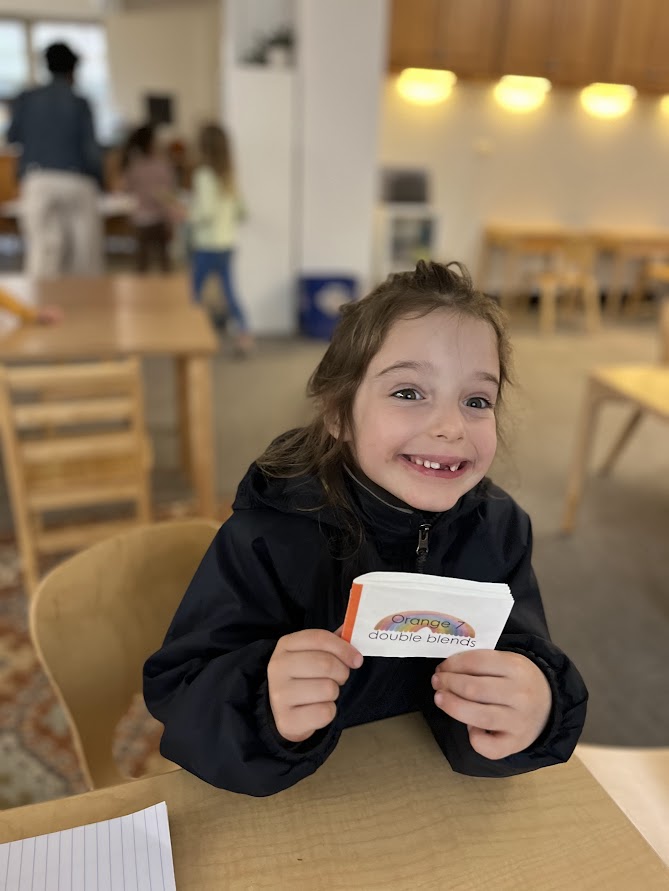
Following the morning circle, learners jump right into their learning by focusing on literacy. Some learners choose to focus on their writing while others choose to go read and spell with the infamous reading drawers.

“I can’t believe I mastered orange drawer seven!”

The beauty of our learning design is that learners get to work at their own pace. If a learner needs more time practicing a skill or is just too excited about the story they’re writing, there is no rush to move on before mastery has been achieved or imagination has had the chance to be written out. Spark learners are learning how to learn and learning how to balance their learning. 

After an hour of non-stop reading, writing, and spelling, learners get to switch gears from being readers to being mathematicians. Using a mix of Montessori and standard hands-on math materials, learners go choose a ‘work’ to focus on. Sometimes, they pick something in their challenge zone right off the bat, and other times they engage in a warm-up game with another learner or two before seeking out a challenge. Some learners prefer the hands-on materials while others like worksheets to apply their knowledge. Our math corner has all of these available for learners to truly be self-directed. But of course, a guide is always nearby to introduce a new skill or material and help talk learners through their thinking process. 

“Last time it took me two days to do my hundreds chart. This time it only took me one day and I did even more numbers!”

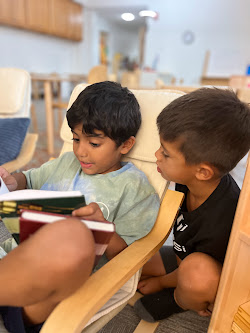
The magic of the mixed-age studio is that learners get to not only learn from one another but guide one another. During morning work, older learners are eager to read to a younger learner, help a friend sound-out a word, demonstrate how to skip-count using a bead chain, or teach a new game.

It wouldn’t be a typical day in Spark without project time. Spark learners get split into a smaller group where they lead the investigations. Using the Reggio Emilia approach, learners lead the projects following their interests and curiosities. It starts with provoking thinking through loose parts, such as blocks, old cork, recycled applesauce tops, and even trash! From these provocations, ideas have been born that led to learners creating their own business, designing their own zoo, and building a model of the Washington Monument. Project time is not just for creating, but for learning how to collaborate and problem solve with other learners.

At the end of the day, Spark learners gather in our cozy ‘Book Cafe’ corner, anticipating the new book that will be read. This time is intentionally designed to spark thinking and inspire creativity. Learners study topics, ideas, or questions through the books, engaging in hands-on projects like churning fresh butter, making homemade applesauce, or sprouting seeds in plastic bags that hang in the window. But sometimes, we just enjoy simply reading with some of our favorite book characters, like Nibbles or Elephant and Piggie. Book Cafe time is extra special when Spark gets to read with their Adventure reading buddies or hear a favorite story from a “Mystery Reader.”

Every day in Spark Studio is different and brings new challenges but one thing remains the same: learners learn.