Session 6 Sneak Peek

Spark Studio

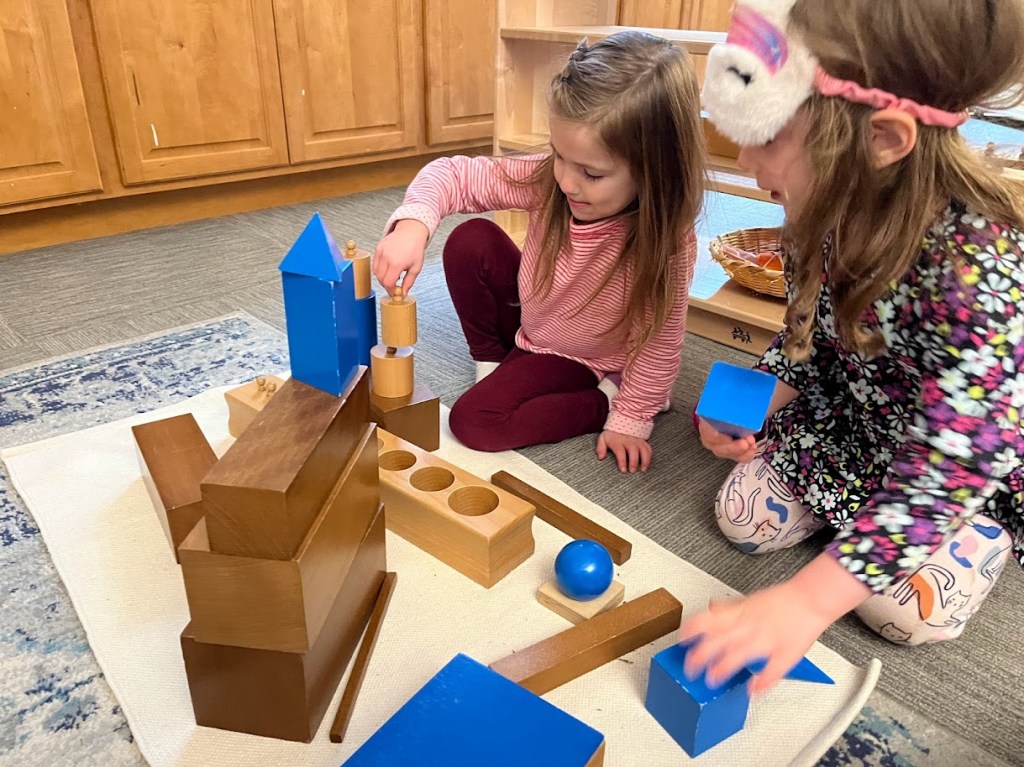
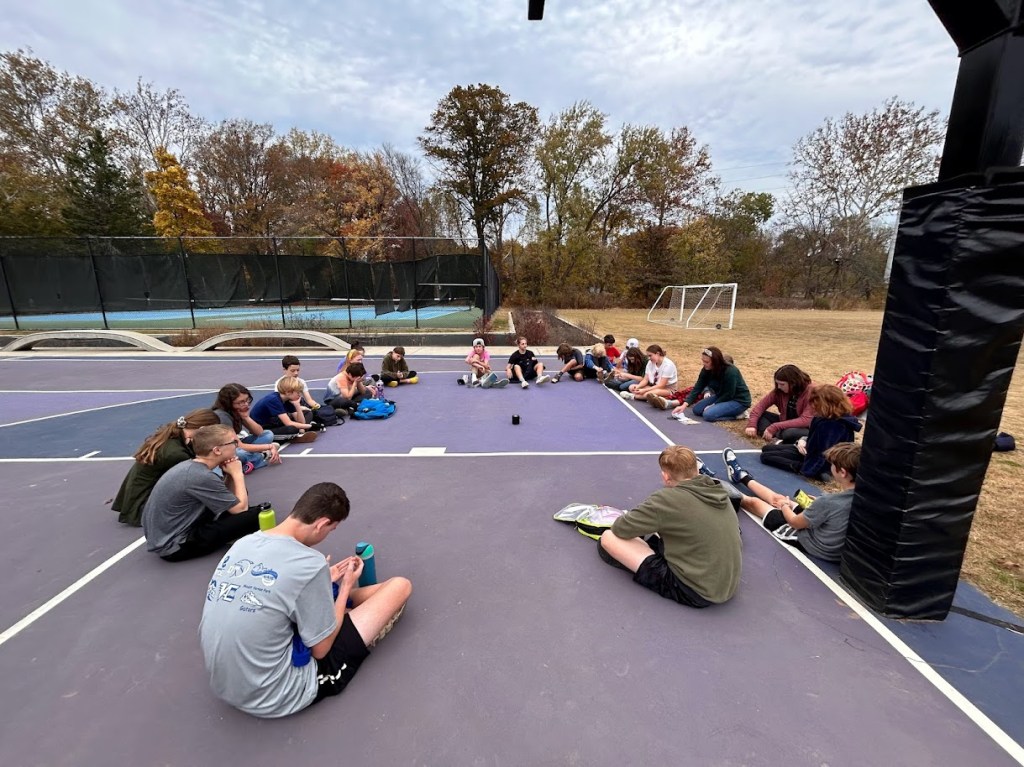
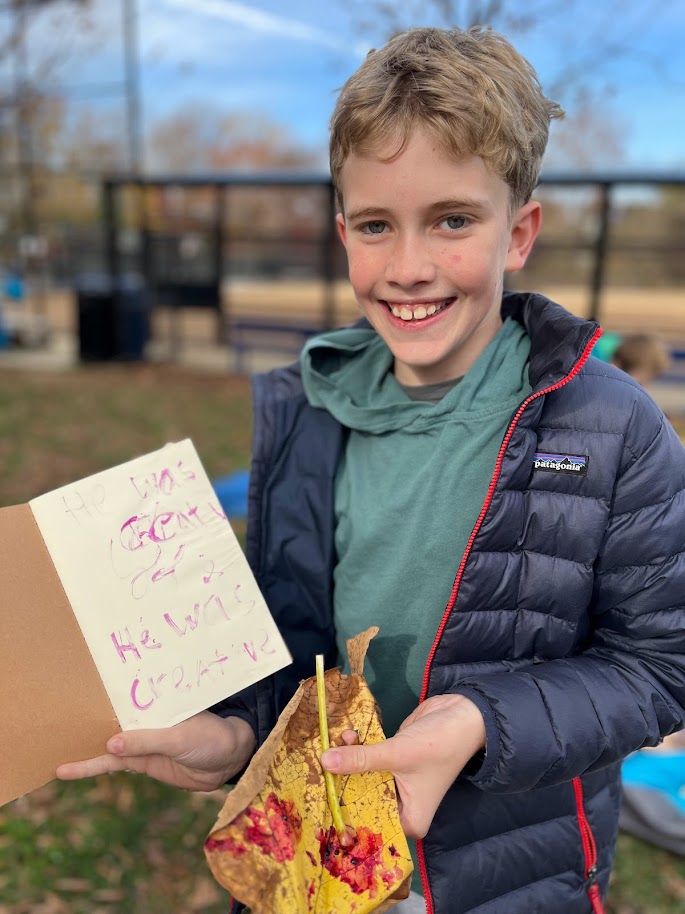
This session, Spark learners will explore the wonders of our environment. Learners will embark on a journey to uncover how things are made, explore nature, and discover what makes Earth so amazing.  They’ll take nature walks, engage in scavenger hunts, and witness how waste can be wonderful.  They’ll even learn about their carbon footprint and experiment with hands-on activities to understand how everyday choices impact us. In project, learners will reuse recyclable materials, turning objects into treasure as they create and design a forest.  By the end of the session, learners will have made a meaningful connection to the planet they call home.

Discovery Studio

Discovery is just days away from buzzing into an exciting new adventure—Entomology! This session, Discovery will be transforming into budding entomologists! In Project, learners will work in teams to classify different insects, diving into their unique characteristics, habitats, and behaviors. They’ll observe a real ant farm in action, watching these tiny engineers build and work together, and witness the magical transformation of caterpillars into butterflies! After studying the incredible world of insects, each team will design their very own “Super Insects,” combining the best traits from nature’s tiniest creatures. Get ready to creep, crawl, and flutter into a fascinating journey as Discovery embarks on an exploration of the insect world!

Adventure Studio

Welcome to Apprenticeship season, one of the most unique and memorable times at The Village School! This session for Communications, learners will focus on the following to prepare for their real-world Apprenticeships in Session 7:

  1. Discovering their values, strengths, and skills
  2. Dreaming up possibilities for their Apprenticeships 
  3. Identifying their networks
  4. Researching companies and organizations 
  5. Growing their professional communications skills  

Real learning is real fun! 

For Project this session, learners will dive into the bold worlds of Jean-Michel Basquiat and Banksy, exploring how these street artists use style and symbolism to share powerful messages. Inspired by their techniques, learners will investigate what makes their own school community special and collaboratively create a mural that tells their school’s story. This hands-on experience will blend art, identity, and community into one unforgettable masterpiece.

Health & Wellness

“Life is about change.

Sometimes it’s painful. 

Sometimes it’s beautiful. 

But most of the time, it’s both.”

Lana Lang

Session 6 is often full of excitement! We are getting close to the end of the school year. We are ready for warm weather, summer days, family time, turning off our alarm clocks, snow cones, swimming, camps, and so much more! Along with the excitement of summer, often comes another feeling… uncertainty. Many of our learners and families have gone through big life changes and transitions this year and there are many more to come… graduations, moves, finishing badge plans, and transitions to new studios. This session in Health & Wellness, we will be reflecting on life’s transitions, exploring how we cope, and how we can handle whatever life brings our way. 
Session 5 Sneak Peek

Spark Studio

Have you ever had an idea for a business or product, but weren’t sure where to start? Spark has too! This session, learners will explore the ins and outs of starting a business. Learners will think about different businesses and products, both that were a success and failure. They will look at what qualities make a successful businessperson before designing their own business, writing out a plan to follow. 

In project time, learners will split into groups where they will decide on a product to sell, list out and purchase materials, and create their business and products. They will get real-world, hands-on experience with a budget to work out how much to charge for their products, how to give change, and even decide what to do with their earnings. 

To conclude the session, learners will become young entrepreneurs in action as they market their products to sell with their business logos and posters for exhibition. 

Discovery Studio

Project

Discovery is T-minus 2 days away from an exciting Launch…literally. This session, Discovery will be setting off as space explorers! In Project, learners will begin by discussing what an Astronaut’s daily life entails. Then, they will research the solar system to create a map and prepare their own trip to space! After exploring stars and constellations, they’ll finally  plan their own lift off by putting their rocket designs to the ultimate test! 5-4-3-2-1, get ready to reach for the stars as Discovery embarks into Astronomy!

Writer’s Workshop

Have you ever sat down and been transported to another world with a nail-biting, thrilling science fiction story? In this session’s Writer’s Workshop, learners will dive into the essentials of sci-fi storytelling, exploring key elements like world-building, futuristic technology, and compelling characters. From there, they will brainstorm imaginative concepts, develop engaging plots, and refine their writing through peer feedback and revision. The best part? They’ll get to share their original sci-fi stories with our fellow learner “editors”! Let’s get ready to write about the future!

Adventure Studio

Curious to know what it takes to design a roller coaster? In our upcoming Project, learners will step into the shoes of engineers, crafting their own marble coasters while diving into the physics of motion! Using everyday materials, they’ll experiment with potential and kinetic energy, acceleration, and Newton’s laws to create loops, drops, and turns that keep their “riders” on track—powered by gravity alone! Stay tuned to see how creativity meets science in this hands-on engineering challenge. 

For Communications this session, learners will step up as trailblazers, using their voices to ignite ideas and spark action in their communities. Through their 10-minute ‘I Have a Dream for My Community’ speeches, they’ll take bold stances, share stories, and propose real-world solutions—proving that leadership isn’t just about having a vision, but about having the courage to stand up and make it happen.Get ready for powerful ideas, courageous voices, and the first steps toward real change! 

Health & Wellness

Have you ever had a moment of embarrassment or feeling incredibly awkward after leaving a conversation and you just relive it over and over again? “Why did I say that?” “I wish I had done that differently!” We all have these moments! This session we will be exploring awkward moments and how to turn them into learning experiences. We will practice social skills such as how to enter and exit a conversation, how to read body language, how to read a room, and how to make a dreaded phone call! Let’s get ready to have some fun with feeling awkward!

Building the Root System

Recently, I had the privilege of visiting a local preschool to deliver a workshop to parents about the importance of play. As I shared a vulnerable story about my own child and her journey to rediscover herself through play, it occurred to me how often this is the story of our learners at The Village School and how rare and unique our little school truly is. 

In a previous blog post, We Choose Dirt, I shared about how unstructured play is an essential component to our learning design. This uninterrupted free play experience allows our learners to explore their imaginations, take risks, deeply engage with their peers, and as Jonathan Haidt shares in The Anxious Generation, allows them to grow their root system – their ability to deal with the unpredictable challenges that life inevitably will bring their way. He refers to these challenges as “the wind” that pushes the trees, enabling them to build a strong root system.
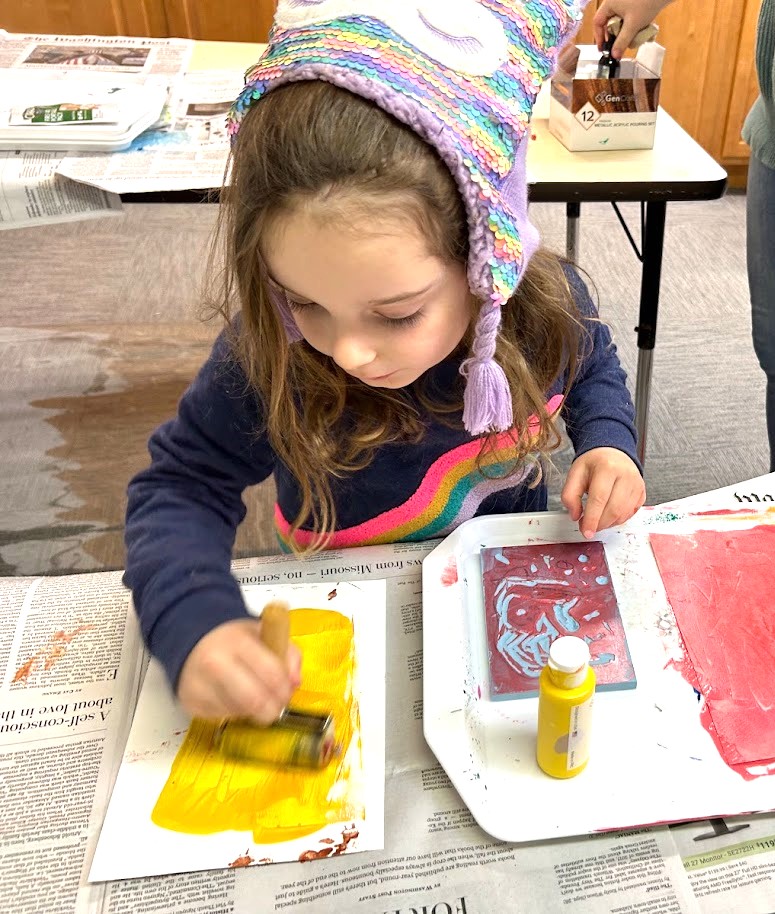
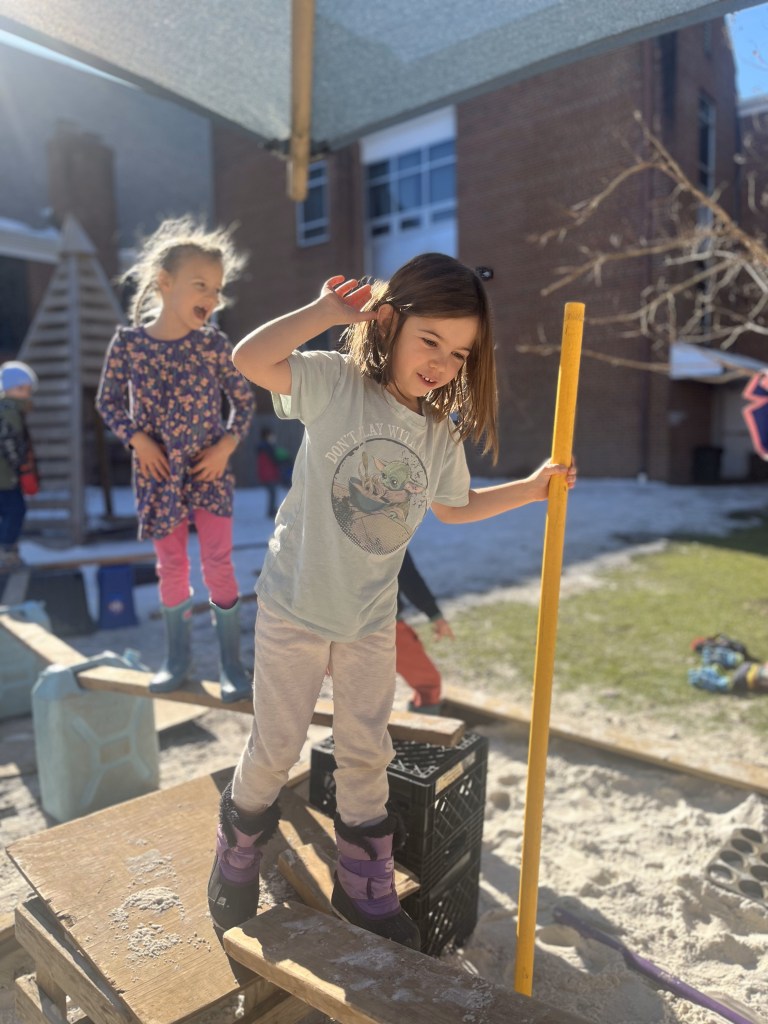
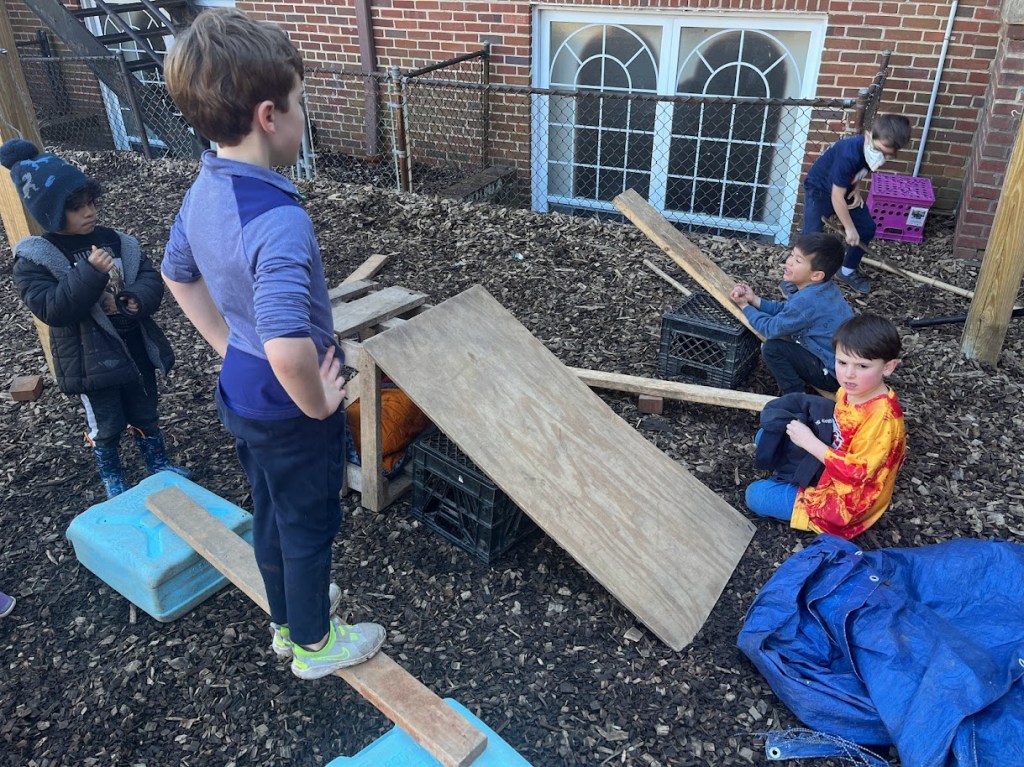
In Spark Studio, I have seen this root system being built during outdoor play in the recent fascination with obstacle courses. Each day, the learners have worked together to create taller towers, more challenging road blocks, and much bigger gaps to jump from section to section. The other guides and I often catch ourselves holding our breath as we watch the learners try out their next challenge. After they make a big jump, the learners chant “YES!” and “I did it!” The guides and I all find ourselves finally exhaling and chanting quietly “the wind, the wind, the wind”. It is hard to watch our children do things that may seem “dangerous” or “risky” but in these moments, it is important that we remind ourselves of safe risk and the self-confidence that can be built when we let go and let them grow their roots. 

In Discovery Studio, I have observed their growth through a different lens. In Health and Wellness, we have been exploring conflict resolution. This has been a popular topic in the past because we often engage in role play, playing out what conflict looks like and analyzing how fictional characters could stand up for themselves, find a compromise, and make amends. The real work for Discovery learners comes out in play, once they leave the safety of fictional characters, and spend the next 2 hours engaged in unstructured play. 

As I wander the park, observing learners with their peers, conflict inevitably arises. I’ll hear something like “you always do this!” or “you never let me play!” As an adult and a highly empathetic human, these words tug at my heart. My instincts are to jump in and remove any hurt that could possibly take place. It is in these moments that I have to remind myself that if we rescue our learners from any conflict that could be hurtful, they will never grow their root system for dealing with conflict later in life. As the adult and guide, I walk alongside them, listen and support our learners with navigating conflict with their peers. As a guide, my  role is to take a step back and support, allowing our learners to use their language to work through conflict. We cannot rescue them from the hurt but we can give our learners the tools to handle the hurt. We cannot give our learners self-confidence and resilience but we can curate an environment where these life-long essential skills can flourish. 

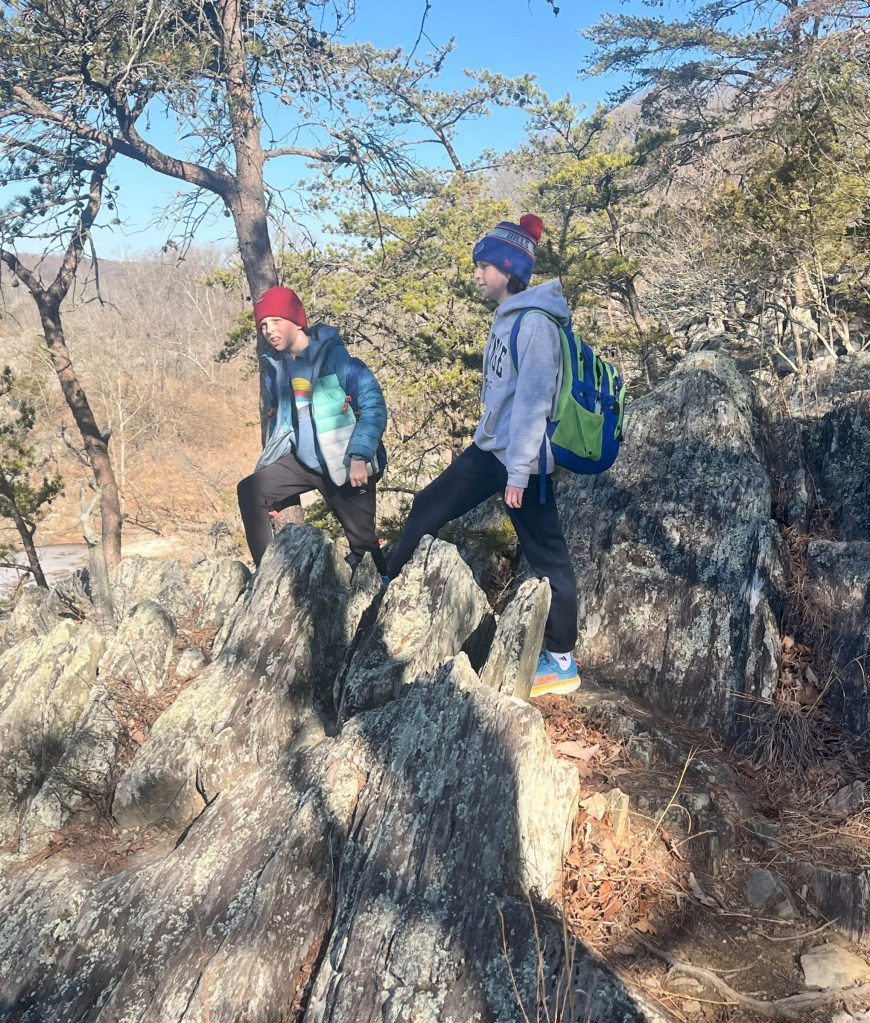
Adventure Studio brings a whole different level of uncomfortability in building a strong root system. As a guide, I find my role constantly challenged as the studio ebbs and flows through challenging life experiences. Recently, we all embarked on the Billy Goat trail. The guides and I scoured the internet looking for whether the trail would be safe after the ice and snow leftover from our most recent winter storm. When we couldn’t find a solid answer, we all found ourselves thinking – we can do this, they can do this, we will all be together and it will be okay! As we started our hike, it was indeed one big ice sheet. We all found ourselves looking at each other, knowing what each of us was thinking – can we really do this? We all took it one step at a time. There were many falls, slips, and  catches from fellow peers. At one point, myself and another learner even found ourselves off the path, stuck between two big boulders. Three learners immediately came to our rescue and guided us down. They beamed for the rest of the journey, chanting to the rest of the group “We just saved Ms. Bridget!”

Later on in the hike, we had to work together to climb up to the top of a rocky slope. The phrases, “you can do it!”, “you’ve got this!”, “I’ve got you”, and “I won’t let you fall” were countless. Every single learner and guide helped each other to reach our destination. Many of the learners were scared but when we all reached the top together, the looks of pride and accomplishment were heartwarming. 

The next time your learner takes a risk and you find yourself holding your breath, breathe out and chant to yourself “the wind, the wind, the wind” and know that you are supporting your learner with building a strong root system that will support them with whatever life brings their way.
Session 4 Sneak Peek

Spark Studio

In this session, Spark learners will discover how Science, Technology, Engineering, and Math can be used to invent new things to solve real world problems. Learners will explore their wonders about inventions, such as “how does flying work?”. Learners will read and learn about historical figures in STEM and how they solved problems. They will get hands-on experience through science experiments and projects. By the end of session 4, learners will become an inventor themselves!

Discovery Studio

In this session’s Project, Discovery learners will explore how nature’s clever solutions can inspire new ideas to solve everyday problems. From buildings to technology, learners will discover how designs in nature have led to creative inventions around the world. They will also have the opportunity to dive into storytelling by creating their own podcasts, sharing their ideas and using their voice in a powerful way! 

Ever wondered what goes into making a podcast? In this session’s Writer’s Workshop, learners will dive into the essentials of podcasting, exploring different podcast formats and discovering what makes a podcast truly engaging. From there, they  will select a topic, conduct interviews, write compelling scripts, and perfect their editing skills to produce their very own episodes. The best part? They’ll get to share finished podcasts with our TVS community who’s eager to listen! Let’s get ready to hit “record”!

Adventure Studio

This session for Project, learners will design cities for tomorrow with working electric grids. Working in teams, they’ll explore electrical circuits, energy transformation, and sustainability. From simple circuits to complex grids, they’ll combine creativity and science to tackle big questions about innovation, functionality, and environmental responsibility in city design.  

Learners will also step into the world of science fiction by crafting their own original stories. Through discussions, text analysis, and peer feedback, they’ll explore what makes the genre unique and bring their ideas to life! This Communications challenge culminates in the sharing of their imaginative creations with the community.

Health & Wellness

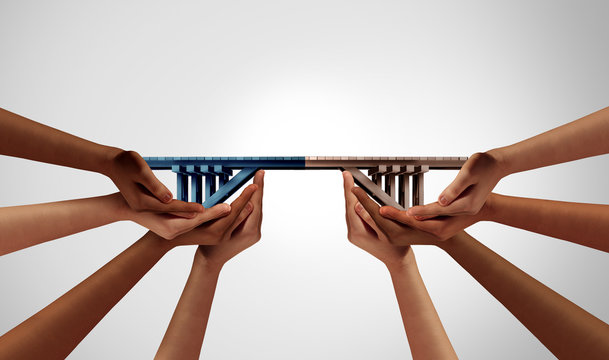
The overarching theme for session 4 will be “Building Bridges”. All learners will be expanding upon conflict resolution strategies that we utilize everyday. Our Spark learners will be exploring what it means to have an argument with a friend, what it feels like, and how we can handle hurting our friend’s feelings. In Discovery, we will explore what it means to be a bridge builder. The learners will practice perspective taking, how they can benefit from different points of view, and how to repair relationships after conflict. In Adventure Studio, we will analyze our mindsets around conflict. Conflict can be an opportunity for change, growth, and transformation. The learners will analyze how they handle conflict and areas where they want to grow.
The Feeling of Belonging

The beginning of the school year is always a chaotic time. This is my 17th beginning of the school year and even though society has changed in many ways, the behaviors and feelings of children remain much the same. As I observe learners in their first few weeks of school, I notice an underlying question of: Where do I belong?

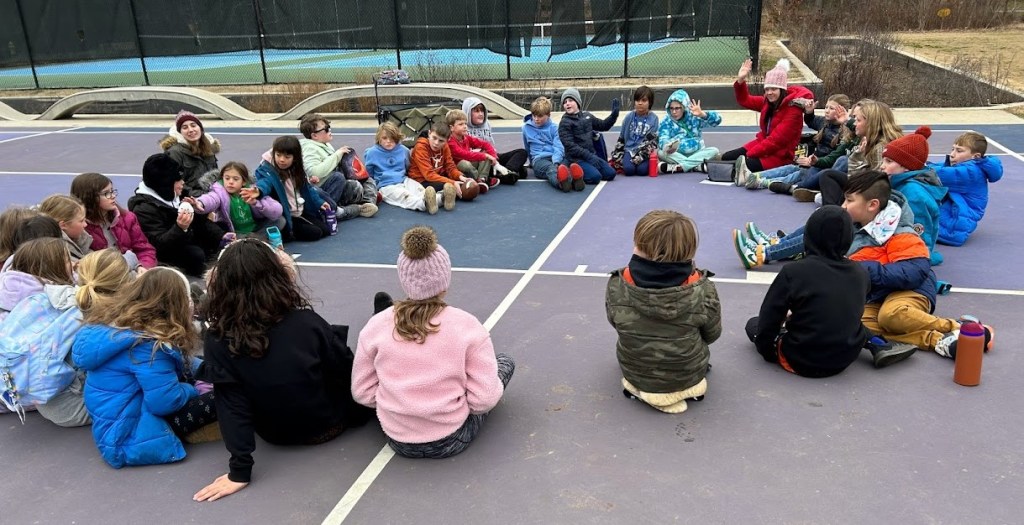
Belonging is vital to our ability to thrive as human beings. In Health & Wellness we have been exploring the science of belonging and asking ourselves what is important to each of us to feel like we belong. Across studios, the learners have shared stories about moments when they have felt lonely and someone made them feel welcome. They have explored ways that they could help others feel a sense of belonging such as inviting others to play or noticing when someone is alone at lunch. We have also explored what behaviors and actions contribute to belonging – what do each of us need to do to ensure that everyone has a place in our community? 

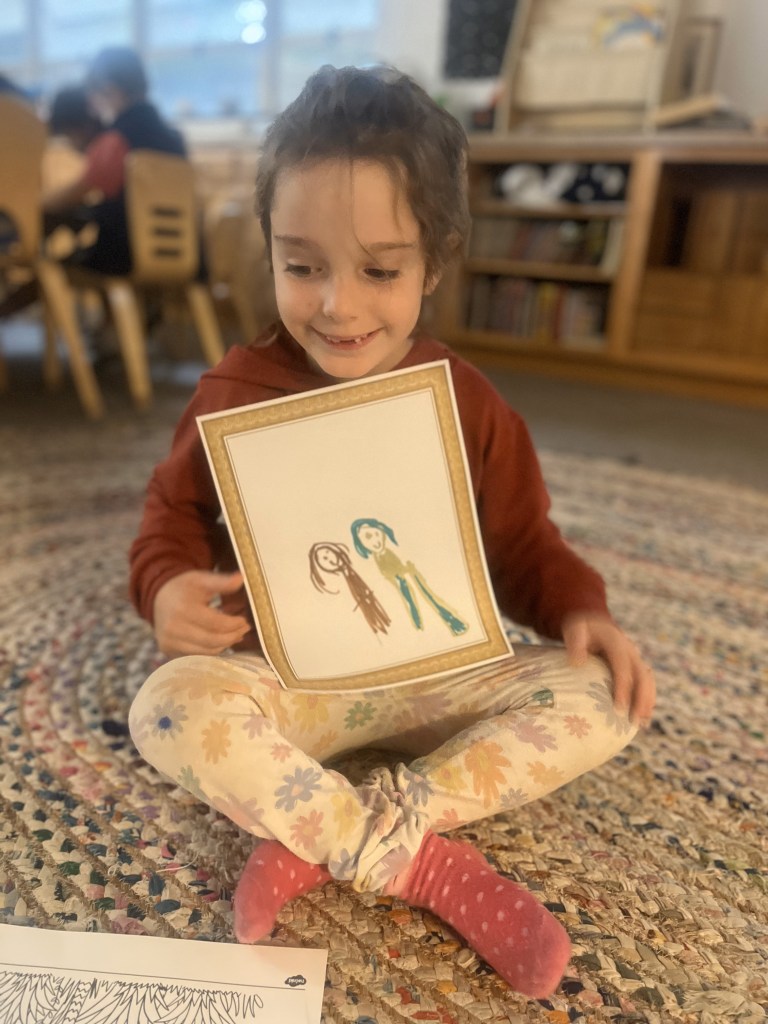
Spark studio has been focused on understanding the “feeling” of belonging. What does it feel like to know that someone cares about you, is your friend, and includes you in fun activities? We explored this through a captivating tale of a creature known as Rumple Buttercup. There were many gasps, smiles, oohs, and ahhs, as I read the story and they began to realize that Rumple Buttercup does have people who care about him and want him to belong in their community. The Spark learners then created portraits of the people who make them feel like they belong, that they are loved, and cared for. 

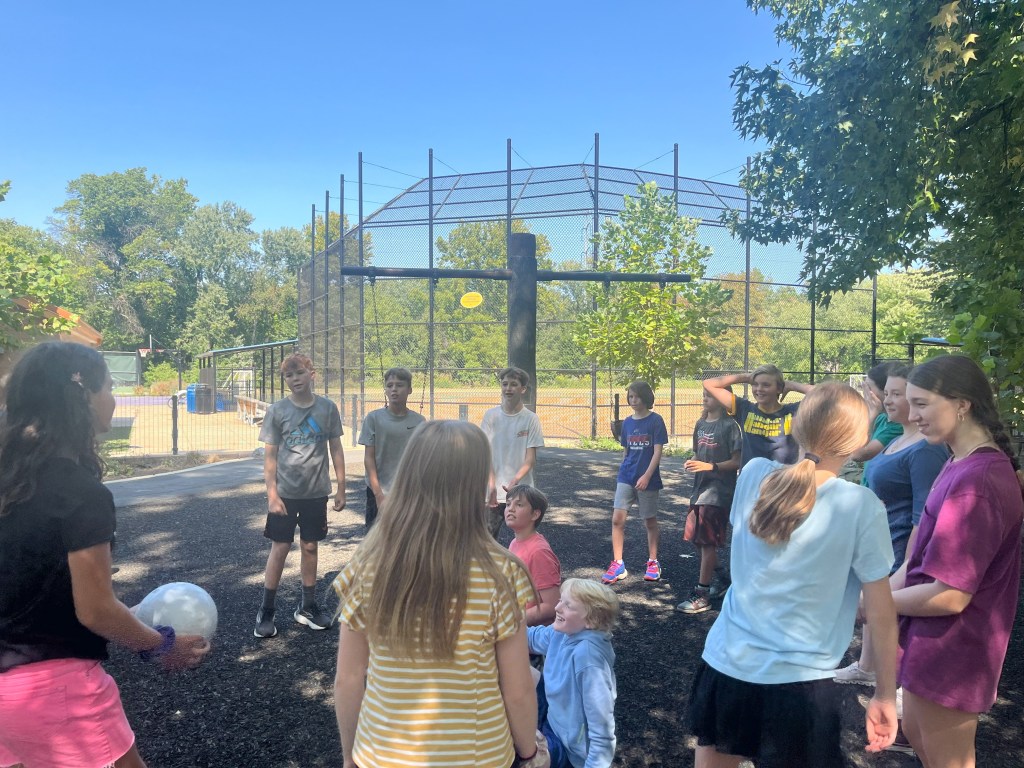
Adventure learners engaged in a heated discussion about FOMO (Fear of Missing Out), FOBLO (Fear of Being Left Out), and JOMO (Joy of Missing Out). Many learners found themselves debating whether it is ever possible to reach JOMO… will I ever be okay with my friends not inviting me to something? Will I ever feel confident in myself enough to be okay with missing out? Be secure enough in my sense of belonging that it is okay to watch my friends enjoy something without me? In Adventure, this debate is far from over with most learners admitting to pings of envy when they know their friends are getting together without them. 

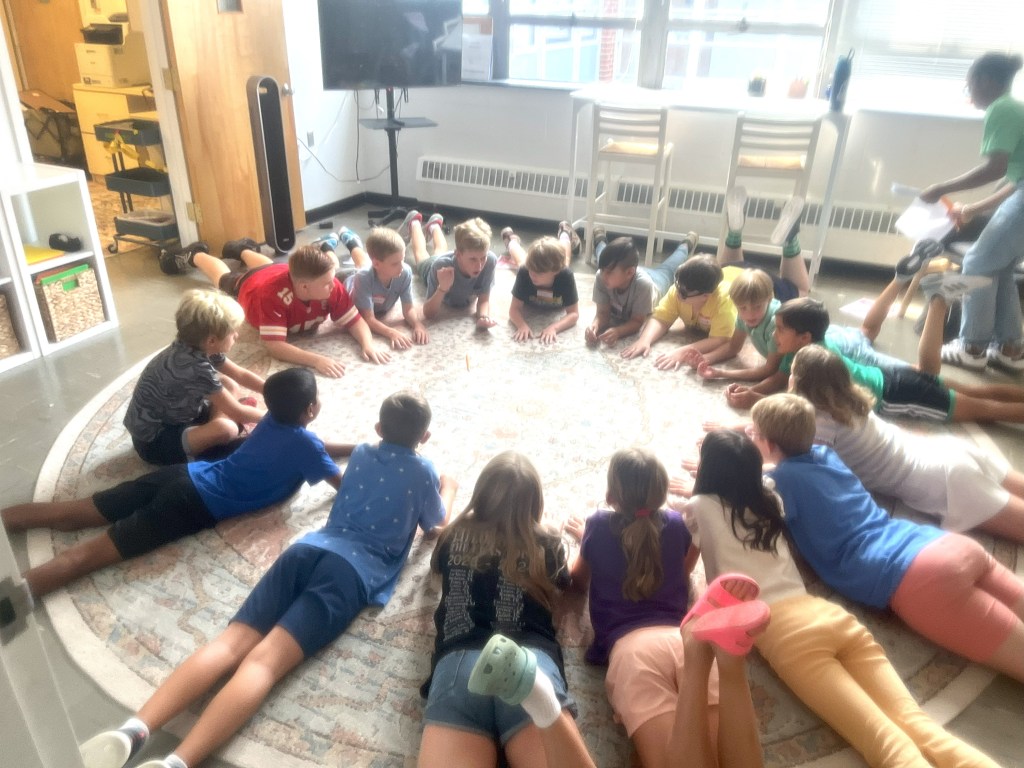
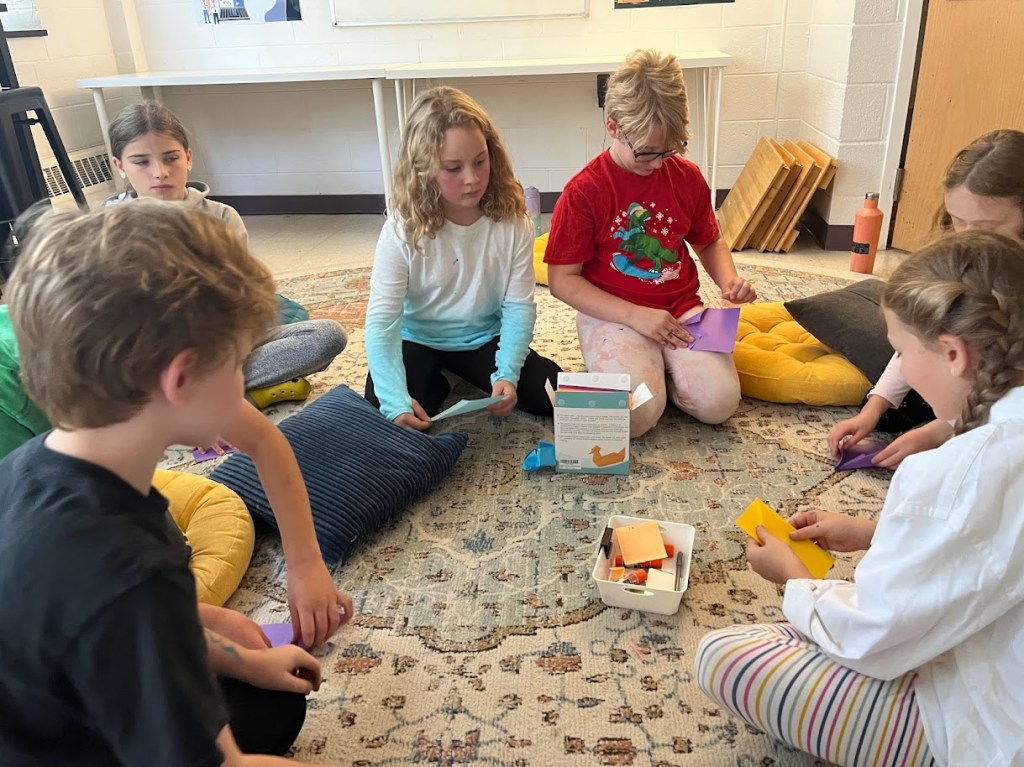
Discovery studio learners have listened to stories of others where the main characters were unique, different, and didn’t quite feel like they fit in. They made connections about moments when they felt uncomfortable, embarrassed, or left out. Then, they shared about the people in their lives that helped them to feel better, feel included, valued, and cared for. Each learner created a puzzle piece to symbolize why they belong in our community or how others help them to feel like they belong. We are continuing to explore stories of belonging through journaling and reflecting on the community that they are creating every day at The Village School. 

Belonging is an essential part of being human and being a part of any community. What steps will you take to connect with others? What steps can you take to reach out to others that you notice are taking a step back? What impact will you make on The Village School, in your community, and in our world? 

We Choose Dirt

By Dr. Elizabeth Dean and Bridget Yoko

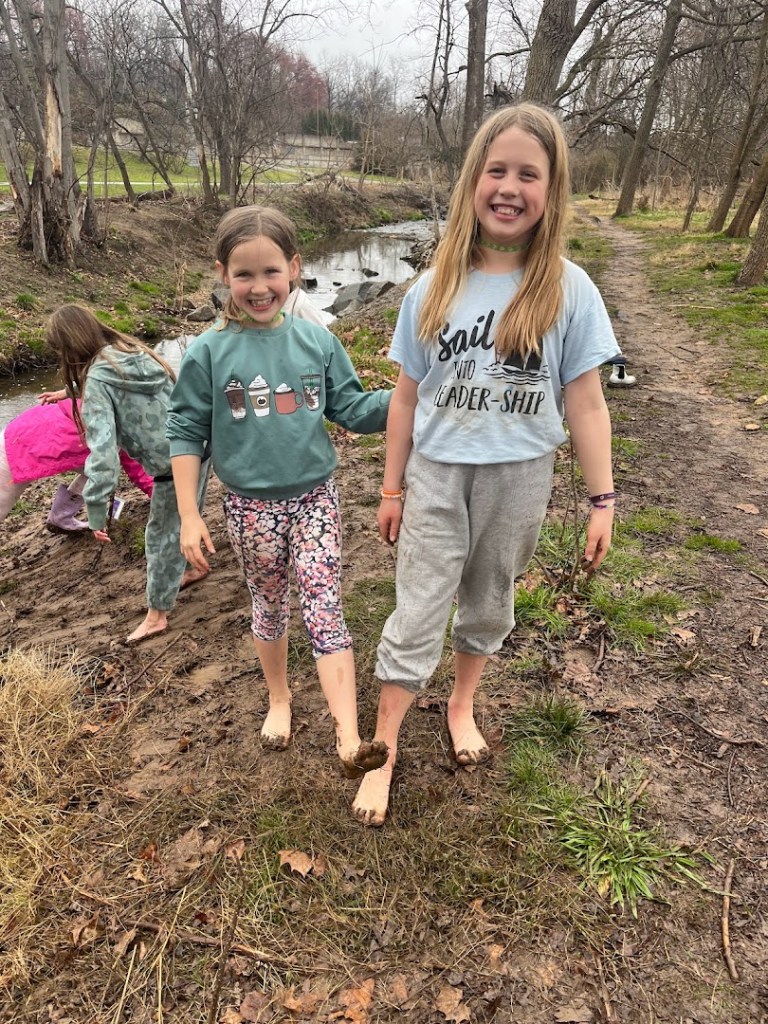
On the days when my kids climb into the car still glazed in sweat, their feet swimming in damp socks and mud-caked shoes, I close my eyes, take a deep breath, and feel a deep sense of gratitude for The Village School experience. I wouldn’t trade a clean car for anything because the dirt that cakes into the seats of my car, fills the backseat and one hundred percent makes it into my house is an indication that my kids’ day was full of active experience. They played hard and it shows. 

On the days when my mind strays from gratitude and leans towards cleanliness and control, I remind myself about our life before TVS, when my kindergartener would get off the bus just as clean as she was when she left the house, with her bow still perfectly straight in her hair. Some days she looked more pristine than when she left. Her cleanliness was a daily reminder of her controlled and passive experience at school. Where were the grass stains? Where were her calloused hands worn out from the monkey-bars? Where were the abrasions from the asphalt? For the love – where was all the dirt?

This session has been a great reminder of our family’s “why” for choosing TVS and a reminder to me that a dirty car and dirty kids was an intentional choice made by our family. We chose the dirt, rain, mud, and all season experiences instead of the pressure of an enclosed classroom in which children rarely get to experience the benefits of nature. 

The benefits of time outside can be seen in the remarkable differences of our older learners when they switch between a traditional educational environment to our program which values unstructured play. In a matter of weeks, our learners have built resilience, conflict resolution strategies, conversational skills, tolerance for being uncomfortable, and so much more! We see them blooming in a space that allows for so much freedom and time to slow down, enjoying the world around them. 

The image of a dirty child is counter cultural. Just as children are expected to be “seen and not heard”, adults also expect children to be tidy and clean. Wash your face, change your clothes, and brush your hair – adults see messy children, where we see the dirt, unkempt hair, and muddy clothes as evidence of a day well spent. When attending private school fairs and open houses, we often see images of children dressed in uniforms, neatly ironed and pressed. As Guides, we find ourselves smiling about how our learners would certainly stand out in these environments, covered in mud and sand, dirt under their nails, expressing that they are “meant for the wild” as one of our Spark learners recently shared. 

We don’t only welcome dirt when it comes to playing outside, we also welcome the “dirt” that comes along with our learning model. Our learning model is not neat and tidy, our learning model welcomes the mess that we know (from decades of research) is the path to deep learning. The “dirt” that occurs during project time might look like chaotic collaboration, loose parts and materials strewn about the studio, little bits of paper and glue all over the tables and floors, freedom of movement – and dare we say it “wasted time”. 

Another form of dirt that we welcome is conflict. Disagreements, misunderstandings, and hurt feelings are all natural and important parts of learning and growing. 

In a recent book our parent community read, The Anxious Generation, author Jonathan Haidt, shares about a school dedicated to unstructured play. At the Central Academy of the Arts, they found that 

“unstructured free play addresses – heads on – making friends, learning empathy, learning emotional regulation, learning interpersonal skills, and greatly empowers students by helping them find a healthy place in their school community – all while teaching them life’s most important skills like creativity, innovation, critical thinking, collaborations, communication, self-direction, perseverance, and social skills”.

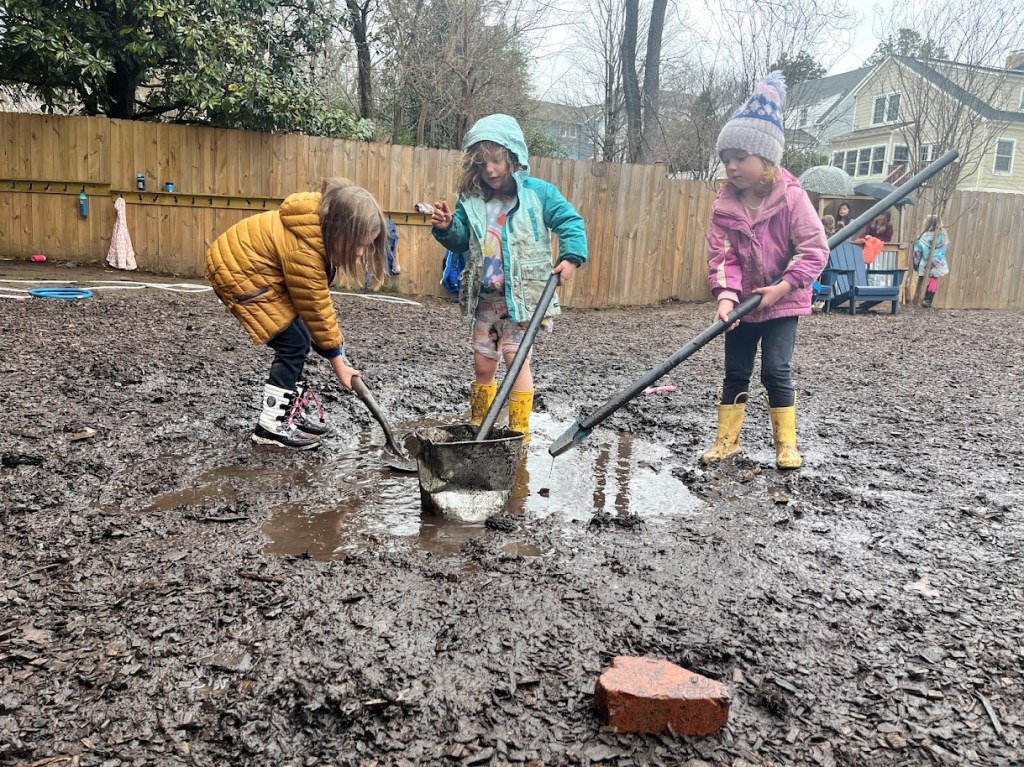
At The Village School, we are proud that our learning model incorporates project-based learning AND unstructured play AND daily opportunities to get covered in all versions of dirt. Just this week our youngest learners were spotted dragging planks of wood across the playground to build a fort while others made “cupcakes” made of -you guessed it- dirt. Our elementary age learners have spent every afternoon at the local park conducting experiments to test the water quality in the creek while also noticing snakes, catching crayfish, chasing turtles, and getting dirty. Our middle schoolers spent their outdoor time yesterday using the playground hose and loose parts to create a wading pool complete with a surfboard and fountain feature.   

We would apologize for the grit and grime (and maybe some creatures) that we know for sure made it into your car and probably house – but all of that dirt was by design. So, the next time you bravely peek into the backseat of your car or the bottom of your learner’s backpack, we hope you’ll remember that you chose dirt – and we are so grateful that you did! 

Exploring Courage

“Courage starts with showing up and letting ourselves be seen.” – Breńe Brown

In Health and Wellness this session, our learners have been exploring what it means to be a brave and courageous person. Researchers have found that there are many definitions for courage but common characteristics of courage include recognizing a risk and then deciding to act in a way that upholds our values in the face of risk. In John McCain’s book, Why Courage Matters: The Way to a Braver Life, he shares that 

“Most of us see the need for moral courage. Most of us accept social norms: that it’s right to be honest, to respect the rights of others, to have compassion. But accepting the appropriateness of these qualities, wanting them, and teaching our children to want them, aren’t the same as actually possessing them… we need moral courage to be honest all of the time. It’s the enforcing virtue, the one that makes the others possible.”

Our learners took time to reflect on John McCain’s message and how it applied to the daily situations we are faced with. When we are faced with difficult situations, ones that require courage to stand up for others or ourselves, what will we do? Will we take a risk and do the courageous thing?

We also explored Breńe Brown’s message on vulnerability. She shares that in order to be vulnerable with others, we also have to have courage. The learners in Discovery and Adventure took part in an activity where they were vulnerable and shared about their fears. Each of us, guides included, wrote down a fear and then we anonymously shared our fears with the studio. Many learners noticed that they had the same fears as others such as heights, spiders, the dark, being left out, and being made fun of. Upon reflection, many of the learners said that they felt more comfortable and relieved after having been vulnerable and realizing that many other learners felt the same way as them. 

Our youngest learners in Spark have been exploring bravery through stories such as I Am Courage and The Courage of the Little Hummingbird. Upon reflection, many of the learners have decided that being courageous or brave makes them feel nervous but after they do something brave, they feel so proud. We also created courage creatures which helped us to envision the courage we all have within us. Along with the courage within us, Spark learners also shared that they have “courage boosters” like hugs from our moms and dads or encouraging words from our siblings that can help our “courage creatures” feel even more brave. 

In our final weeks of the session, each learner will create a plan of action, taking a step to do something courageous. Cindy Solomon shares that even though only 1 in 3 people see themselves as courageous, 100% of us ARE courageous. We all have “courage muscles” that we can strengthen by recognizing the opportunity, being okay with being uncomfortable, and visualizing the best thing that could happen if I were courageous. Moments of courage are not all big moments, they can be small everyday acts that challenge us to be authentic, kind, or outspoken. Every day brings a new opportunity to explore being brave and courageous. 

You Belong, You Matter, and You Have Value.

“Students learn best when they feel known, valued, and respected by both the adults in the school and their peers.” – Cultures of Thinking by Ron Ritchhart

At the Village School, we often say “who you are is more important than what you know”. What we mean by that is that who you are as a person – your thoughts, beliefs, passions, and values- are important, if not more important, than who you are academically. We value that each learner brings their own unique perspectives and beliefs to our discussions. As Ron Richhart states “when teachers don’t value what students bring with them into the classroom, we diminish students as individuals and dismiss their already substantive accomplishments as learners and thinkers”. Our learning environment centers around our learners’ voices and who they are as people, creating a sense of belonging for each of us.

A sense of belonging in a school community has been shown to have life-long impacts. When a child feels respected, valued, and a part of their school community, the science shows that this can have positive impacts on their wellbeing and identity development. Who you are in our community matters. We care about the things that make you an individual. We value each learner’s uniqueness, and we work together to create an environment where each of us values our differences, seeing them as a strength.

Is this easy? Definitely not! What happens when your values do not align with another person in our community? What happens when the differences in those values cause us to act in contradiction to those values? During Health and Wellness, our Adventure and Discovery learners explored this concept. We read a story together about a girl named Anna. Anna’s core value was open-mindedness. When Anna was having a discussion with a friend and they disagreed, she told them that they were “flat out wrong” and then walked away from the conversation, shutting that person down. Anna admitted that in the moment, this felt good, but later she realized that she had violated one of her core values. It didn’t feel good. Across studios we explored these moments together, the moments when we act in contradiction to our values, how that feels, and what do we do about it? The learners all came to a similar conclusion, it’s hard when another person does not agree with us. It’s hard when we have to engage in conversations where our values do not align. Acknowledging that another person sees things differently and respecting them at the same time, is difficult, and it is also essential in order to create a culture of belonging

Engaging in civil discourse about our values doesn’t just happen during Health and Wellness. For example, our middle school Civilizations curriculum invites learners to take on many different perspectives, especially those that might challenge their personal core values. Through this experience, learners explore the events of history and also their own belief systems.

Throughout our day, we cultivate moments for our learners to share who they are as individuals, expressing their core values and beliefs. We strive to create a culture where it is possible to be valued for who you are as an individual and live together in a community with others who have different values and beliefs. Each person matters, each voice matters, and each person belongs in our community. 

Peace & Kindness

Over the summer, I had the privilege of attending the WISSIT summer institute for teachers held at the Washington International School.  To say that the learning experience was inspirational, would be an understatement. I was surrounded by some of the best educators from around the globe. Each day, I soaked in the messages of hope, peace, kindness, empathy, inclusion, and community. When the week concluded, I continued to reflect on the following questions: 

  • “What stories are we telling?”
  • “Whose stories are missing?”
  • “How can we create a community of peace?”
  • “How can we create a community of kindness?”

I knew that I had to find a way to better utilize our Health and Wellness time to think about the stories we tell, whose stories were missing in our community, and how we can take those stories and create a more peaceful and kind community together.

Following my inspiration from “Reflection of Peace” by Ellen Lafferty and “Telling the Untold Stories of Black Joy through 100 Languages” by Marla McLean, I set out to find ways to inspire our learners at The Village school to reflect on what peace and kindness look like, feel like, and how they can spread peace and kindness to each other. 

In our Adventure middle school studio, we listened to the stories of Unsung Heroes like the story of Alie and how one person’s friendship impacted her life. We examined the photographs taken by Thomas Holton, another WISSIT inspired activity, and asked ourselves about the emotions the family was expressing and whose story was being told. The learners were challenged to share their own stories of bravery, joy, handship, challenge, accomplishment, etc. We thought about how each of our stories contributes to the knowledge and impact we all have on each other. Each of us brings something special, something of value and importance to our community. 

Similar activities were shared with our Discovery elementary learners. As we explored peace and kindness, we had one big question left to answer: How do we want to be remembered? The learners thought about, 20 years from now, when a studiomate of mine opens the yearbook and looks at a picture of me, what do I hope they say? What do I hope my impact is? 

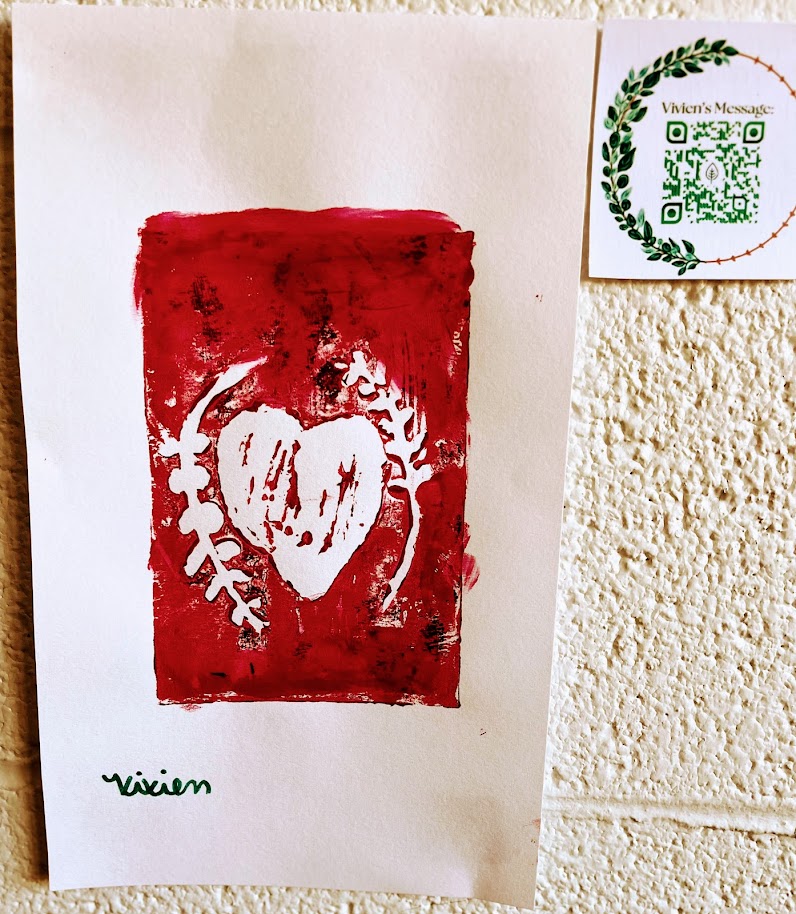
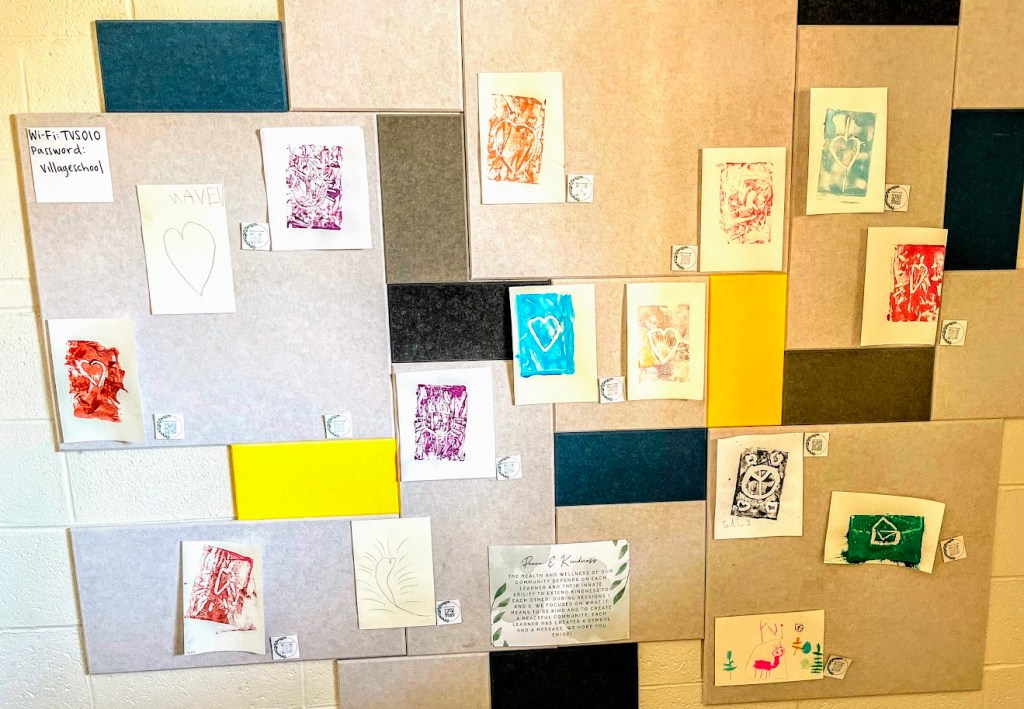
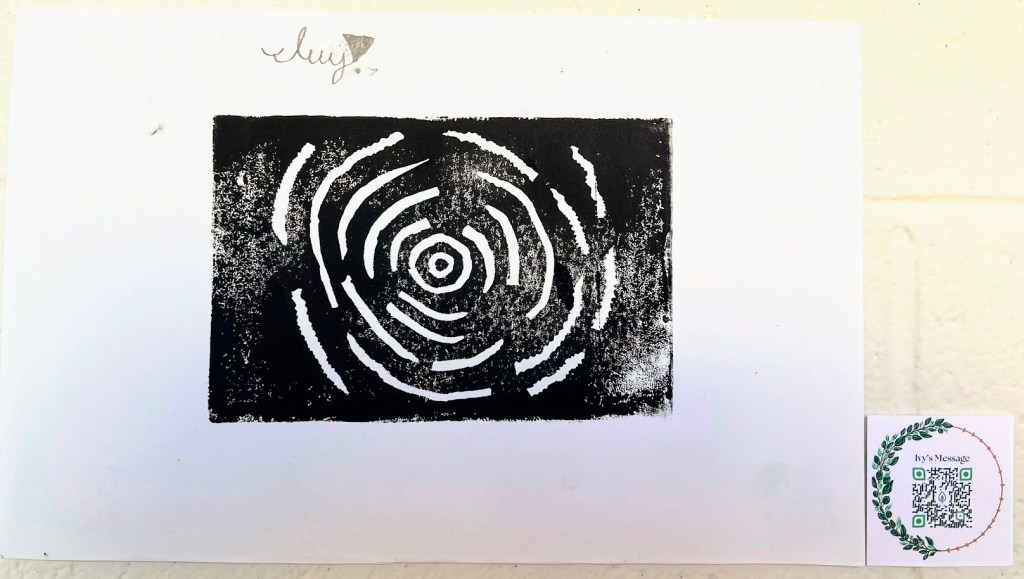
At the end of session 3, after 10 weeks of diving deep into the stories of others and the impact that being kind and peaceful can have, our learners each created their own stamp to represent what peace or kindness means to them symbolizing the mark they hope to leave behind on our community. They started with a brainstorm about experiences, images, and colors that represented peace or kindness. Then, they created a symbol. Now, it was time for the hard and meticulous work of transferring their symbol to a linoleum block. Each learner hand carved their design, painted, and stamped them onto canvas. As our Guide team watched the learners excitedly working, they became inspired as well. In one of our afternoon professional development sessions, we each created our own symbols with the help of some of our older middle school learners. The culminating piece was a short video message for parents and fellow studiomates to hear so they could learn more about what each symbol represents. 

There were symbols connected to nature, animals, friendship, the ripple effect we have on others, reading, family, and so much more. 

One of our Adventure middle school learners, Vivien, created a heart with olive branches, symbolizing peace and shared “a peaceful world is one where everyone is valued”. Other quotes from our learners that we found inspiring were:

“My symbol is a ripple, like a ripple of kindness.  Kind of like a stone being thrown into the water. I think of it like my bunny’s feet. How I am going to spread peace and kindness is doing small things to be peaceful and kind and I think that will help because little things everywhere makes one big thing. “ – Ivy, Discovery Learner, age 10

“Kindness means holding my heart.” – Spark Learner, Age 5

“Kindness is a  note to somebody, like a thank you for being nice to me.” – Spark Learner, Age 6

“Peace and kindness means that people love us and help us.” – Spark Learner, Age 4

“A truly peaceful world would look like no wars and everyone getting along with peace and harmony.” – Adventure Learner, Age 12

Our learners have told their stories and they are the stories of hope, joy, challenge, achievement and inspiration. Each of their voices are valuable and have brought more peace and kindness to our community. 

Building Empathy

“Empathy is caught, not taught.”

– Mary Gordon, Founder of Roots of Empathy

As the Wellness Guide at The Village School, I often find myself seeking moments where I can support our learners with empathy building. Having empathy for others and empathy for yourself is developmental and depends on a number of factors in one’s life. It is not a skill that one day you wake up with and all of the sudden you are able to put yourself in someone else’s shoes or feel what someone else feels. In reality, having empathy is hard. It is a skill that needs to be practiced and experienced in order to be developed. It is also a crucial skill that our world needs more of. According to research, empathy is the most important leadership skill needed today. 

Opportunities arise throughout our day at TVS to allow our learners to experience empathy. One way that we plan for this is through storytelling. Storytelling is an essential component of our curriculum. Listening to the stories of others allows us to connect to the human experiences that other people go through, activating our ability to develop emotions and connections with others. Making connections to people that are different from us, builds our ability to have empathy.

One of the most important ways that The Village School builds empathy is through the caring relationships our learners experience. When our learners struggle, our Guides are the model for patience and compassion. Even in a small environment, our learners are not isolated from the stress of the world around them. They all experience bad days, hear about world events, and have outside sources of stress that they carry through the doors of our building. Modeling patience and compassion for each learner builds their ability to have empathy with others. I often find our Guides taking a moment to listen to a learner, or several, as they are struggling to cope with a life stressor. As our learners experience the empathy they are given, those feelings of being heard, being understood, and being valued stick with them. The compassion of others becomes a part of their story until the opportunity arises for them to be the model of empathy, to lead the path for others to experience the same feelings of being heard and being valued.