Learning to Learn: Middle School Civilizations

Middle school Civilizations, or “Civ” as the learners call it, is one of The Village School’s signature learning experiences. The curriculum is a rich task built with intention and backed with research. Learners are asked to engage with most of the topics and character traits listed in our school Profile of a Learner as well as meet each strand of Project Zero’s Understanding Map, a research based framework for designing powerful learning experiences.

Twice a week learners are presented with a Civ Challenge that is composed of three parts: research, writing to learn, and socratic discussion. Each challenge is centered around a list of approximately 10 socratic questions, with a focus on what is known as the “big question”. The big question is about a specific time or person in history. Learners are challenged to come up with their own answer to the big question based on their own research. Each Civ Challenge is accompanied by a bank of sources that may include primary sources, images, graphs, videos, and articles that are relevant to the big question.  Additionally, each challenge weaves in current events that connect to the historical topic. There are current articles, news clips, and primary sources that highlight these connections. 

Learners are challenged to do at least 30 minutes of research using the sources provided, and take notes on the information they are gathering. After their research is complete, they begin writing to learn. Writing to learn is different from the purpose of most academic writing, and research shows that the older a learner gets, the less opportunities they have to write to learn in school. Writing to learn is to help learners process their thinking and determine their own ideas and thoughts – or as one researcher explains, “Writing to learn is learning to think.” This is exactly the purpose of the writing task in Civ. 

Learners must submit their written response by the deadline in order to participate in the final aspect of the challenge, a peer-led socratic discussion. Learners arrange themselves in a circle, nominate a discussion leader, review the discussion guidelines and begin. The conversation starts with sharing responses to the big question, followed by the discussion leader’s guidance through the rest of the questions.

This session’s CIV, “The People Who Made America” included ten challenges focused on one or two individuals who helped shape the country. One of the challenges focused on Mary Tape, a desegregation activist who fought for Chinese-Americans’ access to public education. Here is an excerpt from the challenge followed by the “big question” followed by a snapshot of some of the learner responses and discussion:

Mary Tape was a Chinese immigrant living in San Francisco in the 1890s. She became an important figure in the fight against racial discrimination in education. After her daughter was denied entry to a public school because of her Chinese descent, Tape took a bold stand against the schools. She wrote letters and took legal action that led to a landmark court case. 

Was Mary Tape a hero for her family and other Asian Americans or a failure?  Should heroes be defined by personal victories or by the ability to inspire and effect larger change? 

“I don’t think you have to succeed to be a hero.” 

I think she was a hero to her family and to the people that she inspired. I think you can fail and still be a hero in some people’s eyes.” 

“I disagree – I think she was a failure because she did actually fail at what she was trying to do. I think what she did was heroic, but it doesn’t make her heroic.”

“I actually completely agree with Charlotte because I think calling her a failure is a bit of a stretch. I also agree with something Jude said that being a hero or a failure depends on the standard. I think for Mary Tape the standard was heroic – she was fighting a similar fight as MLK, because she was fighting against racial discrimination. MLK is one of the most influential heroes in the world.”

“I agree with Charlotte. It’s hard to categorize someone as a complete hero or a complete failure. I do think that she failed in her goals, but she certainly didn’t fail in being her. She was a success in that she brought the injustice to light and made people aware of it. Generally I think she was a hero because she did more good than bad. 

I wouldn’t describe her as a failure. She stood up for her family and that’s heroic to me. 

“Wait -can someone explain what she did with the school?”

“She went to the Supreme Court and advocated for her children to be accepted into the local public school, but the Supreme Court l,et everyone know that segregation was still okay, so they had to make a different school for her children. 

“All last year in Health and Wellness we talked about what makes someone a hero, and I remember talking about how a hero is someone who positively influences others, and she did that.” 

“Along the way to your goal, you’re always going to have failure. Just like us in our journey at TVS, we’re going to fail sometimes.”

“I agree with Amira. I think she was a hero because even though she encountered failure she still did something incredible. Her argument made it all the way to the Supreme Court which is a big deal. Even though it didn’t turn out how she wanted, she brought awareness to this important issue. I definitely think she was a hero.”

“Hey, can you read the second part of the question again? I noticed no one is answering that part.”

“I think if someone is a hero their actions need to affect more than just themselves. You can be a good person, but that’s not the same as being a hero. I don’t think that your reach has to be huge. You could do something to benefit your school or your neighborhood and that can be heroic.”

“I think that heroism should be defined as the ability to inspire others. Inspiring others is good leadership. If you’re being a leader, you’re being a hero – and if you’re being heroic, you’re inspiring others to be heroic.”

I think it matters what your intention is. Her intention was to make a positive impact and in that sense she succeeded.

Below is one of the learner’s written responses: 

A hero is a person who is admired or idealized for courage, outstanding achievements, or noble qualities. And by that definition, Mary Tape was a hero. She might have failed to get her child into public school, but she inspired others, not just to follow the law but to do what is morally right. 

When Mary Tape sued the school and the case went to the Supreme Court, the case was not just for her daughter but for all Asian Americans. She might have failed to get her daughter into an American school, but she put action in the movement and took a step toward equal rights. 

You can’t be a failure if you inspire millions. You can still be a hero if your goal fails. Failure is a part of learning, and failure is a part of changing the world. Martin Luther King Jr. was arrested multiple times, and he may have failed at that moment, but he is still considered a hero. Mary Tape is the same—someone who, in the immediate future, may have failed but, in the long term, succeeded. 

Learners go through this entirely self-led process twice a week. They learn to read critically, write thoughtfully with evidence to support their ideas, consider other perspectives, connect history to current events, and to their own experiences, And, most importantly they are trusted to engage in this process as independent learners, writers, and thinkers. This learning task is something most high school students wouldn’t be trusted to attempt. In a traditional, highly competitive high school environment there isn’t room or time for learners to struggle or fail.  Like so much of the learning design at TVS, we choose to trust over control. Civ requires the adults in the room to really lean into our Constructivist approach to learning and our belief that young people can be trusted to learn from their own experience. 

As expected, the learners capture the heart of Civ best, as one learner put it: “…Civ is definitely the most challenging part of being in Adventure, but it’s also the most fun.” And, of course we agree: the more epic the challenge, the sweeter the victory. 

Learning to Learn Math in Spark

If you have school-aged children, you might have noticed that learning math today looks nothing like it did when you were in school. Unlike the approach we experienced as students and the approach that still persists in many conventional schools, The Village School learning design prioritizes deep understanding over rapid rote memorization. Our goal with math (and other subjects!) is that learners are equipped with a sense of math efficacy that comes from learning to learn instead of simply learning. Spark Studio Guides have designed a math curriculum that nurtures a growth mindset creating space for young learners to feel capable and excited as they deepen their numerical fluency. 

Learning at TVS in Spark Studio and beyond is based on mastery and not bound by age or time. Similar to the literacy curriculum in Spark, the Spark math curriculum is highly-structured, multi-sensory, and research-based. The Spark Math Map is a visual representation of the most important mathematical skills that Spark learners work to master, and are foundational for any young learner in providing them with both the understandings they need for our elementary math curriculum and equipping them to learn how to learn math as they encounter it in their daily lives.

You can probably remember seeing a toddler determined to hold the right number of fingers up to show their age demonstrating their earliest counting skills. Hands and toes serve as everyone’s first math manipulatives. After fingers and toes comes blocks, and in Spark Studio we introduce an engaging collection of Montessori math manipulatives. The intentionally designed manipulatives allow our youngest learners to learn math through natural play – a pedagogy we lean heavily on here at TVS.  

One of the most memorable math manipulatives in Spark is called the long bead chain. Visit any Montessori classroom and you’ll see the beautiful wooden display case of carefully hanging colorful chains of beads. These color-coded beads are used to master several basic mathematical fluency skills including linear counting, skip counting, multiplying, and squaring and cubing. By physically holding and counting the beads, learners are able to internalize the idea of quantity and pattern recognition, two foundational math concepts necessary for developing math fluency. As learners string together bead chains of various lengths, they visually and kinesthetically experience mathematical progression. This process fosters independence and encourages learners to approach math as a logical, engaging journey rather than just memorization.

The bead chain is just one example of how the math curriculum in Spark Studio is both playful and purposeful. In addition to the available manipulatives, Spark learners often engage in math games that promote numerical reasoning and thinking. The benefit of multi-age learning really shines through when learners are engaged in math-based games: older learners are able to model and articulate their thinking about math in a way that inspires and influences younger learners more than any adult could ever achieve. 

However, most central to our math curriculum in Spark Studio is the development of a growth mindset. We know from research and our experience at TVS that a learners’ belief in themselves when it comes to learning math is the most powerful lever in shaping their experience and success. We also know that young people – especially our own children – will internalize and model the attitudes that are modeled for them. Do you talk about math fondly – or do you proclaim yourself “not a math person”? Expressing confidence about your own mathematical abilities will help your learner (and maybe even yourself!) realize that learning math is all about attitude, effort, and practice. Even when things get tricky – just take one bead at a time!

Session 2 Sneak Peek

Spark Studio

Photo by Sara Free on Pexels.com

It’s fall y’all! Learners will get to explore how food gets to their table by reading about and discussing all things harvesting. From learning about plant life cycles to understanding how food fuels their bodies, learners will try new foods, challenge their math skills using pumpkins, read and write about fall activities, and perhaps even learn to make their own lunch! During project time, learners will work in new groups, practicing team building skills while exploring interests and brainstorming project ideas. Amidst all this, Spark will take a trip up into the Washington Monument after the first sessions’ rich exploration of the structure. See you in session 2!

Discovery & Adventure Studio

Photo by cottonbro studio on Pexels.com

It’s Election Season! Learners in Discovery and Adventure Studios will engage in a deep dive into the Democratic Process exploring the different ways they can share their voice, inspire positive change, and participate in the democratic process before they are old enough to vote! The Project and Writer’s Workshop and Communications challenge will create opportunities for learners to explore the three branches of government and their function, analyze the UN Rights of the Child, investigate the legislative research process, examine how art can be used in activism, and develop their persuasive letter writing techniques. At the end of this session learners will journey to Capitol Hill to deliver one pagers to Congressional Staffers and send a persuasive letter to a politician both advocating for a policy issue advocating for children’s rights.

Health & Wellness

Photo by POI * on Pexels.com

“Beauty begins the moment you decide to be yourself.” – Coco Chanel

Throughout session 1, we focused on belonging. Session 2 will be focused on “becoming”. The learners will take an introspective look at who they are through a values game, reflections on goals, abilities, and dreams.  We will visualize the parts of ourselves that make up who they are. Then, we will take a “vibe check”, asking ourselves about the energy we put into the world and what energy we hope we are expressing to others. At the end of the session we will take a look at the story of our lives so far and make predictions about what is to come. 

At TVS Learning is Real, Not Artificial

If you’ve read something recently about how AI is going to transform education as we know it, you’re not alone. If you’re like me, you ignored the click bait for a few months, overwhelmed by the thought of trying to deeply understand yet another seemingly “unprecedented” story of our times. Then, if you’re also like me, after several months of playing ostrich, you decided to finally click and begin the process of understanding just how AI was going to change your life. 

After reading article after article, watching an Oprah special, scrolling my LinkedIn feed for fodder, and even reading a book, I have my own hot take on AI in education – that starts with rejecting the premise. Yes, AI has the potential to radically change education as most of us know it. However, if AI has the power to drastically change education, this says more about the current state of education than the power of AI. Despite the rapid advancement of technology over the past 100 years, schools as we know it still look the same: rows of desks, rote memorization, quizzes, tests, and compliance valued over creativity. The important question to consider isn’t how AI will transform schools, but how we should be rethinking the very concept of school itself.

At The Village School, AI is embedded in our learning design because it is a new and useful tool. As new technology emerges, part of our learning model is to learn to learn about them. AI is not fundamentally changing our TVS learning design because we are focused on the act of learning, skill development, and character education – we aren’t in the business of checking boxes. If we were a school that cared more about what our learners know – then for sure, AI would radically change our approach. The good news is that we’re not. One of our school community’s core beliefs is that we care more about who a learner becomes than what they know. We also believe that young people can be trusted to learn from their own experiences. 

While many schools are frantically searching for ways to keep AI out of their classrooms, this session we put AI into the hands of our middle schoolers. Their deep dive into the world of AI included: creating their own chatbots, considering how using AI aligns with their core values, and determining how AI should or should not be used for their learning. The lessons were inspired by resources from Common Sense Media, WISSIT, and our own team of educators.

Middle schoolers spent time understanding what AI is, how it’s trained, who’s behind the scenes, how AI is or isn’t biased, how AI algorithms can get to know you (really well!), and most importantly, how AI should or should not be used, if at all, in school. They even debated the question: Is AI the future of education – or not? 

This session’s focus on AI won’t be the last time learners at The Village School use, consider, and question AI. As a school, we will continue to explore the possibilities and limits of AI and any other relevant technology that emerges during this “unprecedented” time. And, rather than hiding from it in fear of change, we will continue to intentionally run towards it with curiosity, embracing the unknown and transforming it into opportunities for growth. 

I’m glad I finally decided to get my head out of the sand, learn as much as I could, and make my own decision about AI and the future of education. I learned a lot, had some fascinating conversations with other educators, with learners, and with a few AI chatbots themselves. (One even helped me fine tune the title of this piece – thanks, Khanmigo!) Most importantly, my deep dive reinforced my belief in the learning model at The Village School. Even AI can’t disrupt the power of project-based, character-driven, authentic learning experiences. 

Photo by Junior Teixeira on Pexels.com

I used to think…

At The Village School we trust young people to learn from their own experiences. As adults, we often think we know best. Our life experience overshadows and our been-there-done-that attitude camouflages the curiosity we should have when it comes to our own children’s learning and life experiences. 

Of course, there are times when we do know best, but there are also plenty of times that the stories we tell ourselves about our own and our kids’ experiences are just that: stories. We often get stuck in those narratives and have a hard time recognizing the many other perspectives (including that of our children!) that might tell a different version. 

Each day at The Village School we challenge ourselves to lean into curiosity and live out our belief that young people can be trusted to learn from their own experiences. One of our favorite ways to override our egocentric thinking is to provide time and space for learners to reflect. Reflection is the cornerstone of all of our signature learning experiences from our session-long immersive projects to our middle school apprenticeships. The Village School learning design relies heavily on the art and skill of reflection. In fact, a learner’s reflection on what, how, and why they learned over the course of a session or year is way more important to us than how their final poster looks, how their presentation or draft turned out, or how many badges they earned. Who our learners are is more important to us than what they know – and their ability to reflect on their experience is the most important data point that provides evidence of their growth. 

Data points are something people often ask us about when learning about our school model. “That all sounds great, but how do you know if the kids are learning anything if you don’t have tests?” Our answer is always the same: We ask the learners. 

As we close out this school year, we’ve been spending lots of time reflecting. We asked the learners to share their greatest lesson learned this year and here is what they had to share:

“My greatest lesson learned is that I can do anything.” – 12 year old learner

“This year I learned a lot about how to make a good presentation.” – 11 year old learner

“I learned how to read!” – 7 year old learner

“I’ve learned that actually doing the work is more important than getting the credit.” –  13 year old learner

“I learned that people are naturally caring and not everyone is out to get you.” – 13 year old learner

“I learned how to do the monkey bars and I’m proud that I’m getting close to the aqua [reading] drawers!” – 6 year old learner

“I learned that I need to balance my work so it doesn’t all pile up in the end.”  11 year old learner

“I learned how to do things I couldn’t do at the start of the year.” – 6 year old learner

“I learned how to listen to other people’s points and opinions and maybe agree with them.” – 9 year old learner 

“I learned that if you have a great idea and you present it the wrong way your idea will be lost.” – 8 year old learner

“My greatest lesson learned was to keep trying. I learned how to not get mad when I get something wrong.” 10 year old learner

“I learned that to get something you have to work really hard – even when you don’t want to do it.” – 9 year old learner

“It’s really hard to agree sometimes.” – 9 year old learner

“I’ve learned to be more patient with myself.” – 9 year old learner

“I’ve learned how important it is to always be yourself.” – 11 year old learner

We believe these reflections are evidence enough that our learners have gained something more valuable than any numerical score might suggest. Just this week we asked our learners to synthesize their learning over the course of the year in one single sentence using the frame: I used to think……now I think…. 

“I used to think that making friends was hard…now I think you can get many friends from one single round of kickball.” – 8 year old learner

“I used to think learning was a chore, now I think it’s an opportunity.” – 9 year old learner

I used to think I would only focus on stuff I like, now I think I can do anything if I set my mind to it.” – 9 year old learner 

I used to think that Khan was the hardest thing in the world and should be used as a torture device. Now that I have seen how far I’ve actually come, I actually think it’s kind of fun.” – 9 year old learner

“I used to think I was shy, but now I think I’m brave and kind.” – 8 year old learner

I used to think I had to be cool to fit in, and now I think being yourself is the best.” – 10 year old learner

I used to think people would guide me. Now I think all along I was guiding myself.” – 7 year old learner

We challenge you to find some time at the end of this school year to reflect on your own experience. What is your greatest lesson learned? How might you complete the sentence I used to think…now I think…?

Session 7 Sneak Peek

Spark Studio

Photo by Vladimir Srajber on Pexels.com

Have you ever wondered how insects move their bodies without bones?

In our final session of the school year, learners will focus on insects. Learners will begin the session by learning what insects are and look into its many different types. Learners will be introduced to the foods insects need to eat to survive and explore how insects are different from other groups of animal families. Learners will explore how insects adapt to changes in their environment and why insects are attracted to different surfaces. 

The project room will become an insect lab with loose parts, art materials, and science tools to explore and create. Spark learners will work together to create an “insect hotel” that provides both basic necessities for life and also added fun features that stem from using our imaginations to consider possibilities beyond what we know and see.

Discovery Studio

In this final session, Discovery learners will embark on a virtual journey around the world. We will learn about explorers, interpret maps, and dive into stories from each continent.  Each learner will complete their own handson project to synthesize what they have learned. These projects include World Factbook, Cartography, and DIY Historian. Learners creating a World Fact book will explore different countries around the world and document their findings in their own hardcover book. Those diving into Cartography will explore maps before trying their hand at making their own of a continent. Lastly, participants of DIY Historian will choose an event in history to research and design a way to share their findings with the studio. 

Keeping with tradition, the final Writer’s Workshop invites learners to reflect on their year in Discovery Studio. Learners will consider their most important lessons learned and use these insights to craft an inspirational speech aimed at uplifting and empowering the TVS community. As a right of passage, the learners endeavoring to transition to Adventure Studio next fall will share their speech during the Discovery End of Year Celebration along with speeches voted on by the studio! 

Adventure

It’s Apprenticeship Season in Adventure this session – we wish them luck. Go Trailblazers!

Learning to Learn Math

I’ve never considered myself a “math” person until I became a high school English teacher and realized that there was no such thing as a “math person” just like there was no such thing as an “English person”. Throughout the ten years of my career that I spent as an English teacher, I made a point to share my appreciation for math with all of my students, many who were shocked that a person who loved books could also love numbers. Friends who were math educators and well-known educational researchers also helped me shake this misconception – and so did the statistics classes that I took during my doctoral studies.

So where did I get this idea? I know for certain that it originated early on as a result of the messages I received in school. To be a math person at school you had to be good at math, and to be good at math you must learn fast and solve problems even faster. In fifth grade, my math teacher would pass out our tests in order – best to worst score. Each week I would cringe with scarlet cheeks as she placed the last test in her stack on my desk, face-down, of course. If I had only had the chance to take my time, learn at my own pace, and most importantly, build confidence in my ability to learn to learn math – maybe I would have been a math, not an English teacher. 

The irony of the traditional math teaching approach is that math in the real world is meant to be slow – not fast. In a typical math class, the lessons are planned and scheduled before the school year begins leaving no time to plan responsively to the emerging needs of learners. Memorization is prioritized over conceptual understanding, and efficiency is prioritized over divergence. This type of learning is shortsighted, and as a result, turns many young people – myself included – away from understanding and appreciation for math. 

One of the most frequent questions we get about our learning design is often in the form of a complaint about math and they go something like this… “But, don’t you need a teacher to learn math?” “My kid really doesn’t like learning math this way.” “Learning math that way doesn’t work for my kid.” 

As a parent myself, I can relate to these sentiments – learning math is difficult and stretches a different part of the brain. I can also empathize with how difficult it can be to watch your child struggle to learn something, and how fear can creep in when I begin comparing my own children to their friends who attend different schools with a more traditional approach. When I slow down and think about the purposeful and research-based design of the math curriculum at TVS, my fears subside and I feel grateful for the opportunity my own kids have to learn how to learn math and develop confidence in their mathematical ability. 

The goal of the math curriculum at TVS is much different than the typical or traditional math classroom. In fact, we would posit that the two are designed for completely different end results. The goal of our math curriculum at TVS is to build each individual learner’s capacity for learning how to learn math- or even, more broadly, how to solve problems, so when they encounter math challenges or difficult problems in their future schools,  jobs, and life, they will have the ability to approach such challenges with confidence.  

Most parents, educators, and learners can get on board with our ultimate goal of building the confidence and capacity to solve difficult problems. It’s the process that makes us uncomfortable. 

For a learner, this process involves making mistakes, getting stuck, languishing a bit, feeling frustrated, avoiding asking for help, making more mistakes, complaining, figuring out what they need to learn, figuring out what tools they need, asking for help, finding momentum, making progress, feeling successful, making mistakes, getting stuck, (repeat, repeat, repeat!) Over time, the process of learning something new and challenging becomes far less intimidating, and learners draw on their previous experience to know what to do next.

Take an example of one of our oldest learners- a learner who has used Khan Academy to master arithmetic and pre-algebra, and is now halfway through Algebra I.  Recently, this learner was making mistakes as he worked through the practice problems on Khan Academy. He was stuck. Feeling frustrated, he started avoiding math. Enter the languishing period. Noticing this, his guides and parents checked in with him. He responded by complaining about how difficult the problems were and how Algebra was a “different kind of hard” than he’d ever faced in math. He said he wasn’t sure what he needed to learn it but “Khan wasn’t helping”. Enter the complaining phase. Curious about his approach, a guide sat next to him as he worked through a problem. When he got stuck, she suggested going back to the video and modeled taking notes. Once back at the practice exercise, the learner referenced her notes as he solved the problem. Instead of the reassuring “ding” that indicated he got it right, his selected answer showed red and a “not quite” message. Before clicking “start over”, he clicked on the hints to see how they solved it. He looked back at the notes and discovered what he had done wrong. He solved the next four problems successfully and moved on to the next lesson. This time, he took out his notebook to take notes.  At home, he confirmed with his parents that it is his goal to complete Algebra I this year. He made a weekly goal to stay on track and uses time outside of school to meet his goal if needed. Enter the finding momentum phase. 

At TVS, we are deeply familiar with this process of learning how to learn math. The experience we share here is commonplace; the learner described is not alone in his process of learning to learn math. Mastery-based learning is hard and frequently uncomfortable and gratifying and confidence-building. All of this is by design. While our learners aren’t exempt from getting stuck, avoiding work, or complaining as they learn how to solve difficult problems, through our learning design they adopt a core belief that they are capable of learning hard things. They might need more practice, more support, or more tools, as they explore and master new concepts, but thankfully all of these are within reach. 

As a result, I am certain that although some of our learners definitely enjoy math more than others, all of them would scoff at the idea that there is such thing as a “math” person. For this, I am so grateful.

Learning to Learn: The Joy (and Science) of Reading 

I have vivid memories of Saturday mornings in the mid-80s. I remember sitting in my pajamas on the navy blue checkered couch in the family room of my childhood home watching cartoons. I remember the dread I felt at the start of that interminable what-felt-like-forever two-minute commercial break (a feeling my own kids will never understand) as I waited for Reading Rainbow or Rainbow Brite to return. As I suffered through the commercials, I can see a pig-tailed girl on TV smiling back at me exclaiming: “Hooked on phonics worked for me!” I remember this commercial like it was yesterday, which really just means either I watched a lot of Saturday morning cartoons or that commercial got lots of air time. 

Reading instruction has strayed far from phonics since the 1980s and those commercials. Since then the approach known as “balanced literacy”, that was not research-based was the status quo approach in most early childhood and elementary school classrooms. The history and details of this misguided shift in reading instruction in the United States are shared in a recently released podcast, and countless articles published in The Atlantic magazine, American Public Media, The Washington Post, and The New York Times. The topic of reading instruction even made headlines at the annual  SXSW conference, a meeting place for educational innovators.

Like so many aspects of education that have been under scrutiny since the pandemic, reading and how to best teach it has been under close inspection by politicians, parents, and educators. This close examination began in 2018, and only increased since parents had a front row seat to their children’s classroom lessons during virtual school in 2020.  Since then, 18 states and counting have passed legislation requiring public schools to implement a curriculum that follows what is known as the “science of reading.” The science of reading is based on long-standing and emerging research from the fields of education and neuroscience about how one learns to read.  The approach focuses on phonics instruction – the subject of those memorable childhood commercials.

The focus on reading instruction has found its way into our TVS admissions process last year. Families considering TVS have had more questions than ever about our approach to reading, especially in Spark Studio. We are proud to share with them that our curriculum and pedagogical approach is in line with phonics and the science of reading. It is designed not only to teach learners how to read, but is also designed to foster a love of reading. 

Our Spark learners use phonics-based Montessori reading materials that include sandpaper letters, moveable alphabets, and the Waseca Reading Curriculum. These are enhanced with pre-reading activities and books from the All About Reading (AAR) curriculum, and later, an adaptive online platform called Lexia. These resources are highly engaging, research-based, and from what we can see, joy-inducing. 

A new learner will first work on making the connection between sounds they hear and the letters that represent those sounds. They then learn to distinguish between beginning, middle, ending and ending sounds of words that they hear. They also explore concepts such as rhyming, segmenting words into individual parts, and blending sounds together. 

Once all these skills are mastered, learners are ready to begin the Waseca Reading program, a multi-sensory set of materials that is based on the Orton Gillingham Method of reading instruction. Orton Gillingham is a highly structured, research-based phonics approach that is based on how children naturally develop language. It is a well known staple in many Montessori & Reggio classrooms, as it is self-directed and allows learners to correct their own mistakes. It involves careful encoding of words (sounding out and spelling words from picture cards), then decoding those same words by reading them without pictures. Through the drawers, children learn individual phonemes in a careful order. They then practice those same phonemes using the AAR readers, which follow a similar sequence.

Once learners have mastered the Waseca reading drawers, we introduce Lexia, a phonics-based program that has recently been adopted by local public school districts in an effort to shift reading instruction to align with the science of reading. 

Beyond learning how to read, the goal of our reading program across all of our studios is for learners to identify as readers. First, we focus on creating the space for our learners to read for fun, build fluency, and gain confidence. Second, we focus on developing a love of reading, with dedicated time for reading called ‘DEAR’ (Drop Everything and Read), and whole studio read-alouds. In our elementary and middle school studios learners select their own books to read and write about. The books they choose must meet a specific set of standards, including meeting their reading challenge zone, and be peer-approved. 

The autonomy we allow and the amount of time dedicated to reading as a group contrasts with traditional schools, in which the reading curriculum is pre-determined and dedicated to the kind of reading comprehension that results in passing standardized tests. New research even suggests that this type of success measurement is flawed; testing reading comprehension measures knowledge – not comprehension.  

While we don’t use standardized tests in the same way that most traditional schools do, our learners do take a national test once a year as just one data point to measure their learning. Over the past 5 years, our learners typically score an average of 1.5 grade levels above their peers in all subjects, including reading. 

Through the science of reading, and dedicated time throughout the day to read both independently and as a community, learners at TVS have many opportunities to see themselves as readers and find joy in reading. For some, it might not be apparent right away, but it is our hope that learners experience the kind of reading in school that might turn into a passion for reading at some point, whether that’s now, or when they leave us to continue on to the next phase of their educational journey. 

My identity as a reader has certainly changed since I learned how to read in the 1980s, and my Saturday mornings have changed quite a bit since then, too. Instead of perched  on my couch with cartoons, you can find me curled up in my bed with a book. My hope, and our hope at The Village School is that someday, our learners will find joy in something similar.

Karma is a TVS Apprenticeship: A Community Partner Testimonial 

The Village School Apprenticeship is one of our most compelling signature learning experiences. The TVS Apprenticeship is our spin on the more conventional internship, typically offered to seniors in high school, if offered at all. At TVS we believe young people are capable of so much more than the world gives them credit for, so we naturally invite our middle schoolers, age 11-14 to step off campus and step into the “real world” to learn from experts in fields of their interests. The apprenticeship experience is a cornerstone of our school, as it draws on all three pillars of our learning design and puts our mission of empowering young people to discover their passions and share them with the world in action. 

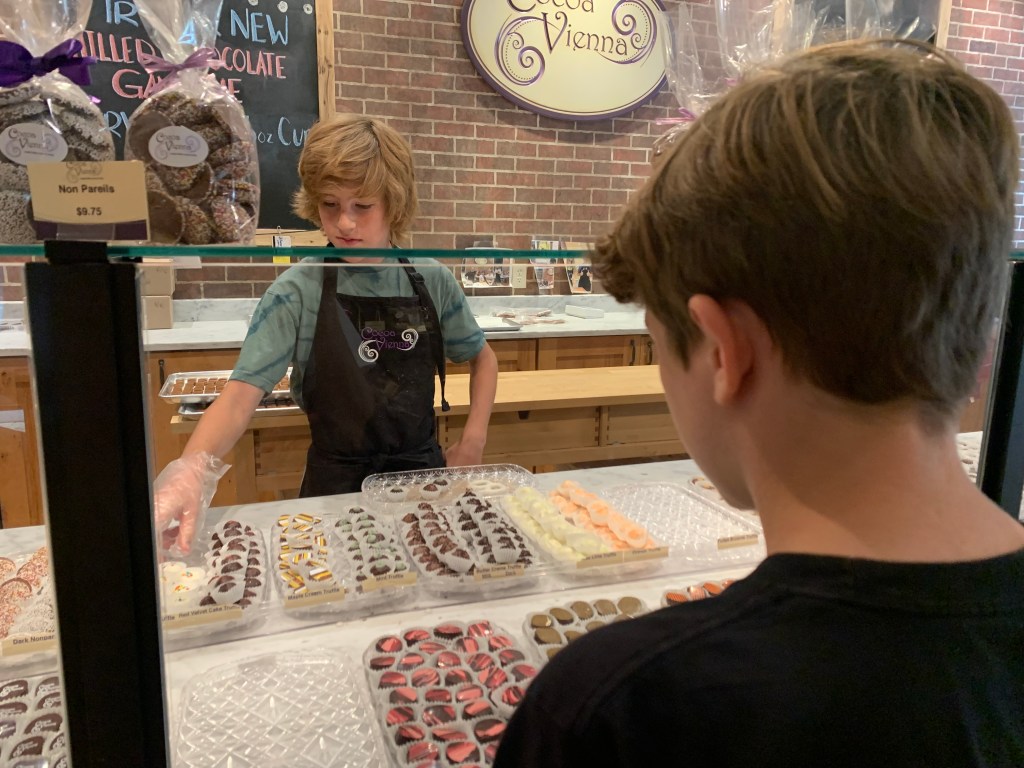
Over the past three years our middle schoolers have secured internships at the local farmers market, a costume design firm, a national accounting firm, a podcast recording company, the National Park Service, a local chocolatier, and the United States Senate. 

There are now dozens of brave adults who have welcomed TVS middle schoolers into their place of business – and it seems to us like it was a risk they are all glad they took. 

Below is the reflection of the CEO of a digital marketing firm who hosted a sixth grader for a 40 hour apprenticeship. We’re curious after reading their testimony about what you might say if a TVS learner reaches out to secure an apprenticeship with you…

We were excited at the prospect of hosting an apprentice from The Village School. While we weren’t sure exactly what to expect from such a young learner, we soon discovered that the apprentice we were working with was more mature than several college interns (and many adults) we’ve worked with in the past. We also found that it quickly became an overwhelmingly positive experience for our team. 

The apprentice brought a great level of maturity and enthusiasm, as well as a fresh perspective. Their being brand new to the industry was a great eye opener, and helped us check our assumptions about things we sometimes consider “common knowledge” in our industry. Throughout the process they helped shape and create valuable insights and ideas to improve our process, and share our knowledge to make the process more accessible to both clients and employees new to the industry. 

Supporting a young learner is not just an investment in their future – for us it was both an investment in our community, as well as a way for us each to pay forward the various training, education, and life lessons that had been shared with us when we were a similar age. I was also surprised to see what a positive impact the apprenticeship had, especially on the parents, aunts, and uncles in the team, who were thrilled to invite a learner and show them the ropes with the same intention, respect, and excitement as they would their own children, nieces, and nephews.

I highly recommend participating in The Village School’s apprenticeship program. It’s an incredibly rewarding program that benefits everyone involved – your business, your team members, your customers, the learner, The Village School, and society at large. And if that doesn’t sell you on it, consider the karma. Maybe participating in the apprenticeship program today gives lady luck the push she needs for a new customer or client to give your company a shot tomorrow.

Session 5 Sneak Peek

Spark Studio

Spark learners will explore animals in Session 5. Learners will begin the session by discussing how they can use their voices to benefit animals in their community.  Learners will dive into books, discussions, and experiments to explore the impact of speaking up for what is right for animals. Learners will also look closely at animals in North America and see how their habitat and diet help them thrive.

Learners will also adopt Minnie, a visiting rabbit as their class pet for six weeks. Learners will brainstorm as a community how to care for, feed, and take ownership of her. Spark learners will have the opportunity to hear from Discovery learners, who will share their research on rabbits and model how a presentation may look in a variety of ways. Learners will research, create, and unveil their rabbit presentations at exhibition. 

Learners will also build upon their artistic skills this session as they design a miniature zoo with loose parts, clay animals, a large-scale tree, and more. Spark learners will conclude the session with a field trip to Long Branch Nature Center and an optional family field trip to the Smithsonian National Zoo. 

Photo by Pixabay on Pexels.com

Discovery Studio

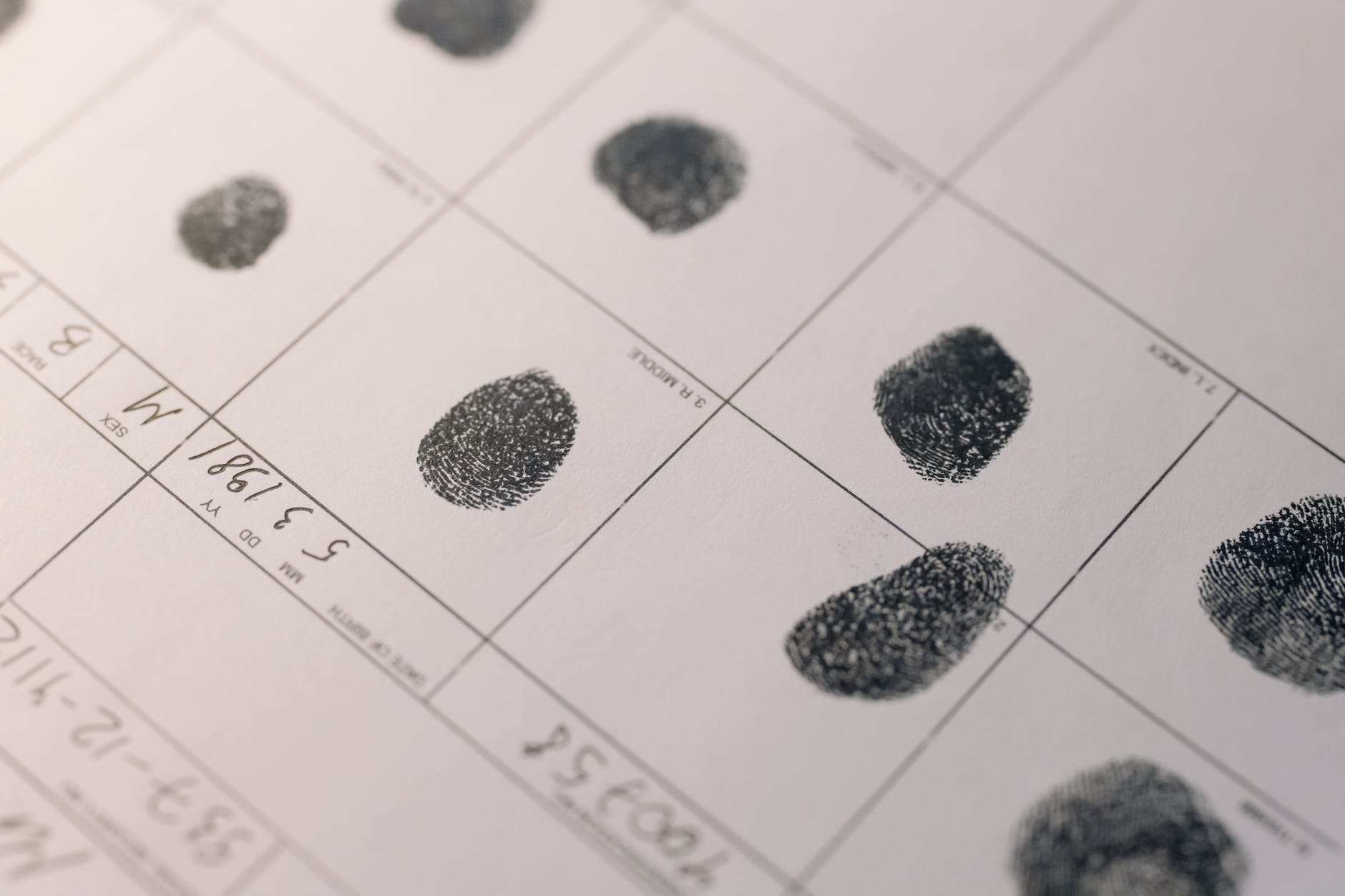
Get ready for an adventure like no other as we dive into the captivating realms of forensic science and mystery writing in our upcoming project!

Join us as detectives-in-training, where Discovery learners will team up to tackle hands-on challenges and thrilling crime simulations. Using the principles of forensics and biology, participants will unravel mysteries, apply scientific thinking, and test hypotheses to crack the case wide open. From basic biology to genetics, every clue and deduction will lead us closer to the truth.

But wait, there’s more! In our Writer’s Workshop, learners will transition into master sleuths, crafting their own gripping mystery stories. Through collaborative book groups, learners will dissect mystery tales, uncovering the secrets behind captivating narratives.

Then, fueled by newfound insights, learners will unleash their creativity to construct their very own mysteries. From developing theories to testing hypotheses, every step will lead learners closer to crafting a tale that will leave audiences spellbound.

Learners, prepare to immerse yourselves in the art of intrigue and unlock the secrets of storytelling like never before. Get ready to become a true detective of both science and fiction in our thrilling journey ahead.

Photo by cottonbro studio on Pexels.com

Adventure Studio

Get ready to embark on an exciting and enriching journey as we dive into the fascinating realms of communication and rocket science in our upcoming projects!

In our communications this session, we’ll dive deep into the art of effective public speaking and persuasive rhetoric. Through writing our own speeches, engaging in writers workshops and welcoming guest speakers, you’ll learn how to craft speeches that will inform, inspire, and persuade your audience. From structuring your arguments to mastering the use of persuasive language and delivery techniques, you’ll develop the skills necessary to become confident and compelling speakers.

But that’s just the beginning! For project this session, we’ll be diving into the exhilarating world of rocket science. In our rocketry project, you’ll have the opportunity to explore the principles of chemistry as we design, build, and launch our very own rockets. From experimenting with different fuel mixtures to understanding the dynamics of thrust and propulsion, you’ll gain hands-on experience in applying scientific concepts to real-world challenges.

Prepare to unleash your imagination and hone in your communication skills!

Health & Wellness

“Courage emerges when we are vulnerable to be and be seen for who we are.” 

Aran Levasseur

In Session 5, the learners will be exploring what it means to be courageous. Courage comes in different forms and can be shown in different ways. We will explore different types of courage and what character traits support courageous acts. The learners will reflect on times when they have to be brave and what it felt like to take a risk. We will plan for how to be more courageous, how to stand up for ourselves and others, learn ways to cope with fear, and discuss how courage can build our confidence. 

Photo by u0410u043du043du0430 u0420u044bu0436u043au043eu0432u0430 on Pexels.com