Lessons from a Cartwheel

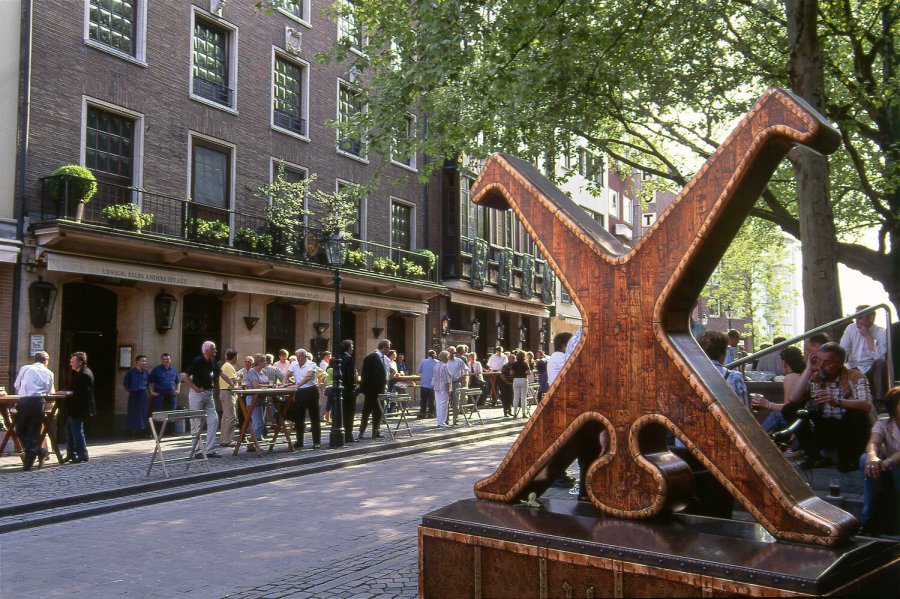
There is a town in Germany that is the home of over 100 art installations of cartwheeling children. There are statues of cartwheelers in parks, in fountains, hidden in the architecture of buildings, and imprinted in the sidewalks. The cartwheel has become such a prolific symbol of the city, there are tours you can take to see all 100 representations. If you’re up for it, you can also join the over 700 children that participate in the town’s annual cartwheeling championship where young people compete based on speed and skill as they cartwheel along the banks of the Rhine. 

The Dusseldorf Fountain

Although I’ve never been to the town of Düsseldorf, Germany, I feel an affinity to their celebration of the cartwheel. Lately, I feel like my daily life is a different type of cartwheel competition. My 8 and 10 year-olds cartwheel whenever they can and wherever they can: on the way down the hall in our house, over the 80 year old original hardwood floors, from the front door to the car, across the kitchen to retrieve a carton of milk from the fridge or just one more handful of pretzels that they promise won’t spoil their dinner, down the sidewalk on our way to piano lessons…you get the idea. The cartwheel is their preferred mode of transportation. 

My thoughts swing on the pendulum of extreme annoyance to overwhelming gratitude. Dear God what I would give for a quiet house and OMG please make the pounding stop, to in just a few years the house will be silent and I know I will long for the sound of cartwheels and laughter. My cartwheeling competition sounds a lot like the mom please watch this again and just one more and how many do you think I can do in a row and mom pleeeeease watch this. In just a few short years, stillness will swallow our house, and I know I’ll be the one who wants to create a monument to cartwheels in an effort to savor every second of their childhood and my motherhood. 

Just as elusive as childhood is the origin of the Düsseldorf cartwheeler. No one is quite sure exactly what caused it to be the town’s symbol, however all can agree that its meaning is all about communicating optimism and joy. 

Mastering the cartwheel is a childhood rite of passage that I never experienced. I have memories of watching all of the neighborhood kids gleefully throw their bodies around; a summersault was as much as I could contribute. Up until a few months ago, I thought my oldest daughter and I would have this cartwheel deficiency in common. She turned ten this summer, and despite the gymnastics classes and the perfectly executed cartwheels of her younger sister, she had yet to figure it out. Her cartwheels were clumsy, full of bent legs, and had no resemblance to the Düsseldorfers. Watching her imperfect movement was endearing to me; in fact, I admired her willingness to continue trying, patience with herself, and belief that one day she’d get it. Or, if I’m being honest I felt comfort that she was like me: incapable of a perfect cartwheel. When was the last time I attempted something and continued to fail for years at a time without losing hope, confidence, or self-respect? I’m not sure it’s ever happened. 

Entry to the cartwheel contest in our house has been a long time coming. It all began four summers ago when we took a different kind of leap and joined The Village School. Part of the Discovery Studio onboarding process was a series of challenges, including the challenge to choose something new to learn. My then six-year-old daughter chose to learn how to cartwheel. She documented her progress for a few days. After about a week of trying a few times each day she got discouraged. We called a friend whose daughter was a few years older and a talented gymnast, met them at the neighborhood park and she gave us some pointers. A few days later there was still not much progress. We watched at least twenty youtube videos titled “cartwheels for beginners” “cartwheels made easy” “cartwheeling 101” – nothing really helped transform the jumbled rotating motion into a crisp, clean, cartwheel. 

She decided to give up and choose a different goal in order to complete the challenge for school, but she never gave up on the goal of mastering a cartwheel for herself

Four years later, her last year as a part of Discovery before joining the middle school studio, something magical happened: she mastered the cartwheel. There she was, swinging two strong straight legs across her body and across our backyard, down the sidewalk, the hallway, and once again anywhere she went. The pride was contagious – not only could she finally do something that had come so naturally to her little sister – but she accomplished the goal on her own – it was hers to celebrate.  

There is something we can all take away from her 4-year journey to master the cartwheel. Replace cartwheel with any goal a learner might set for themselves – she set her own goal and accomplished it on her own time. She trusted herself and had enough confidence to keep trying, regardless of how long it took. She spent over three years doing crooked cartwheels alongside her younger sister and friends who had mastered the skill without any shame or embarrassment. She owned where she was in the process. And even better, she owned her own joy when she finally found success. Mastering the cartwheel was a goal she was intrinsically motivated to reach. 

I’m in awe of her persistence and even though I’m still cartwheel deficient, I’ve taken something of value from her process. Her journey is evidence that she is capable of so much. As she dismounts from Discovery Studio and vaults into Adventure, I know for certain there will be challenges ahead that she will be less excited to attempt. When those inevitable moments arise, as her parent I can remind her of the cartwheel and all of those moves she made on her journey to mastery: commitment to sustained practice, willingness to fail, acceptance of her limitations, seeking out help from experts, more practice, patience with herself, and most important, trust in herself. She believed she could, and eventually she did! 

As parents these moments are gifts, in the sense that they provide such clear evidence that our children are so capable. And, like the residents of Düsseldorf, the cartwheel now has a whole new meaning to our family. More than its playful reminder of the fleeting optimism and joy of childhood, the cartwheel is a reminder of our children’s strength and our role in cheering them on as they go head over heels in learning and in life. 
Session 4 Sneak Peek

Spark Studio

Photo by Tim Mossholder on Pexels.com

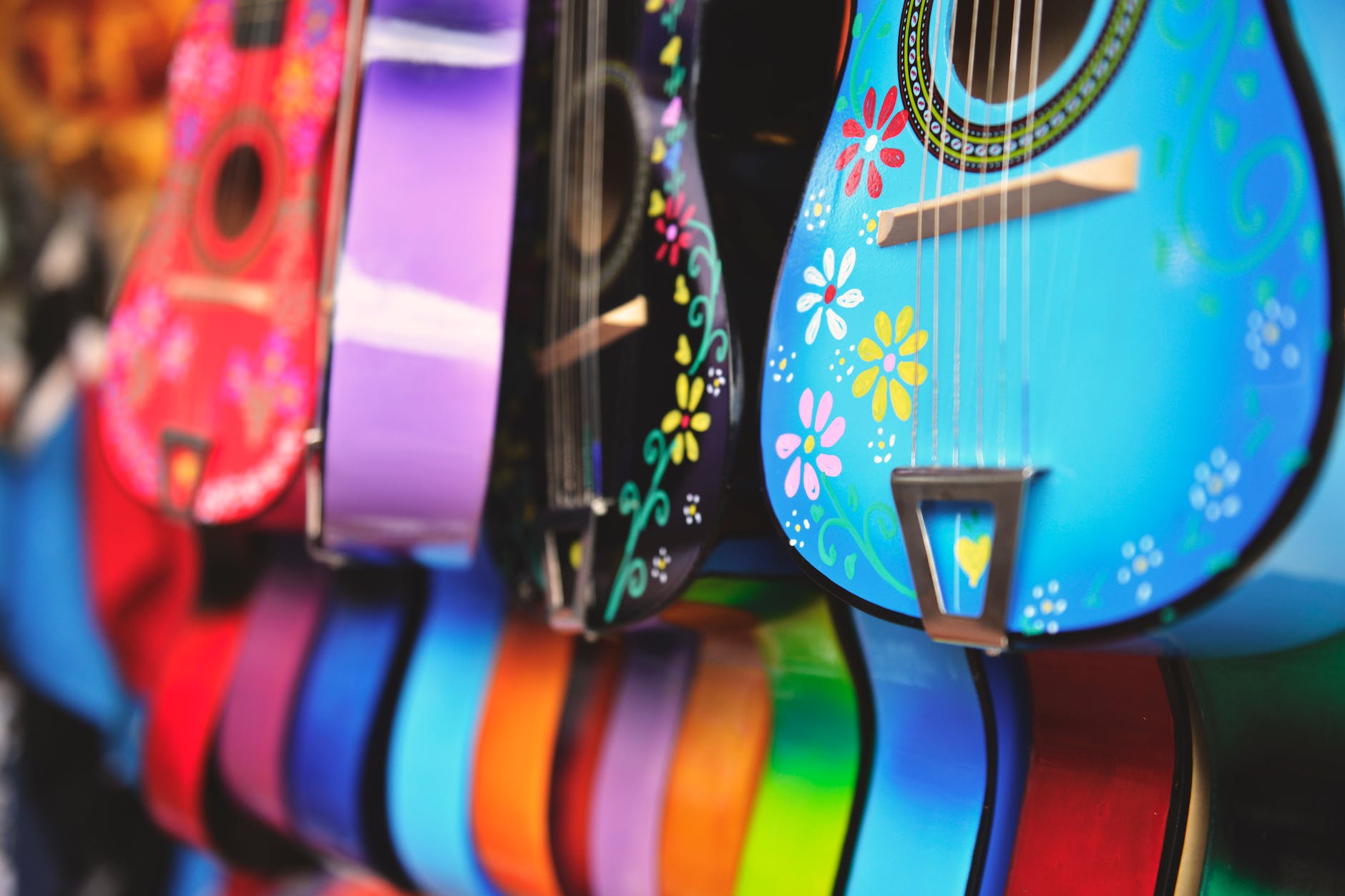
This session, Spark learners will explore music. Learners will begin the session asking the question: where does music come from? Learners will also look into the impact music has on our community.  Each week, learners will have the opportunity to listen to and discuss a different instrument, learn the history behind it, and watch how music has evolved over time. 

Learners will also incorporate music into circle, studio maintenance, and project time. They will design their own musical instruments, incorporate music into their art, and compose individual and group songs. Learners will end the session by sharing a timeline of their favorite music at our in-house exhibition. 

Discovery Studio

Photo by Pixabay on Pexels.com

This session Discovery learners will step into the shoes of an architect and embark on a journey of creativity and problem solving to design a tiny home for a real client – who also happens to be a local architect!  In design teams, learners will consult with their clients, learn about their needs, and consider all of the questions they might ask to build the perfect home. To accomplish this, learners will explore mathematical skills related to measurement, geometry, building, and construction. The session will end with an in-house gallery share of each group’s tiny home blueprints and models.  

Writer’s Workshop this session will offer learners an opportunity to step into the shoes of a poet, as learners consider the question: What is poetry and how can it be used as a tool to observe and gain deeper insights into the world around me? Learners will read and listen to different styles of poetry, engage in discussions about poems that they liked, disliked, or are curious about, and explore poetry as a way of expression and observation, a way of seeking new perspectives and practicing empathy, and as a tool for social justice. The session will end with each learner sharing a poem they have memorized at an in-house open-mic exhibition. 

Adventure Studio

Photo by Pixabay on Pexels.com

In session four, Adventure learners will explore the exciting realms of food science and restaurant critique. The focus shifts to the intersection of science and culinary arts, emphasizing hands-on experiences that delve into flavor dynamics, ingredient interactions, and the scientific principles behind cooking.

Chemistry takes the spotlight as learners apply precision to culinary arts, navigating precise measurements and geometric considerations in the kitchen. This application of food science will help the understanding of ratios and aesthetics, and will help to connect chemistry concepts to real-world culinary scenarios.

Venturing beyond the classroom, Adventure Studio transforms into a culinary critique hub. Students become discerning food critics through exploring local restaurants, evaluating diverse flavors, and honing their critical thinking skills. Learners will end this session by serving a three course meal to local food scientists.

Health & Wellness

“Don’t let the noise of others’ opinions drown out your inner voice.” – Steve Jobs

Photo by Markus Spiske on Pexels.com

Before winter break, the learners began to talk about what it means to practice self-care. They conducted self check-ins and decided on what area of self-care they needed to focus on. This session, the learners will decide how they want to improve their minds, bodies, or spirits, and set weekly goals. 

In Discovery and Adventure, we will practice different types of self-care each week. We will also explore the stories of other children and how they learned to take better care of themselves. Towards the end of the session, we will reflect on our values, the characteristics within ourselves that we hope to share with others. We will connect with ourselves and who we are, learning how to trust our inner voice

In Spark Studio, in addition to our Human Growth and Development lessons, the learners will continue to practice ways to be kind to themselves. We will practice positive affirmations, noticing our inner dialogue, caring for nature, and how to be confident. Building our Spark learners self-compassion skills will support boosting their self-esteem and build their resiliency for when they face difficulties later in life. 

Session 3 Sneak Peek

Spark Studio

In Session 3, learners will continue exploring all aspects of entrepreneurship. Spark will begin the session with a guest talk from an entrepreneur, Lisa Bourven of Toy Nest, who reimagines the way we buy and use toys. Each learner will then work with a small group to create their own business. They will have the opportunity to incorporate animals, sports, holiday related themes, and food and drink into their products as they solve a solution to a world problem. 

Wondering if math, reading or writing are important in designing and owning a business? Learners will work with hands-on materials in each area of the studio to see how these basic skills help them as they own and operate a business. They will conclude the session with a business fair to showcase and sell their products.

Discovery Studio

Photo by Alena Koval on Pexels.com

This session Discovery learners will lean into their Trailblazer identity and consider what it means to be a changemaker through graphic design. Learners will study the impact and effect of persuasive graphic design through research on three rhetorical appeals – logos, pathos, and ethos – and four graphic design principles – proximity, alignment, contrast, and repetition. They will hear Trailblazer talks from several local graphic designers and artists to inspire them in their own design creation. What will they persuade us to think and believe? We can’t wait to see their final products at the end of session exhibition. 

The Session 3 Writer’s Workshop will invite learners to explore the art and practice of journaling.  In this technology-free project, learners will write their own journal entries inspired by reflective journaling, creative journaling, travel journaling, and gratitude journaling. The project will kick-off with the “discovery” of a time capsule that holds journal entries written by famous historical figures. At the end of the session, learners will choose one journal entry to put in a time capsule that will be opened in four years, the next time this Writer’s Workshop is offered in Discovery Studio!  

Adventure Studio

Photo by Foodie Factor on Pexels.com

What do you get when you mix history, science experiments, and sugar? The Chemistry of Candy Project! This Session Adventure learners will explore the origins and history of one of the world’s sweetest discoveries, dive into the science of candy, and learn about the processes that go into mass production. Learner’s chemistry skills will be put to the test with the challenge of creating their very own brand of Edible Slime at our “Edible Slime Tasting Exhibition” at the end of the session. 

Adventure learners will also begin the process of securing an Apprenticeship this session. Learners will spend time considering their values, strengths, and skills in order to determine what apprenticeship might serve their dreams and passions best. They will make decisions about their dream apprenticeship opportunities and create a social capital map that will help them in realizing who they know and who might be able to support and guide them in their journey. 

Health & Wellness

“Lighten up on yourself. No one is perfect. Gently accept your humanness.”

–Deborah Day


Self-care is essential to our physical, emotional, and mental health. The holiday season can often be a time of joy, comfort, and fun. It can also be a time when we all feel busy and stressed. During the last session of 2023, health and wellness will be a time of introspection. The learners will be challenged to reflect on how they take care of their minds, bodies, and spirits. In the linked research article, the authors explain how students learned about how to take care of their minds through reducing stress, their bodies through healthy exercise and nutrition, and their spirits through finding connection with themselves and their purpose. Each learner will be given tools for reflecting on the self-care they engage in now and what they would like to focus on in the future.

Session 2 Sneak Peek

Spark Studio

Imagine our youngest learners designing their own individual products and pitching a slogan to sell their creations? Would their words intrigue you enough to buy their product? 

Spark learners will kick Session 2 off by learning about entrepreneurship. They will explore how they can start their own business, what they can use, and what counts as a business, how selling items with friends can have a positive or negative impact, if selling or renting has any advantages, and courage to continue when there is a setback in their business. Learners will seize their opportunity as entrepreneurs at the business fair held in Session 3 as they bring everything together and put their ideas into action. 

Discovery Studio

“The best way to predict the future is to create it” -Peter Ducker

If you had the tools to create a better future, how would you do it? If you had the power to shape products, services, and experiences that could change the world, what would you create? These are the questions Discovery learners will face as they embark on the journey of becoming an entrepreneur in Session 2. On this journey, learners will build their own business with fellow trailblazers using collaborative, creative, analytical, and critical thinking skills. Learners will conduct market research, learn about competition, and use mathematical skills to create a realistic financial plan. They will then create a prototype of their product and pitch their business to a panel of investors. By the end of this session, learners will have built a business that has the potential to change the world. 

Adventure Studio

“Entrepreneurship is about turning what excites you in life into capital so that you can do more of it and move forward with it.” – Richard Branson

In session two, our Adventure learners will embark on an exciting entrepreneurial journey, designed to enhance their skills and ignite their creativity. To kick-start this session, learners will dive deep into the fundamentals of what defines a business, exploring its significance in our lives, communities, and the sustainable landscape. 

Learners will be challenged to generate their own unique business plans, setting their ideas apart from the rest. They will uncover the complexities of launching a business, unraveling the mysteries of startup costs, profit generation, and the art of maintaining a consistent cash flow. Armed with their well-crafted business plan, learners will take their ideas to the next level, bringing them to life through the creation of prototypes. Lastly, Adventure studio will have the chance to showcase their innovation and hard work in a thrilling pitch to a panel of local investors in week five. 

Health & Wellness

“In order to have a friend, you have to be a friend.” – Maya Angelo

Building a peaceful community takes leadership, patience, gratitude, acceptance, kindness, and courage. Throughout session 1, the learners explored their emotions and how they affect their behavior and inner dialogue. This session, we will continue to work on building our peaceful community by reflecting on our relationships. The learners will explore what it means to be kind, take part in acts of kindness, and role play what to do when a friendship feels uncomfortable.

Starting the School Year in the Sandbox – Come Play with Us! 

Last spring the middle schoolers were late coming inside from their typical 45 minute afternoon free play. One or two learners straggling in after the majority of the group was not rare, but on this afternoon the entire group was late. It was one of those early spring days where the sky was extra blue and the sun was warm enough to remind you that summer was just around the corner. I figured it was the too-good-to-be-true weather that was to blame, so it wasn’t until the following day when we all headed outside to lunch that I realized what had stolen their attention: the sandbox. 

The middle schoolers had created an intricate world of sand tunnels in the 10 x 10 sandbox on the playground. Instead of eating lunch first and then playing, which was our normal routine, lunch boxes were flung to the fence, and everyone picked up right where they left off, playing in the sand.

I stood there for a moment taking in the sight of these middle schoolers kneeling, laying, and sitting on the edge of the sandbox engrossed in imaginative play. I found one of the abandoned Adirondack chairs, usually never found empty, sat down, ate my lunch, and took in the scene. For over an hour I listened to the sixth, seventh, and eighth graders use their imaginations, work together, laugh, and reach a state of flow that caused them to find joy and forget time. I also chose to forget time – the freedom to follow the child is exactly what being a Guide at The Village School is all about. I found joy in the (rare compared to their peers) opportunity that these young people had to play in a literal sandbox, and felt gratitude that this type of experience is not a rare at our school. 

Over the next several weeks the sandbox play continued. Each day the learners would return to their previous day’s creation and start anew. The younger learners would admire their work from a distance, somehow realizing the special synergy that was happening between the older learners and not wanting to disrupt it, they actually went out of their way to protect their creations. Another guide started recording other learner’s reactions to the new situation in the sandbox each day. 

Beautiful!”

“Awesome!”

“This is so cool!”

“What will they do next?”

“Ants, the ants could live in it!”

“No, don’t step on it, you’re breaking it!”

“I wonder how they made this!”

“Wow!”

I couldn’t help but think of how different this experience might have played out (pun intended) at a more conventional school. Elementary school learners in most Virginia schools are allowed 30 minutes of recess, many times split into two fifteen minute sessions, and the fifteen-minute middle school break that was recently reinstated doesn’t include a playground or a sandbox. I acknowledge that play can and should transcend the literal playground – but the typical experience reflects how and when we value play.. 

At TVS, playful learning is a goal of ours each day, not just for our youngest learners, but for all of us – including our guides. As a guide team we spent the summer studying the research-based pedagogical approach, playful learning. Harvard researchers write extensively about the importance of taking a playful stance – suggesting that playful learning happens anytime a learner is 

  • Leading their own learning
  • Exploring the unknown, and
  • Finding joy 

The researchers go on to claim that “playful learning in school occurs when students want to be doing the same as what their teachers want them to be doing” which can happen beyond the playground, and the sandbox. 

Last spring, around the same time that our middle schoolers immersed themselves in the literal sandbox, our guide team hosted a professional learning event at our school. Participants from a diverse range of schools and contexts showed up to network, tour our space, and consider our learning design. To close out the event, we asked the attendees to gather in a circle and share their takeaways from their time learning about our school. As a team, we were interested to see what stood out about our space. One participant shared something that has stuck with me ever since: 

“I’m inspired by the room for ambivalence in every space. It feels like a wonderful invitation to not have someone tell you who or how you should show up each day.” 

I’m curious if this comment was inspired by the sustainability park models that were mid-creation in several studios. There were uncapped glue sticks, markers, tangled yarn, torn construction paper scraps, cardboard box fragments, and random pieces of recycled materials strewn around the room. Little did she know that her comment captured the heart of a pedagogy of play and our school’s mission.

The middle schoolers sandbox story serves as a powerful reminder of our mission here at TVS. In The Design of Childhood, Alexandra Yang writes, “Sand is a material that lends itself to sharing, making, and remaking…..the player has to create her own intrinsic fun.” This is our mission each day and each year at TVS. We set out this year and every year, to create a space where young people have agency over their own learning and the freedom to create their own experience, remaking it as many times as they want. 

Yang also wonders, “Maybe sandbox games are the playground adults don’t realize they still need.” This year we invite you to join us in the sandbox – come share, make, remake, forget time, and find joy with us!  

Session 1 Sneak Peek

Spark Studio

Welcome to Spark Studio! Spark learners will dive into the first session individually and as a community as they learn to live together in their new environment. They will focus on building their independence and collaborative relationships through grace and courtesy lessons. Each week, learners will gain an awareness of how their personal actions affect the studio and learn how to make respectful and kind choices that they outline in our studio contract. They will model and practice routines in the studio, as well as explore materials in the practical life, math, sensorial, cultural, writing, and reading areas. Through hands-on learning activities in their new project space (formerly the movement room), they will further explore what it means to be a community. They’ll work with a wide variety of materials to create self-portraits and harness their collective creativity to build a large-scale model of The Village School! 

Discovery Studio

For our first session of the year, Discovery learners will be entirely focused on building our studio community. To do this learners will be immersed in activities and tasks aimed at developing an understanding of their space, others, and themselves. To get to know their space, learners will first be responsible for establishing common expectations by collaborating on a studio contract, maintenance procedure, and general routines. While learners will have many opportunities to build relationships with every member of the Discovery Studio, they will become an expert on one fellow trailblazer by designing a “Portrait” of that learner. Our learners will also engage in a descriptive writing memoir project to reflect on their own strengths and recognize themselves as trailblazers as well. 

Adventure Studio

Welcome to the Adventure Studio! This session is all about building studio community and culture. For the Build the Team Project, learners will explore and identify the unique gifts they bring to their community and dive deep into what it means to be part of a team. Learners will have the opportunity to stretch their individual abilities and collaboration skills as they focus on a different Build the Team challenge each week. These challenges will include establishing a studio contract, constructing a badge plan, creating a music video, planning a field trip, and building a symbol that represents their character growth throughout session one. Each challenge will encourage learners to consider what makes a trailblazer and a community of trailblazers.

For Communications, learners will examine their own values, beliefs, and passions. What is important to me? What life lessons have I learned, and what have they taught me? Learners will work through each step of the writing process, practice giving and receiving feedback, and share recordings of their essays during Exhibition. Reflecting on their beliefs and values will aid learners in identifying the characteristics of the team they want to build, and ultimately, the kind of world they want to live in.

Health & Wellness

“By acknowledging our children’s emotions, we are helping them learn skills for soothing themselves, skills that will serve them well for a lifetime.” – John Gottman, PhD. 

Emotions and feelings… What are they? How do they feel? And how do we handle them? These are some of the questions we will be exploring together during session 1 of Health and Wellness. We will explore the emotions of others, what they look like, and how we know how someone else feels. We will also explore how these emotions feel for us. How do we know we feel angry, sad, happy, joyful, lonely, or surprised? What signals are our bodies sending us? Once we recognize the different emotions we feel, we will better be able to understand how to cope with uncomfortable emotions. The learners will be introduced to mindfulness practices and tools for how to identify emotions. We will also play fun team building games at the park and work towards building a peaceful community together!

Be Bored & Play More This Summer 

Photo by Karolina Grabowska on Pexels.com

I’ve definitely romanticized those long boring summer months of my childhood: lazy mornings spent on the back porch, living in my pajamas well after lunch, hours spent at the neighborhood pool, and captured fireflies staring back at me through glass mason jars as I slept. Now that I think about it, maybe I’m not romanticizing at all; it does sound pretty magical. I grew up in the 80s, and my mom was a teacher who had the summers off – and she took those summers seriously. They were full of art classes for her and museum trips to Washington, D.C. for us, and a few camps here or there, but she was thoughtful to keep just the right amount of time for us to get lost in our own boredom. I remember those long days of “boredom” vividly. Once a few neighborhood kids and I built a huge fort out of the ridiculously large cardboard boxes that we collected from a recently purchased Nordictrack. The fort took us days to create, and we played in it for at least a week. We painted it, ate lunch in it, hid snacks in it, and created a whole new cardboard universe. There is only one explanation for how we crossed over the threshold into that cardboard world: we were bored.

Who knew how intuitive my mom was, ensuring boredom and play were a part of our summer experience. She knew if she ignored our “I’m booooarrrrds” enough, something inside us would unlock and over that threshold we would go. (In college I wrote an essay titled, My Mom Was Right – so I should have known.) Regardless of her educator instincts, neuroscientists confirm her narrative; research continues to emerge claiming the important role boredom plays in maintaining our mental health – a topic we are all concerned about these days.

We take that magical kind of free, unstructured play seriously here at TVS, too. Playful learning is a signature part of our learning design. Learners from ages 4-14 have an average of 2 hours of unstructured free play every day of the week, a stark contrast to the typical recess allotment. This summer our Guide Team is reading Project Zero’s latest research on the subject in a book called, Pedagogy of Play, which will inspire and equip us to infuse even more of a playful approach across studios. 

At the risk of sounding trite (and old), I’m not sure kids these days experience the same type of “boring” summers. In the culture of overscheduling, overcommitting, and overextending, do kids even have the chance to feel bored and lean into that boredom and play? Acknowledging that a summer full of pricey camps is a privilege and not an option for many families, finding playful moments is still very much a possibility. Researchers who have spent their life’s work studying this topic remind us that playful moments can happen anywhere, anytime

As the parent of an 8 and 10 year old, I have to remind myself of the benefits of playtime, especially when my email inbox explodes with summer camp registrations in January each year. (Those emails usually haunt me until Spring Break.) Dare I say it, boredom and free play is actually my number one summer priority for my kids. 

Owen, a middle school learner, spent six weeks researching the role of play and writing a speech advocating for just this kind of experience for all kids. His speech is titled: Play is not a Privilege, It’s a Right, and we wholeheartedly agree. Read an excerpt of Owen’s speech and see if you aren’t inspired to allow yourself a little bit more time to get bored and play. 

Play is not a Privilege, It’s a Right.

by Owen Quinn

As a kid do you remember getting home from school, throwing your bag on the ground, and then running down the street to play with your friends? You then quickly ran back because you forgot to do your chores. You finish up and bolt down the road. Your other friends are already there and maybe they’re doing something inside, or you played tag on the lawn. This is called free play, and it is very important. 

And the truth is, most kids these days, in places like Northern Virginia, won’t experience a lot of free play. Kids are overscheduled, with sports, tutoring, and so on. And beyond that, these extracurricular activities are very intense to the point that for many kids, the spirit of the game is lost. Coaches and parents trade fun for winning. 

I’ll tell you why this topic matters to me. I love free play. I always have, though there have been times in my life when I didn’t have time to free play. Here is the story. Two years ago I wanted to try lacrosse because I thought it would be fun, and it was! But coaches kept telling me I was behind, all because I started late, as a 10-year-old! I apparently had to have been playing since I was 3. 

Almost all of the kids on my team were on a travel team as well, and I thought this was the answer. So I signed up for travel lacrosse. And I’ll admit, I got better, but the tournaments were so intense, they weren’t fun. And this was when I realized, I didn’t have to play travel. If my heart isn’t in it, what am I doing here?

I do not play travel lacrosse anymore, but I still love to play recreational lacrosse. I don’t have anything against travel sports, I just know that it wasn’t for me, and I believe there are other kids like me, who feel pressured. 

I have more time now for things like going to the woods to build forts, skateboarding, and doing projects such as building a business. I love all of these things because I feel I have a lot of freedom within them, and it feels a little like free play. Don’t get me wrong, I think it is very important to play at least one team sport, but something that is even more important, and is lacking in kids’ lives, is free play.

Schools also need more free time so kids can play. The average school recess time in America is 25 minutes per day. Studies show that kids should have longer free time, the average being 1 hour a day. Kids that have short recess do not have enough time to get all their energy out and they come inside still in hyper mode. So some schools never even let the kids outside in the first place. This still doesn’t work. Exercising is part of not only your physical health but also your mental health. 

I know that kids like me need to move their bodies a lot. I don’t know about other kids, but I require exercise to feel happy. After moving my body I feel reset, and I feel much happier. Kids that have at least an hour of recess are proven to perform better in school. People might believe that as you get older, you need less time to run and jump around, but that’s not true. All kids deserve the chance to move their bodies.

All kids also need to take risks. Risks are very important, especially for the adolescent mind. Risks help kids create a sense of independence as they become young adults, they allow kids to see what they can do and see what their limits are. And good risk-taking in adolescents is proven to make kids happier. And now you may ask, what is the difference between good risk-taking and bad risking taking? Research shows that kids that do not have a good outlet for risk-taking may take risks in unsafe ways, such as drugs, fighting, self-harm, or breaking the law, all of which are proven to give kids anxiety and depression later in life. 

A good risk gives you a healthy dopamine rush. Some examples of good risks are rock climbing, mountain biking, martial arts, skateboarding, and parkour. Or if you’re not into athletics, you can take risks by joining some kind of social club, or within academics, entering a spelling bee is a risk. 

Not all of these are factors of free play, but a lot of games or activities in free play will allow the healthy risk of these kinds. Free play allows kids to take risks without breaking someone’s trust.

Free play also builds social skills. My generation is full of kids that lack social skills, but why? I believe this has to do with a lack of free play. Free play without any structure, will lead to small arguments and conflicts between children, which is completely natural, and good for children. They may argue about what game to play, where to play, over the rules, or just conflicts about completely silly and random things. Kids usually end up with reasonable solutions. If kids never learn how to resolve these conflicts on their own, when they go into the real world, how will they know what to do?

Lenore Skenazy, author of the book Free-Range Kids says, “We want our children to have a childhood that’s magical and enriched, but I’ll bet that your best childhood memories involve something you were thrilled to do by yourself. These are childhood’s magic words: ‘I did it myself!’”. 

So, now you know. You know that schools need more free play in their schedule, kids need free play to take risks, and kids need free play to build social skills. Kids need to play. Play brings out who you are. Growing brains are meant to play, and they are meant to play a lot. 

Play is not a privilege, it’s a right. 

“Tree-VS”: Adventure Studio’s Mural

Guest Contributors: Hazel Hales & Charlotte Myers, Adventure Studio Learners

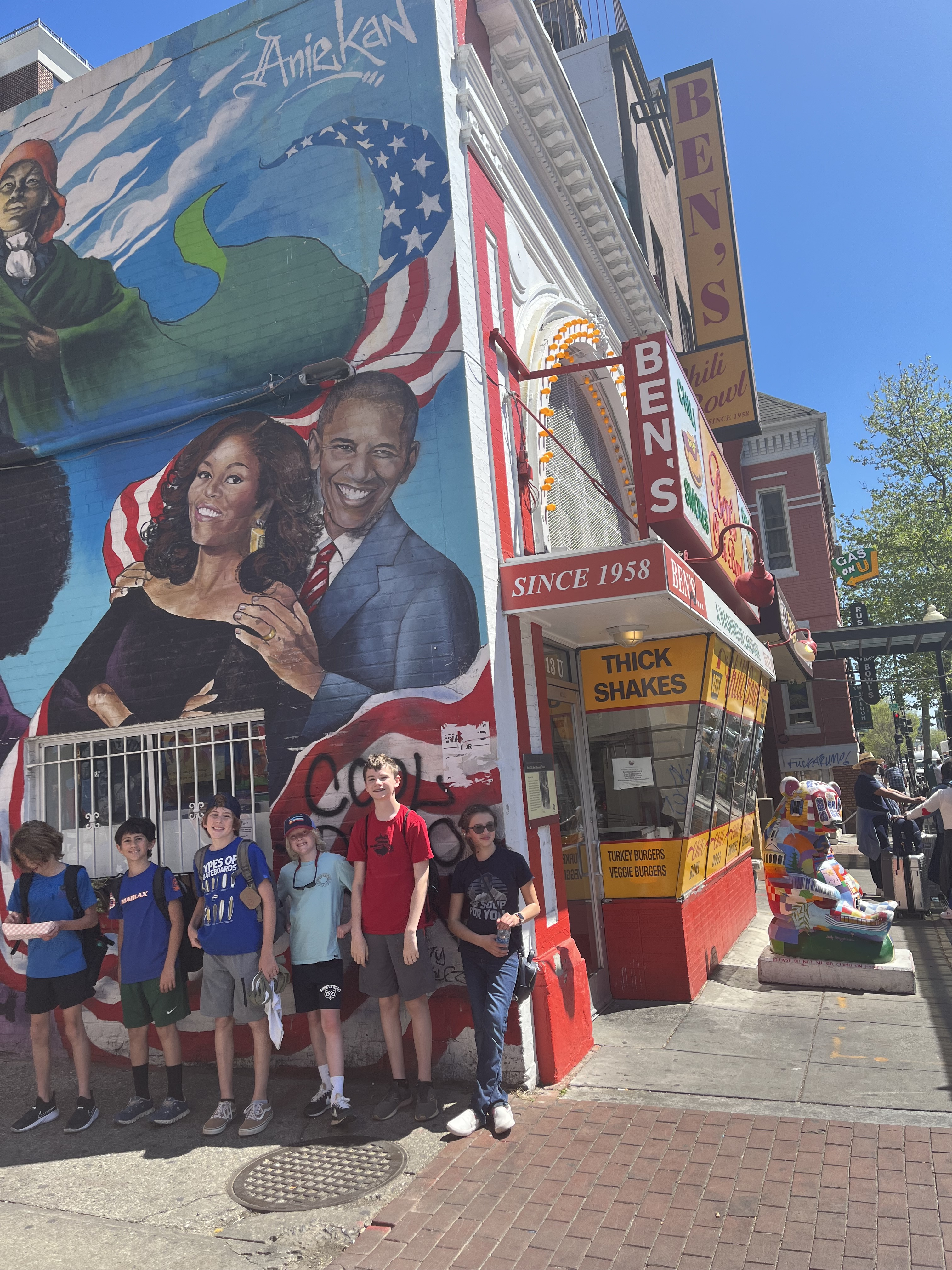
Adventure Studio was challenged to design and create a mural for the Session 6 Quest, based on the murals in Washington, DC. Although we faced challenges and obstacles, our mural exceeded expectations and we are proud to share it with the TVS community!

To start the Mural process, we took a field trip to DC, where we went on a Mural Tour. Studying these murals inspired a list of things that every mural has 

  • vibrant colors
  • relatable to the location of the mural neighborhood/community
  • really big
  • represents something beyond – symbolic 

We used this rubric, as well as input from the community, to create our designs. We split into three groups, each coming up with an individual design, and then combined them into the final design. 

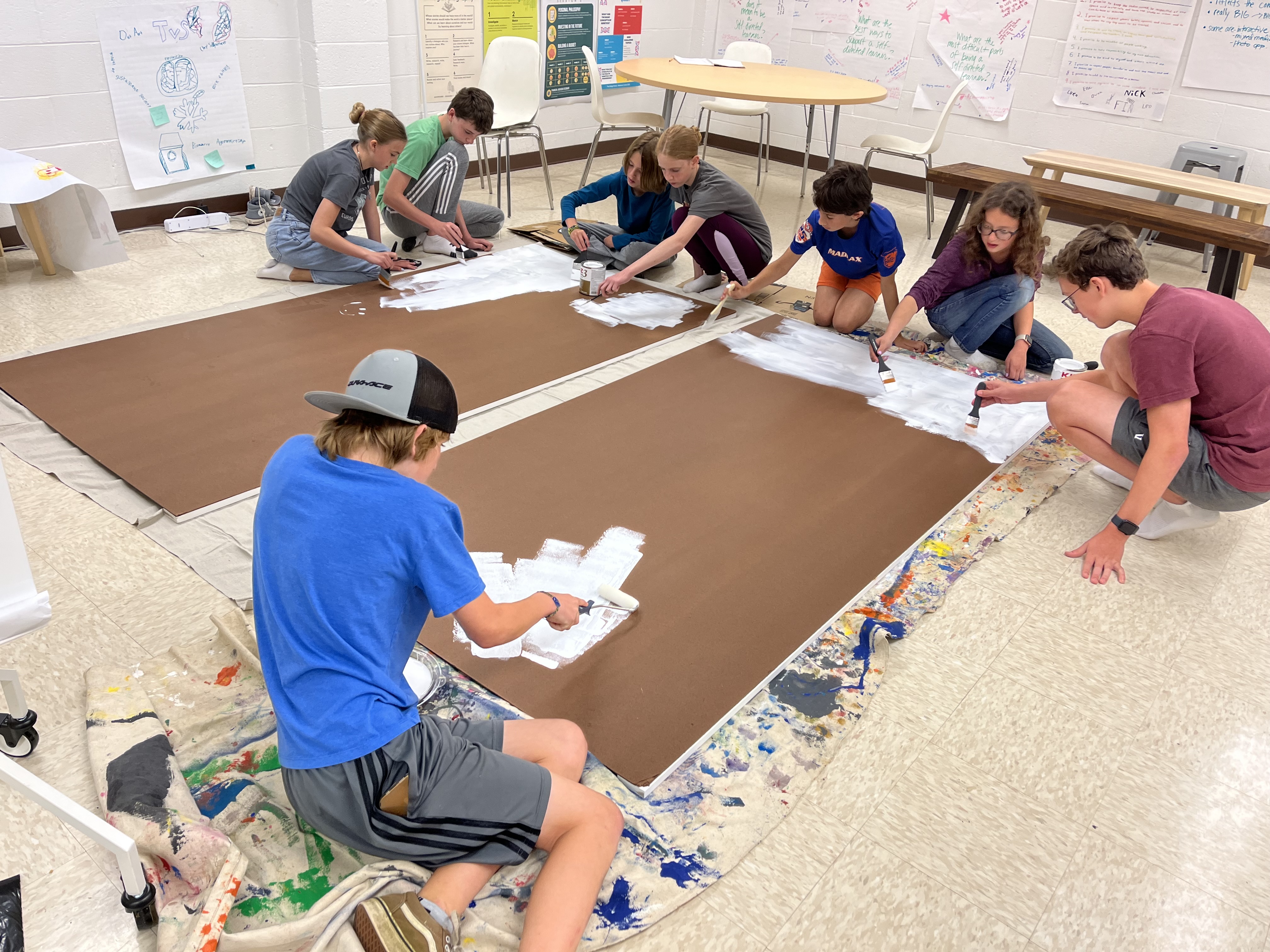
To start the painting process, we primed our masonite boards with two coats of primer (hoping to not get it on our clothes!), making it weather proof . And after two days of priming, we were ready to sketch!

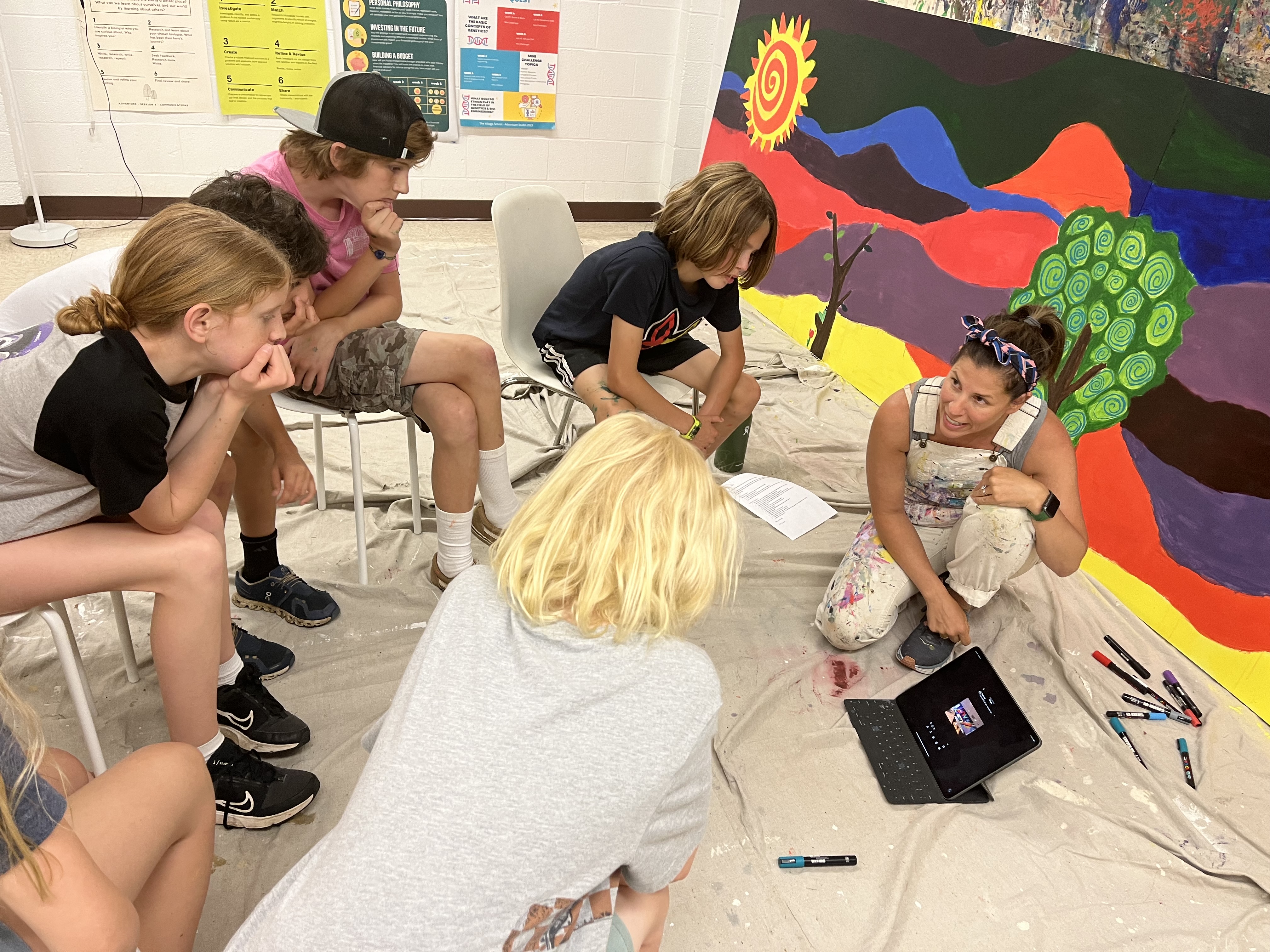
Although mumbles of, “I have no artistic ability ” kept flying around, we were thankfully able to use a projector, projecting the image onto the boards and then trace the lines. This gave us a template to sketch it on the boards and would keep it proportionate. After finishing, we painted the entire thing with the first coat, and kept it up with the second and third coats, until week seven, when we finished and signed it. 

This mural represents the journey of the learners and trailblazers, when they come to the Village School. There are many symbolic representations in our mural, and each message applies to our school. 

The trees represent the growth of the learners as they move through the different studios, from Spark to Adventure. The caterpillar on the spark tree eventually turning into a butterfly on the Adventure tree serves the same purpose, representing growth. Next to the trees, there are symbols, a rose next to the spark tree represents a new beginning, the start of the hero’s journey. The apple represents discovery, since the apple that fell on Newton’s head led him to discovering gravity. The compass represents adventure, because of it being a necessary traveling tool, leading adventurers to their final goal, and destination. And the spirals on the sun and trees represent the journey, a cycle of accepting a call, embracing challenge, and learning important lessons.

Ms. Carrie, our Artist in Residence, was an essential part of this project. She provided us with materials and gave us guidance as we chose colors, size, placements, and how to fix mistakes, so shout out to her! 

Before this Quest, a lot of us thought that we couldn’t draw very well, and that we were bad at painting. But, we’ve all grown in our understanding of art, artistic abilities, and ability to work together, and we made something that we’re all proud of.

This video shows our process start to finish!

Measuring what Matters 

This week marks the one week each school year that our elementary and middle school learners spend time with a standardized test. They show up to school, sit in front of their computers and try to determine the best answer: A, B, C, or D. For these few hours our studios full of learners look a lot like classrooms full of students. 

Before we begin the testing experience, we spend time considering the purpose of the test and what it does and doesn’t measure. Like so many other mornings, we begin with a story and some questions: 

You are about to go on a solo trip on a sailboat around the world. It will take you 3-4 years to circle the globe. You will be alone on the sailboat with all your provisions. And because vast portions of the ocean are so remote, much of the time you will only have your wits to rely on.

Question 1: How will you prepare yourself for this epic journey?

  • Study and take a test
  • Go out and sail every day in vastly different conditions, taking longer and longer trips until you feel prepared

Question 2: Imagine this… You have a dream to become the CEO of a multi-billion dollar company. You have an amazing idea but little business experience. What do you do?

  • Study and take a test
  • Talk to other CEOs and experiment your idea by starting very small and growing

Question 3: Imagine this… You want to write and produce your own Broadway play- it’s going to be the next Hamilton! You know how to write and understand music but you have never written a play before. What should you do next?

  • Study and take a test
  • Write a play, get feedback, and try again

In most of these scenarios of epic adventures, our learners identified that the best way to prepare for the journey is to practice and develop their skills, not take a test. Life is an epic adventure and often, the real test is the journey each of us go on. And yet, in most schools, a standardized test is the only way that learning is measured and success is defined. 

The last question we pose to our learners is the most important and resulted in the most profound responses.

Question 4: And really importantly, what does this test not measure that will help you on your life adventure as you blaze your own trail?

Our learners’ responses included…

“It won’t measure how good of a friend I am.”

“Collaboration and how well I work with others and even how well I work with myself.”

“Basically every character trait that we think is important – like curiosity and compassion.”

“Respect.” 

“How funny I am.”

“How I’ve grown in public speaking.”

“All of the things we talk about in Health & Wellness.”

We closed our conversation confirming our learner’s ideas – that each of them are so much more than a score on a standardized test, and we reminded ourselves of some of our TVS core beliefs. 

We believe who you are is more important than what you know. We believe that a learner should only ever compare themselves to who they were yesterday – not to the person next to them or to some arbitrary standard. We believe that all young people have a calling that has the power to change the world. We believe that what really matters can’t possibly be measured on a test.

Apprenticeship Season: Adventure Awaits! 

This session middle schoolers are hard at work trying to secure an apprenticeship for the final session of the school year. This real-world experience, typically reserved for juniors in college, is something we are proud to offer learners as young as 11 here at TVS. The apprenticeship, like much of our learning design, is intentionally named. The term apprentice is from the old French word, “apprentiz” meaning “someone learning” typically from a mentor in a specific field of interest. The word apprentice also relies heavily on a relationship between a mentor and a mentee. Growing our learners’ “village” is a large part of the apprenticeship experience goal. 

The apprenticeship experience is a cornerstone of our school, as it draws on all three pillars of our learning design and puts into action our vision of empowering young people to discover their passions and share them with the world. 

Learner-centered 

We believe young people are capable of so much more than the world typically gives them credit for. Over a seven-week session learners will identify, research, and secure a meaningful apprenticeship working in a position where they can use and hone their greatest gifts, and explore an industry, company, and assignment that will advance them towards their calling in the world. Learners take personality quizzes that provide potential career fields to consider, determine what jobs they would never enjoy, as well as jobs they might consider the perfect match for their passions and skills. Learners are entirely responsible for this process, acting as the leaders in this work, while their parents and guides cheer them on as they go.

Experience-based

We believe that experience is the best teacher. Each step of the TVS apprenticeship is an experience that teaches learners about themselves and the world around them. The “process” here is just as important as the “product” (actually securing an apprenticeship). We consider it essential for learners to go through the process of reaching out to professionals, deal with getting “no’s” or no responses from potential apprenticeships, and to persevere and move forward. We know that our learners’ memories of time spent with a mentor in a field of their interest will last a lifetime. 

Character-driven 

We believe that who you are is much more important than what you know. The experience of learning from a mentor beyond our school walls is a chance for learners to further develop the TVS character traits they work towards and reflect upon all year including: leadership, responsibility, gratitude, accountability, compassion, and trust. We also believe in what we call real-world feedback: feedback from the real world, rather than feedback from our own community. This kind of exchange is character building and important in terms of character development and growth. 

Our commitment to middle school apprenticeships is also an act of trust. We trust young people and we believe they can do and will do so much more than is generally expected of them. What will they learn from spending time with a professional podcaster, a Montessori educator, a costume designer, an entrepreneur, a chocolatier, a CFO, or a small business owner…. We can’t wait to see what each of them do and learn as they blaze their own trails this apprenticeship season. 3 – 2 – 1 Adventure Awaits!