The Power to Choose

Spark Session 7: Week 2

Our central theme for morning launches this session is making choices. Spark heroes are at that magical age where kids realize that they can choose to act in a certain way. Activities and thought exercises that remind them of this ability and allow them to practice it are particularly engaging. They love to imagine themselves in a situation and speculate about what they would do.

The first book we read as part of this unit was entitled “What Should Danny Do?” In this choose-your-own-adventure-style book, a little boy named Danny—a self-described “superhero in training”—encounters various problems throughout his day. For each one, the reader gets to choose between a good choice and a bad choice, then see what happens in the following pages.

On our first read, the heroes were opting for all the good, reasonable-sounding actions. Logically they knew these were the “right” things to do. They decided Danny would cooperate with his brother, play with him even after he teased Danny, and share his ice cream when his brother dropped his.

But before we made the final decision, one hero stopped us and said “I think we should make this more like a normal day, where bad things happen sometimes.” I asked what they meant. “Sometimes you feel a strong emotion that makes you want to [make a bad decision].” 

With this insight, they had beaten me to the punch. In very simple terms, this young hero explained that an entertaining book is not the same as real life. Reality is much messier, spotted with hurt feelings, selfishness, and knee-jerk reactions. In real life, Danny might have demanded his brother give up the coveted toy, stomped on his brother’s foot when teased, then slurped up his ice cream before his brother could ask for a taste.

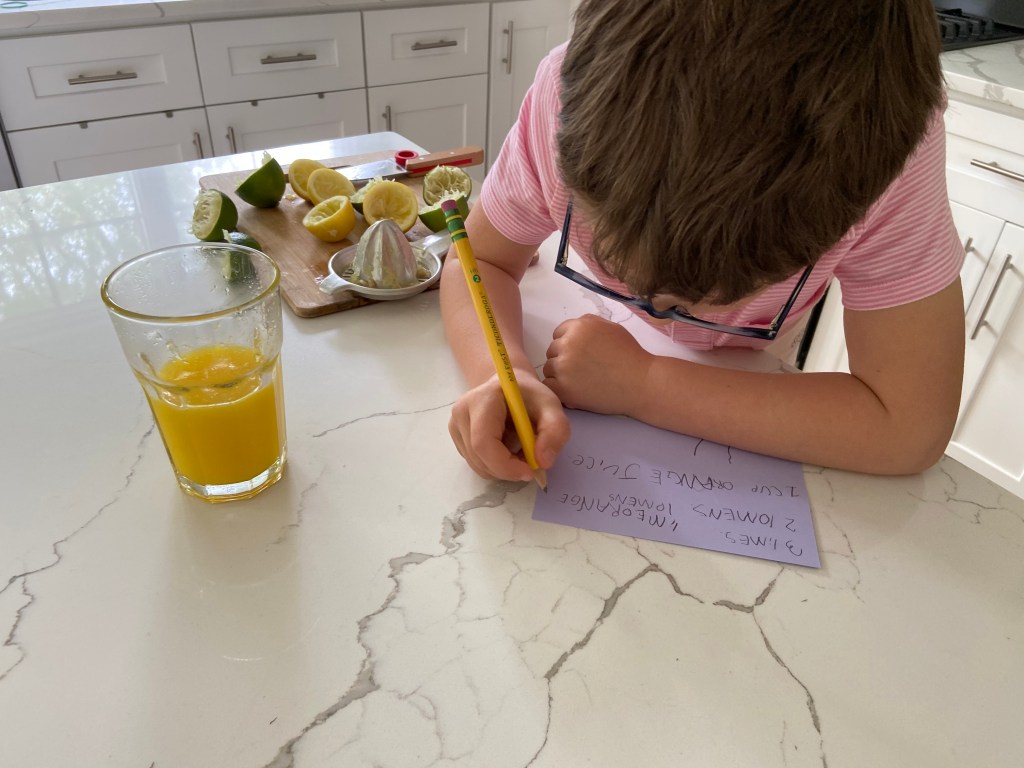
So we did what they suggested and made the “bad” choice—we decided Danny would yell at the girl who fell, spilling his lemonade, rather than help her up. Not only did Danny make the girl feel bad, Mom wasn’t happy with him either. Danny resolved to make better choices the next day.

Becoming aware of our ability to make choices is eye opening and empowering for young children. Wow, that one decision changed the course of his whole day!? It’s a difficult concept to grasp, and even more difficult to exercise in real life. It’s a big ask to suggest that a child pause, think about their options, and thoughtfully choose their actions based on the best outcome. Heck, that’s hard for an adult.

But when kids realize that with a single decision they can turn a bad day around or make a friend feel better, they strengthen the agency they feel over their lives and empathy emerges.

Each hero in our studio has the “power to choose.” How will they use it today?
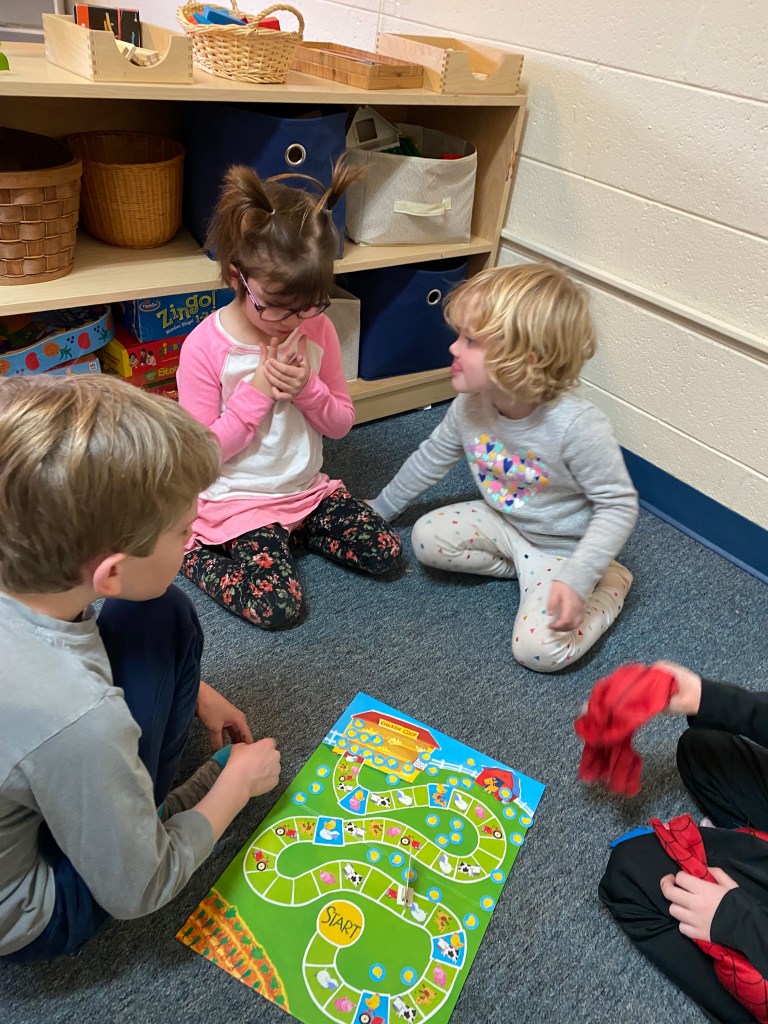
Let the Games Begin!

In Spark, our session 7 project time theme is Games and Strategy. Why games? First and foremost, games are fun. And who couldn’t use a little boost in excitement, laughter, and joy at the start of this summer?

But games provide so much more than that. When kids roll a pair of dice, they are getting real-life practice with numbers, counting, addition, subtraction, and even probability. While they hopscotch down the sidewalk, they help solidify their spatial abilities and gross motor skills. When they imagine they are frolicking through Candy Land, they get practice strategizing, keeping track of hazards, and following the sequence of play. A simple game of Scrabble Jr. has them reading, writing, and communicating verbally.

Countless other games help heroes solve problems, make predictions, use logic and reasoning, and understand that actions have consequences. They also hone the ability to set goals, recall the rules, and follow them.

Many of these skills are essential for getting heroes ready to enter the elementary studio: exhibiting self-control, waiting their turn, and being able to concentrate and focus for longer periods of time. Each game is a prime opportunity to practice winning and losing gracefully. That last one is particularly tough, even for us adults!

Throughout all these games, we are developing life skills of collaboration and teamwork, perseverance, and creativity. For our final project, the heroes get to create their own game!

The benefits of games are unending, but this might be enough for now. Sometimes what matters most is watching our kids lose themselves in the pure joy of it all. What fun it is to play together!

Practicing Resilience

Resilience is one of the most fundamental qualities we try to instill in our heroes.  To be able to bounce back from a change or misfortune is an essential life skill. At the same time, this may be one of the hardest characteristics to develop. It takes a LOT of practice.

This whole session has certainly provided lots of practice, hasn’t it? There have been so many examples of heroes meeting challenges and never giving up. They adjusted to new routines, tried out different reading and math programs to keep them in their challenge zones, and collaborated with each other over Zoom. Virtual school has been a challenge for sure, but it’s been wonderful to witness how these heroes can think creatively, solve problems, and explore amidst it all. Just look at the learning that took place this session!

Ms. Katey wisely commented that if this period of isolation had occurred at the beginning of the school year, it likely would have looked quite different. The group was still figuring out how to learn independently and working to forge strong bonds. However, with six months under their belts, the heroes were quick to translate their learning to their home environment. For them, the location of school mattered far less than the attitudes they had developed. It’s been a privilege to witness their strength and determination!

Positive Feedback: The Words We Use Matter

“Good job, kids! Well done, that’s beautiful! Way to go, that was great!”

These affirmations are music to our ears, aren’t they? We all love to hear that someone else likes our work, that something we did makes them proud, that they approve.

But perhaps a bit paradoxically, we try not to say things like this to heroes at The Village School. When we tell kids that we like their work or we think they did a good job, we are essentially giving them gold stars. It doesn’t take long to shift their drive from “I want to learn new things,” to “I need applause from another person.”

For this same reason, we don’t give grades. Grades have the unintended consequence of encouraging students to do whatever they need to do to get that ‘A+.’ Instead, without that pressure, our learners have room to tinker, try new things, work at their own pace, and make mistakes—all without worrying that they need to perform to perfection. That frees their young minds to learn and grow and helps foster the learner-driven environment that we are trying to create.

So we try not to praise results at TVS. But we still want to cheer our learners forward, steer them in the right direction, and maybe give them a boost of confidence. How do we shape that feedback?

In the studio, one thing we try to do is praise effort rather than results. We say things such as “Wow, I saw you keep trying and not give up.” Or “I can tell you worked really hard on that.” In praising their effort, we strive to help kids focus on the process they used to make something. That encourages them to continue trying in the future—to practice and get better—which builds persistence.

Another way is to ask a few pointed questions. “Interesting, what gave you the idea to use those colors?” “Wow, how did you decide to use wood instead of cardboard like last time?” These questions show our interest and engagement, but avoid any judgment—positive or negative. And if they seem hungry to do more or make more, we might say something like ,“Great, what do you want to do differently next time?”

Perhaps the hardest method—but one of the most effective—is to say nothing at all. So many times, kids aren’t looking for any kind of feedback while they’re hard at work. If they don’t ask, they won’t miss it!

Our fervent hope is that the payoff for learners will be huge and long-lasting. Their whole lives, they will be able to pat themselves on the back for a job well done rather than chase the elusive accolades of others. Above all, they will be excited to learn for learning’s sake, which will help maintain that precious intrinsic love of learning. That life lesson will take them far!

Obstacles: Roadblocks or Opportunities?

Problems in life may seem to come one after the other, especially when you’re young. In one afternoon, a child might spill red paint on the table, get muddy water in their boots, and lose a favorite toy. What to do? Get mad and complain? Or tackle these situations head-on?

This week we talked about problems like hurdles on a track. Some kids might grumble, kick or yell that they’re not fair. Others may decide to leap over them. What would you do? During launch, I asked the heroes what advice they would give to a child who was stuck behind a hurdle. One piped right up. “I would tell him to jump!” And jump, I believe, they would.

An outdoor mission this week followed on that same theme. The heroes were invited to make themselves or their siblings an obstacle course using objects they had around the yard or garage. I saw footage of heroes jumping through hoops, balancing on pool noodles, and jumping off of playhouse roofs. Even if they didn’t quite grasp the obstacle course as a metaphor for life, I couldn’t help but imagine them bobbing and weaving, pirouetting, and running when life’s challenges came their way.

But while it might seem fun to leap over obstacles in a game, it’s not so easy to scramble over the stumbling blocks of real life. A sticky mess, painful scrape, or shouting match with a sibling—none of these is fun. So how can we nudge kids to see these problems as hurdle-like opportunities they can surmount?

One thing guides try to do in the studio is model the approach. We might say we are perplexed, explain how we feel, and then talk through step-by-step how we could put things right. We might even ask heroes’ advice about the best course of action.

We also try to help heroes recognize that they can solve their own problems. After we acknowledge that it’s a hard situation and label their feelings as valid, we may offer a way to reframe or give a choice of actions. “It sounds like this is a tough problem. What would you tell a friend in a similar situation? How could you turn this into an opportunity? Would you prefer to do X, Y, or Z?”

Lastly, we might ask their advice when a fellow hero (or at home, a sibling) has run into a difficulty. “It seems like Maeve is having a tough time waiting for her turn to use the toy John has. What advice could you give her?”

It is certainly a long process, but little by little we can help show our heroes that their problems don’t have to get them down. They can be part of life’s rich experiences, and they can mold us into more resilient human beings!

Building the Tribe: Home Edition

At The Village School, we work diligently on “building the tribe.” We strive to create a community that works well together, can talk about problems, resolve differences, and encourage one another. These character-based, real-life lessons are a huge part of our learning design and a solid way to build lifelong social skills. 

While we are learning from home, it’s hard to build those same school relationships. However, we can turn our focus to a different tribe—the one at home. Heroes’ relationships with siblings, parents, even pets will be some of the longest-lived—and arguably most important—relationships of our lives.

One thing we can say about this pandemic is that it has led to LOTS of family together time. (That can be either a blessing or a curse sometimes…) Kidding aside, we may never again have so much uninterrupted time together. So how can we make the most of it now?  

As a studio we are exploring sibling relationships in morning launch. This week we read a book called “Violet and Victor Write the Best-Ever Bookworm Book” in which a sister-brother duo writes a creative story together. The two sometimes disagree and dislike each other’s ideas. But at the same time, they compromise, respect each other’s contributions, work as a team, and delight in their final product. “I like our story,” says Victor at the end, before Violet spends the afternoon rereading it aloud. That push-and-pull of the sibling dynamic is one we will continue to explore.

We are also trying to provide opportunities for siblings to participate in projects. In the past couple of weeks, siblings (often younger ones) joined heroes to explore the water cycle, create art, and collaborate on videos. So while more togetherness inevitably invites more squabbles, yelling, and competition, the lessons in teamwork are invaluable.

Have you noticed any shifts in the sibling dynamics at home? What challenges have your kids faced? In what ways have you observed the strengthening or deepening of that bond? Where do they seem stuck, and have you discovered helpful tips that might help another family? Do you have any beautiful or encouraging stories to share? Please share in the comments!

Hopefully, when this is all over, we will emerge stronger as family units. That will translate to better relationships at school, where we will continue building our Spark tribe as soon as we can safely be back together.

Find the Flow

Pandemic parenting is tough. In addition to everything else, we are trying to homeschool our children and keep them motivated. I don’t know about you, but I find the latter one of the hardest tasks on my plate, and the one over which I have least control.

It has helped in the past couple of weeks to recall the primary goals of Spark Studio. Our chief aim lies not in academic progress, though that comes in time. Instead, it’s to help children expand their ability to find focus and joy in their work, and to concentrate on a task for longer and longer periods of time. Does it matter whether they are getting equal amounts of math, reading, and writing, or even whether they are doing any of these things at all on a given day? Nope.

Kids can find themselves in the concentration zone (or “in flow,” as it’s also called), when they are doing something that especially interests them in that moment. It’s especially common with hands-on work. They might be building with blocks, creating art, exploring an instrument, or playing a game. Those periods of flow, when heroes become lost in their task and are intensely focused—yet are completely relaxed and enjoying themselves—are the Holy Grail of learning. These are the times when the deepest learning occurs.

Why? Because that’s when learners are most curious and interested, which makes them hungry to go deeper. Key here is to give heroes the freedom to choose what they work on. (Within limits, of course. They can’t watch movies all day.) Kids have this wonderful innate love of learning that keeps them seeking novelty in their activities. We aim to preserve that intrinsic motivation by following those interests. Where will they take us today?

Aside from that, they can set the stage for periods of flow by choosing activities that are challenging but not too hard. They can set realistic goals that they know they have the skills to accomplish. And activities don’t have to come from school-related materials, but they certainly can. You as a parent can then keep an eye out for any periods of deep concentration and try not to interrupt them if you can avoid it.

Chasing those periods of flow and allowing them to linger has become my focus, which has shifted my thinking about what homeschooling should look like. I still have to remind myself several times a day, but I now have less pressure to check things off a list and more room to observe and enjoy the moment.

Does this mean heroes will ignore their at-home materials? Probably not. There may be days when they happily take out their grammar books, breeze through some math sheets, or tackle a few challenging Bob books. And on those other days (and there will be lots), as long as kids are getting outside and being read to, that’s plenty. There’s so much learning that takes place with just reading and unstructured play. The rest is completely optional and icing on the cake!

Experience-Driven Learning in Our Own Backyards

For the first week of Session 6, Spark heroes and guides found themselves working out how to best navigate a virtual landscape. Confined to our houses, we interacted by Zoom calls and did our best to carve out space to learn in our living and dining rooms. Under these circumstances, how does a school that uses real-life experiences to explore the world carry on with this crucial component of our learning design?

The answer for Spark Studio lies in our newest project series—the Backyard Biome. Through this unit, we use experiential learning to examine the parts of the ecosystem that interact to create the natural world. We use magnifying glasses and binoculars to observe the plants and animals in our neighborhoods. We record our findings in nature journals. We dig our fingers into dirt as we learn about its many layers. We plant seeds and watch as they use the energy of the sun to grow throughout the session. We collect the different elements of the ecosystem in jars—plants, animals, soil, water, air, and sun—and ponder how they all might work together. All the while, we are having fun and getting our hands dirty in the truest sense of the word!

By doing this, heroes see, experience, and think about the environment in new ways. We also subtly integrate other topics important to their learning and development. As we turn on all our senses to experience our environment—sight, smell, hearing, touch, and (occasionally) taste—we are grounding ourselves in the present moment, practicing the mindfulness we talk about so often. We learn alongside our parents and siblings, which helps us deepen and expand our family relationships. And the heroes work on writing, drawing, vocabulary, critical thinking, and their powers of observation. It’s a truly multi-disciplinary way to learn, and we can do it all from home!

ES Quest: Session 4 Week 5

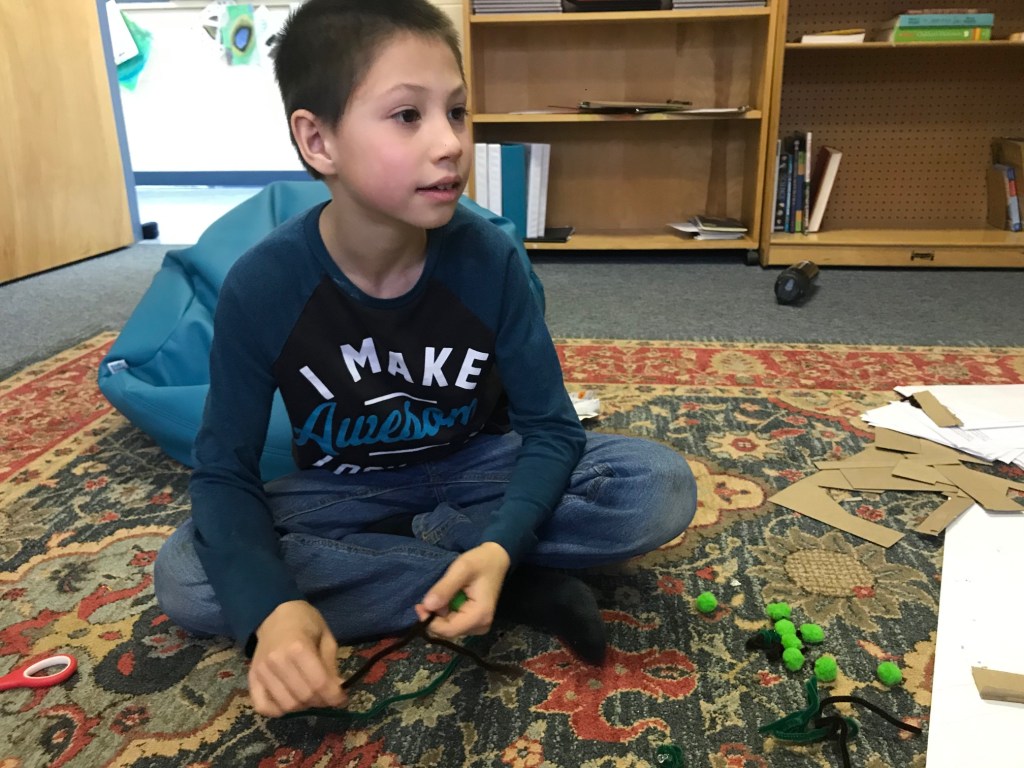
This week was all about putting the finishing touches on the heroes’ 3D models of their Acton Academies. They livened up the outsides with ball pits, basketball courts, and trees made out of pipe cleaners, while decorating the insides with Lego pieces and windows made of aluminum foil.

And for a very special hero talk, the famous architect Ben Mickus joined us via Skype to talk about his career. We learned all about his biggest accomplishments, including a building he designed on rollers to safeguard it from earthquakes, as well as a renowned concert hall in New York City that took six years to complete.

ES Quest: Session 4 Week 4

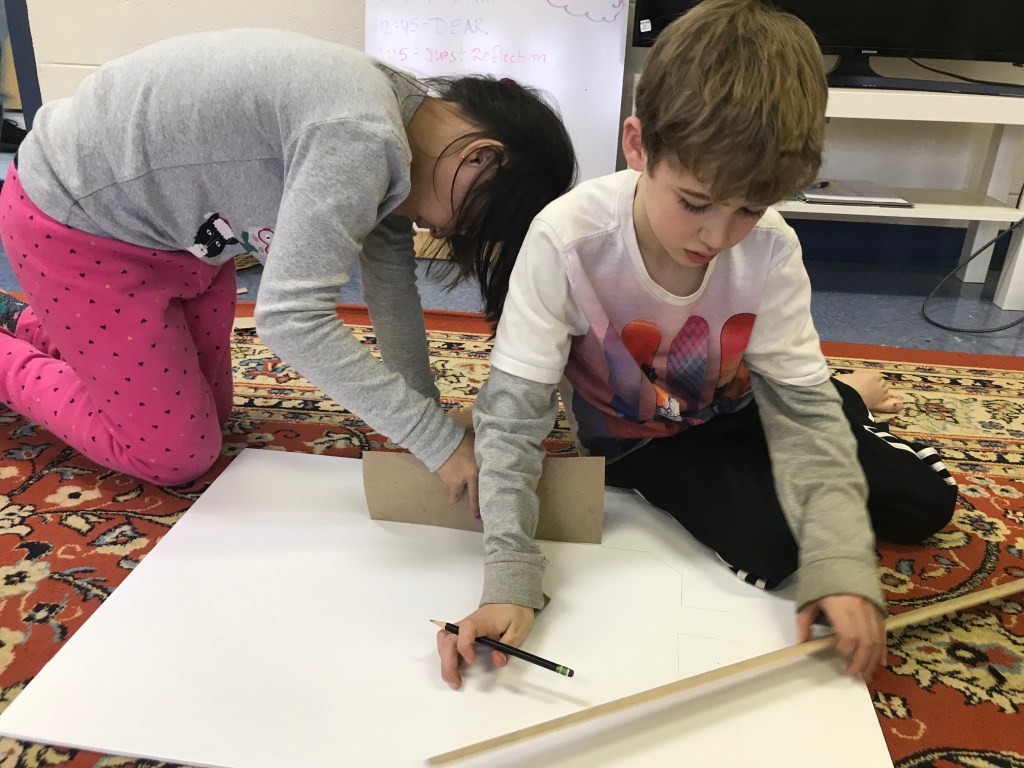
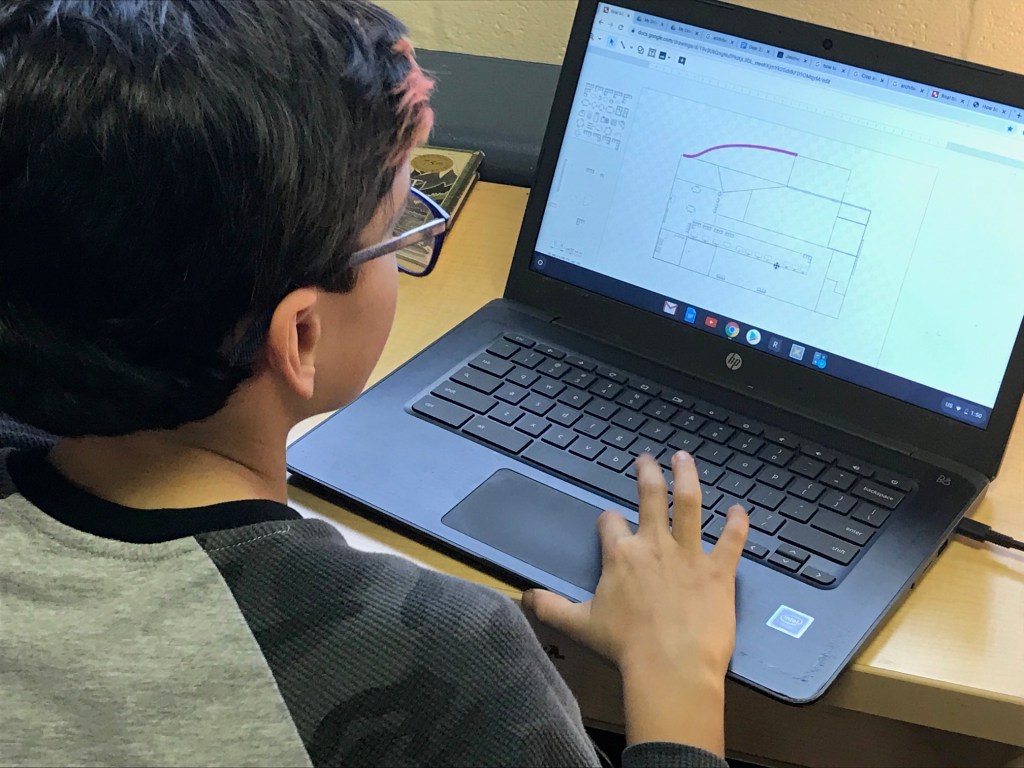
Last week in Quest, learners started building 3D models of their Acton Academy designs. They began by drawing out their floor plans on foam board, then crafted walls using chipboard and scissors. It was tricky to keep the walls standing while the glue dried! They also explored the concept of landscape design. It was fun dreaming up the outdoor green spaces that would surround their schools. Through it all, the heroes talked about the importance of staying flexible and confident, especially when we are forced to change our plans.