“Our mission is to give young people agency in their learning, helping them discover what they can uniquely contribute to the world.”
When my youngest son was four, he loved the act of throwing rocks into the water at the creek by our house. He would carefully select a stone and watch the impact as it hit the water’s surface. He loved seeing the ripples, watching them circle the rock’s point of entry and move outwards, creating small waves in the surrounding water. He could do this for hours.
At age 10, he could still do this for hours- though the task had changed from simply throwing rocks to skipping rocks.
Today, At age 12, he’s often found at the creek with a group of his neighborhood friends. There, they work together devising and implementing various ways to manipulate the flow of the water. Just last week, while walking the dog, I found them knee-deep in the water, moving stones and logs to create a dam and bridge from one side of the stream to the other.
It’s evident to me why he has always loved this so much. In the sacred space, he is in charge. He chooses the materials and how to use them. He selects the pace and when to take a break. He gets to see the immediate outcome of his actions. As he’s gotten older, he naturally chooses to increase the complexity of the task, seeking a greater challenge, and others to join him.
In the comings and goings of life, the prescriptive nature of childhood, and a largely adult-imposed agenda, my son is captivated by this space that allows him freedom and choice. He has agency over his experience.
When I think of this, it always reminds me that is truly what we all want, children and adults alike. We all want the opportunity to impact the world in some way- to see the ripples, the effects of our actions, no matter how big or small the splash. We all want the chance to use our innate creative freedom, act, and stand back proudly and think, “I did that”- or “Oops, I’ll do it differently next time”…
This is the magic of a learning environment where young people have agency, are trusted and empowered to solve problems, and effectively have the chance to see the ripples of their choices and actions in a caring and close-knit community.
As we send our alumni into the world, on to their next great adventure of High School, I am affirmed in our mission here at TVS as our graduates exhibit this same sense of agency. They are talking with teachers, asking for feedback, helping their peers, and taking on leadership roles. They are courageous and self-aware. Just a few days into my oldest son’s first year of High School, and he claims is the go-to “tech guy” in his advisory. When I asked him how this evolved, he shrugged and smiled, “I’m a problem solver.”
As we excitedly embark on the adventure of a new school year, we remain rooted in our mission to give learners agency, which will allow us to continue nurturing a generation of young people who know who they are and what they can contribute to the world around them.
We are thrilled to welcome new team members to The Village School for the 2024-2025 school year!
New Guides
Aliyah Rawles- Lead Discovery Guide
Aliyah’s journey has been one of many rising actions! She began her work with young people as an early learning teacher and a Teaching Resident. Eventually, she became the founding teacher for a cutting-edge project-based learning program that was functioning within a public charter school in Washington, DC. There she led upper elementary learners in project creation, experiential learning outings, English Language Arts, and hands-on Social Studies curriculum.
She was inspired daily by the curiosity, resilience, and adaptiveness of young people and became convinced that a learner-centered and project-based model is the best way for children and adolescents to learn. When she came across TVS, she knew she’d found a place where she could commit 100% to focusing holistically on the learner and guide them in navigating their own journeys. In her spare time, she loves to spend time with her Labrador retriever, curl up on the couch to read a good book, or watch history documentaries!
Abby Shaw- Lead Spark Guide
Abby grew up in Oklahoma and has had a lifelong desire to work with and support children as they learn and grow. She studied Human Development and Family Sciences at Oklahoma State University. She knew that she wanted to pursue a career in education after she had the opportunity to work in an early childhood classroom during her final year in college. While working as a second-grade teacher over the past two years, Abby has developed a passion for teaching reading and literacy and engaging learners in project-based learning experiences. Throughout her training and teaching experience, she realized how difficult it is to meet the individual needs of a diverse classroom of students in a conventional setting.
Abby’s desire to see every young person succeed led her to The Village School. She knew the learner-centered model was what she had been looking for and truly believes it is the only way to honor the unique needs and interests of each child. She is excited to guide the youngest learners at TVS alongside the Spark Guide team!
Noel Welch- Adventure Visiting Guide
Noel graduated from Bowling Green State University with a degree in German Language and a minor in Three-Dimensional Art. After graduating college, she went on to work in a variety of fields, such as working for a sculptural lighting artist, as a glassblowing demonstrator, and as an elementary school English teacher in South Korea. There, she discovered her passion for working with young people and bringing creativity into the classroom. She is looking forward to fostering an environment of curiosity and exploration, and creating a learning environment she would have loved to have had as a young student. In her free time, she has rediscovered the joy of reading, works often on embroidery or stained glass projects, and tries cooking new recipes.
Caroline Powell- Discovery Visiting Guide
Caroline is a native of Richmond, VA. She loves living in the DC area and is very excited to be part of The Village School team. Caroline graduated from Roanoke College with a degree in Psychology with a concentration in Human Development. She has a life-long passion for learning, which was fostered during her high school years when she attended a specialty center focused on education and human development. She continued to make child development a focus of research during her undergraduate career. Before joining TVS, Caroline worked at an educational consulting firm in DC. There she worked with higher education teams, learning about engagement and continued connections to academics throughout a lifetime. She loves meeting new challenges and working to find answers to questions, so she is very excited to be joining a community with a learner-centered approach. She is looking forward to seeing all that the learners at TVS discover!
Outside of the classroom, you can find Caroline cooking a new recipe, writing, listening to music and attending concerts, in the movie theater, or exploring DC with her friends and family.
Please join us in welcoming these new team members to The Village School for the 2024-2025 school year!
At The Village School we trust young people to learn from their own experiences. As adults, we often think we know best. Our life experience overshadows and our been-there-done-that attitude camouflages the curiosity we should have when it comes to our own children’s learning and life experiences.
Of course, there are times when we do know best, but there are also plenty of times that the stories we tell ourselves about our own and our kids’ experiences are just that: stories. We often get stuck in those narratives and have a hard time recognizing the many other perspectives (including that of our children!) that might tell a different version.
Each day at The Village School we challenge ourselves to lean into curiosity and live out our belief that young people can be trusted to learn from their own experiences. One of our favorite ways to override our egocentric thinking is to provide time and space for learners to reflect. Reflection is the cornerstone of all of our signature learning experiences from our session-long immersive projects to our middle school apprenticeships. The Village School learning design relies heavily on the art and skill of reflection. In fact, a learner’s reflection on what, how, and why they learned over the course of a session or year is way more important to us than how their final poster looks, how their presentation or draft turned out, or how many badges they earned. Who our learners are is more important to us than what they know – and their ability to reflect on their experience is the most important data point that provides evidence of their growth.
Data points are something people often ask us about when learning about our school model. “That all sounds great, but how do you know if the kids are learning anything if you don’t have tests?” Our answer is always the same: We ask the learners.
As we close out this school year, we’ve been spending lots of time reflecting. We asked the learners to share their greatest lesson learned this year and here is what they had to share:
“My greatest lesson learned is that I can do anything.” – 12 year old learner
“This year I learned a lot about how to make a good presentation.” – 11 year old learner
“I learned how to read!” – 7 year old learner
“I’ve learned that actually doing the work is more important than getting the credit.” – 13 year old learner
“I learned that people are naturally caring and not everyone is out to get you.” – 13 year old learner
“I learned how to do the monkey bars and I’m proud that I’m getting close to the aqua [reading] drawers!” – 6 year old learner
“I learned that I need to balance my work so it doesn’t all pile up in the end.” 11 year old learner
“I learned how to do things I couldn’t do at the start of the year.” – 6 year old learner
“I learned how to listen to other people’s points and opinions and maybe agree with them.” – 9 year old learner
“I learned that if you have a great idea and you present it the wrong way your idea will be lost.” – 8 year old learner
“My greatest lesson learned was to keep trying. I learned how to not get mad when I get something wrong.” 10 year old learner
“I learned that to get something you have to work really hard – even when you don’t want to do it.” – 9 year old learner
“It’s really hard to agree sometimes.” – 9 year old learner
“I’ve learned to be more patient with myself.” – 9 year old learner
“I’ve learned how important it is to always be yourself.” – 11 year old learner
We believe these reflections are evidence enough that our learners have gained something more valuable than any numerical score might suggest. Just this week we asked our learners to synthesize their learning over the course of the year in one single sentence using the frame: I used to think……now I think….
“I used to think that making friends was hard…now I think you can get many friends from one single round of kickball.” – 8 year old learner
“I used to think learning was a chore, now I think it’s an opportunity.” – 9 year old learner
“I used to think I would only focus on stuff I like, now I think I can do anything if I set my mind to it.” – 9 year old learner
“I used to think that Khan was the hardest thing in the world and should be used as a torture device. Now that I have seen how far I’ve actually come, I actually think it’s kind of fun.” – 9 year old learner
“I used to think I was shy, but now I think I’m brave and kind.” – 8 year old learner
“I used to think I had to be cool to fit in, and now I think being yourself is the best.” – 10 year old learner
“I used to think people would guide me. Now I think all along I was guiding myself.” – 7 year old learner
We challenge you to find some time at the end of this school year to reflect on your own experience. What is your greatest lesson learned? How might you complete the sentence I used to think…now I think…?
“The more you praise and celebrate your life, the more there is in life to celebrate.” Oprah Winfrey
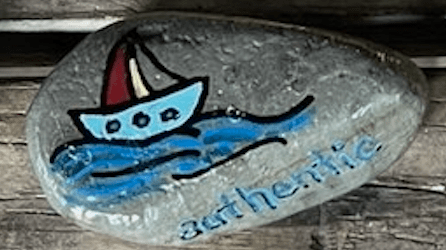
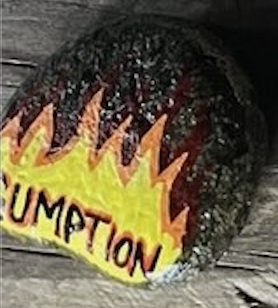
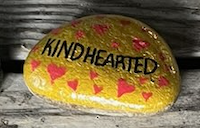
At the end of the school year, each studio carves out time for a long-awaited celebration: Character Rock Ceremony. One of the most honored and sacred traditions at The Village School, Character Rock Ceremony gives every learner and studio community the opportunity to celebrate who they are. At their studio ceremony, each learner receives a special rock with a word painted on it. The word identifies one trailblazing trait the learner exhibited and shared with the community throughout the year.
On Tuesday, Adventure celebrated the end of the year with a sunset hike at Bear’s Den Scenic Lookout. After an engaging climb, learners, families, and guides gathered together in anticipation of the studio Character Rock Ceremony.
Rock Ceremony Introduction
This hike marks the end of the 2023/24 school year for Adventure Studio. For some of you, this is your first sunset hike, and for some it’s your last. Tonight we are celebrating two things: first, we are celebrating the strong team that you all have created together since Session One. Second, we are celebrating each of your unique contributions that have made our studio and school a better place. We are also here to recognize our four graduating learners. Regardless of when you joined our studio, each of you will always be a TVS Trailblazer.
As you all know, a trailblazer is someone who discovers their passions, creates their own path in the world, and inspires others along the way. At The Village School we believe that each of us are trailblazers on our own journey to learn as much as we can about ourselves and the world around us. A trailblazer understands their own strengths and weaknesses and makes intentional choices to grow each day. Trailblazers have a vision for a different future, a faith that turns their dreams into reality, and a determination that cuts through barriers and obstacles. All of you have shown the traits of a trailblazer this year. And now we will present you with your character rock representing the trait that you have most contributed to our community this school year.
Presentation of Rocks
Following the introduction, guides gave a character callout to each learner and presented them with their rock. Several of the callouts and pictures of the corresponding rocks are below.
Ralph Waldo Emerson wrote, “To be yourself in a world that is constantly trying to make you something else is the greatest accomplishment.” [Learner], we can count on you for so many things–kindness, compassion, an incredible amount of knowledge about history–and something we always know you will do is be true to yourself. By showing up as your true self, you encourage others to do the same. [Learner], you lead by example and balance being honest with being kind. You are intentional in your interactions with friends–you’re always willing to listen and support–and remain genuine even in the midst of challenging conversations or situations, which is not easy to do. [Learner], thank you for showing us how to be authentic.
“The hero’s journey in the real world is about moving forward through challenges and obstacles; overcoming one then starting again with a new fear to face and new thing to accomplish.” [Learner], you shared this quote in your speech “What Defines a Hero?”, a speech that deeply inspired our community this year. There is no mountain too big for you. When you set goals, you go for them with confidence, determination, and grit; and, when you reach your goals, you celebrate your wins with grace and are ready to take on the next mountain. You show us what it means to take ownership of our own stories with courage, purpose and spunk. [Learner], we would call that gumption.
You know the feeling you get when you look up at the stars and think, “How is something this amazing possible?” If you take that feeling of curiosity and mix it with a deep love of life, you will find [learner]. You want to know how things work and why things happen. You are unafraid to take something completely apart so that you can learn how to put it back together again, often inventing your own ideas along the way. In conversation, it is a joy to see you light up when talking about the curiosities around you. You really do inspire all who cross your path. [Learner], we would call your joy for deep learning and beautiful outlook on life wonder.
Stephen Covey said, “Every human has four endowments – self-awareness, conscience, independent will, and creative imagination. These give us the ultimate freedom… The power to choose, to respond, to change.” [Learner], in your time at TVS, you have certainly changed, grown, and become an exceptional young man.You have not only contributed to our studio’s culture but you have impacted our entire community with your bravery, creativity, determination, and compassion. You have pushed yourself to become a better person and in turn, have set in motion the determination for all of us to question who we are and who we want to become. [Learner], you show us every day what it looks like to constantly challenge yourself to be a better human, relying on your inner strength to show you the way. For this, we would call that independence.
[Learner], you are like the sun–you are bright, warm, and make people feel better on good days and really challenging days. You have a superpower. You care about others and take the time to really check in on them. When you ask, “How are you?” our community knows that you are truly interested in how the person on the other end of the question is doing. You not only listen to those around you, but you also take action to make our community a safe and warm space. So many times we have seen you uplift others by leaving small notes in people’s cubbies, sharing a silly meme with the studio, or telling much-needed jokes throughout the day. [Learner], thank you for showing us what it means to be truly kindhearted.
To close the event, we listened to the inspirational words of poet Cleo Wade’s What the Road Said, watched the sunset, and celebrated our community of trailblazers.
As a guide, I’ve had the honor of getting to know our amazing TVS learners and seeing each one grow. Now having experienced one, Character Rock Ceremony is an event I will always look forward to in my time at TVS. I couldn’t think of a better way to celebrate who our trailblazers are than with a ceremony dedicated to community and the sharing of rocks.
“Trailblazing is what we do when we find ourselves in the wilderness, with no path to guide us but our own intuitive understanding of nature and our destination. At times we must walk through the night, guided only by the stars. We know when to sit and rest, to shelter from storms, when to gather water, and what on the trail will sustain us and what will do us harm. We are courageous and cautious in equal measure, but we are driven forward, not only by our own desire to reach our destination, but also by the desire to leave a viable way for others who follow.” -Lucy H. Pearce
I could not say where I first heard this. A parent? An educator? A coach? It may have even been paraphrased in my memory. Anyone of these influences in my life could have sent this message. Regardless of where I first heard it, I am regularly reminded by those who inspire me now, likely without even knowing it: TVS learners.
This session’s Writer’s Workshop challenge is to write a speech aimed at inspiring our community by sharing a lesson that has helped them through their journey in Discovery Studio. In an effort to not spoil any surprises, I am restraining from sharing parts of those, as learners continue to craft and revise. You will just have to hear them for yourselves at the Discovery Character Rock Ceremony! However, many of them reflect on this willingness to face a challenge and how they grow when they do.
Even in the beginning of the year, they understood the importance of facing challenges. In session one, this mindset was so highly regarded that it is reflected in the Discovery Studio Contract as the promise to “learn from mistakes and failure and never give up.” Throughout the year, learners honored this promise in many ways. It may be the disappointment of trying a Unit test in Khan and missing just one question. Or, the failure to earn even a single badge in a session. Even the breaking of the Studio Technology Contract and resulting loss of tech for a week. No matter the challenge, Discovery learners found ways to face it. They learned from their mistakes by retaking that unit test, sometimes several times. They rose above the failure by earning a badge in every category the next session. They refused to give up by showing up all week and setting tech free goals. Knowing how to face challenges is one thing, seeking them out is something else entirely.
“Our multiplication chart is only within 10. I am making one to 20.”
“What continent is most challenging? That is what I want to map!”
“Can I map two continents instead of just one?”
“I have learned to do what is hard.”
“I did that country last year, so I am going to pick somewhere new to learn about.”
“I know I got all the facts right but I think I can be faster.”
“I learned that hard work equals being proud.”
These are only a sample of the innumerable statements heard around the studio and read in session reflections that are evidence of how learners each live this lesson. Recently, I received a call inviting me to return to another learner-centered institution and train to be the next director. The opening and/or running of a school with the same mission of putting children first by giving them agency in their own education, has long been a dream of mine. Yet, when this opportunity called, I hesitated because of all the challenges I saw: moving again, learning a new role, potentially failing, and of course leaving TVS. The thought of leaving was challenging enough. However, it is ultimately the actions and words of our TVS learners that encouraged me to chase my own challenge. In my first blog post I remarked on the differences between students and learners. How, in the studio, every learner is a guide in their own right, sharing wisdom with peers and taking an active role in the creation of their community. I used to think I was there to support them through that journey of growth. Now I know they’ve been guiding me too.
“There is no absolute assurance that those things I plant will always fall upon arable land and will take root and grow, nor can I know if another cultivator did not leave contrary seeds before I arrived. I do know, however, that if I leave little to no chance, if I am careful about the kinds of seeds I plant, about their potency and nature, I can, within reason, trust my expectations.” -Maya Angelou
We use a variety of metaphors to capture the essence of what learner-centered education is all about, but the primary, and possibly most accurate metaphor is the one of the gardener. Our goal, like a gardener, is to provide optimal conditions and experiences in which the seeds of strong character and skills (as outlined in our Profile of a Learner) will take root and flourish long after a learner’s time at TVS has come to a close.
As a PreK-8th grade school, High School is the “next great adventure” for our learners.
Given that the majority of secondary programs in our area look very different from our model, (because, yes, the archetype of the High School experience still runs deep in American culture) parents, community members, and other educators are often curious about this transition to High School. Understandably, they want to know, “What happens after TVS? How do learners adjust to a more conventional experience? Do they figure it all out?” In many ways, what they are really asking is, “Did those seeds take root?”
Recently, we caught up with our small group of trailblazing alumni and some of their family members who were eager to share about life after TVS and the impact that the learner-centered experience has had on their educational experiences.
Our current alumni consist of learners who attended TVS for 2-4 years through their 8th grade year. Each of our alumni chose to attend their local public high school. These include Justice High School and Falls Church High School in Fairfax County and Alexandria City High School in Alexandria City.
How do learners adjust to a more conventional experience?
Each of our learners spoke of the initial culture shift they experienced in their first few months of High School. Specifically, they shared the challenge of shifting from a high-trust environment such as TVS to an environment in which “young people are not trusted as much by the adults.”
One learner shared, “I was surprised that my peers were almost afraid of the teachers.” She noticed that her classmates avoided asking questions or seeking feedback from the teachers.
Additionally, each of the learners shared that it was difficult at first to not have as many social connections as many of their peers had, due to not having attended their local public middle schools.
In sum, all of the learners reported missing a learning environment that emphasizes freedom, trust, and curiosity. “I miss the amount of free time we had, all of the freedom we had, the trust that the guides had in the kids, and an actual desire to learn in all of the students,” one learner shared.
Do they figure it all out?
As difficult as the transition was, each of our Alumni shared that they feel they are succeeding and even excelling in their respective environments and spoke of how TVS uniquely prepared them for High School. Here’s what stood out:
Academically, they felt more than prepared overall.
100% of TVS alumni report feeling academically “ahead” of their peers in nearly all academic areas, credited in large part to their writing and communication skills, historical and political knowledge, critical thinking, and problem-solving skills.
One learner shared, “I learned how to express myself at TVS. These skills have helped me in speech and writing in High School and on a larger scale. Also, I definitely have strong historical and political knowledge that I use all the time to apply to current events and connect the past to the present.”
The one area learners did not feel as prepared for was math. One learner shared, “Algebra was tough. This was the first time learning math at TVS became difficult for me and I avoided it.” This learner further explained that she would have benefited from more direct support especially without older peers in the studio to help as in previous years. Other learners shared similar feelings about math once they reached Algebra.
Aside from the initial challenges, learners felt prepared overall. “The skills I gained at TVS overall well prepared me and put me drastically ahead of my peers,” one learner shared. Another learner shared, “I learned to have high standards of excellence in my work at TVS. This has helped me tremendously.”
In terms of course selection, all learners are taking some combination of Honors and AP courses across subjects. Even with the challenges associated with math, Two-thirds of learners went on to enroll in advanced math courses. One learner is enrolled in the IB (International Baccalaureate) program at her school. Another is enrolled in the STEM academy program. Another learner is enrolled in the Business/Marketing Academy program at her school.
Their communication skills (with people of all ages) give them an “edge”.
While many of their peers showed a reluctance to engage with their teachers, all of our alumni reported positive relationships with their teachers and other adults in their schools. They attributed this to the positive relationships they had with the adults at TVS and the frequency with which they were able to “use their voice” in a school setting.
One learner shared, “TVS helped me learn how to build relationships, how to take initiative, and gave me a desire to learn and ask questions.” Another learner shared, “So many of my peers have built this imaginary wall between themselves and the teachers. They don’t understand that all you have to do is go up to the teacher and ask them questions- ask them for feedback. The minute you do that, the teacher loves you. They care so much when they see that you care.”
Another learner shared that the Socratic discussions at TVS helped her hone her public speaking abilities- especially in the art of persuasion. This learner is heavily involved in her school’s debate club (which recently went to the state finals!).
They know how to work on a team.
Learners attribute the collaboration required at TVS, both in the various project-based learning experiences and even more so in the daily challenges of “learning to live together” in a small close-knit community, to have helped them find success in high school both in and out of the classroom. From group projects to team sports, 100% of learners feel that TVS prepared them to be excellent collaborators and team players.
One learner shared, “Without TVS, I probably would not have the collaboration skills I have.” Another learner reported, “I think communication in group settings would be a lot more strenuous if I hadn’t been able to practice this as much as I did at TVS.”
100% of TVS alumni are involved in team sports and extracurricular activities. One learner is on her High School softball and field hockey teams. Another learner is on her school’s volleyball team. Another learner is a leader in her school’s theatre program. (All learners shared that these early team/extracurricular experiences in High School were critical in helping them build relationships and make friends).
They are leaders.
TVS Alumni have many of the skills that make them superb leaders- both of themselves and others.
As leaders of themselves, learners report high levels of self-direction, goal-setting, and personal accountability for their learning. One learner shared, “Two of the most important things I learned at TVS that have helped me are how to lead and how to manage my time.” Another learner echoed this and stated that TVS gave her the “Leadership skills, time management, and organizational skills” that other learners her age do not have. “A lot of time is wasted in public school that could be allocated to better uses,” one learner shared. She and others reported using this time to do homework, reach out to their teachers, or get ahead on other things. Learners share that it is due to these skills that they can successfully manage a challenging course load and extracurricular schedule in High School.
Additionally, TVS alumni are also leaders of others, taking on various leadership roles in their schools. One learner serves as the Sophomore Representative for the PTSA (Parent Teacher Student Association) as well as Treasurer for the National Arts Honors Society. Another learner serves as her Class Vice President and Theatre Department Supervisor. Recently, this learner organized and executed a community food drive for a school service project.
Finally, our alumni expressed a desire to continue to serve and lead at TVS. They were interested in opportunities to visit campus to speak to current learners, lead discussions, help with math and or reading/writing, etc. Furthermore, they were very interested in the idea of participating in an Alumni Group that would help them stay inspired, equipped, and connected to each other and to TVS.
They know who they are.
If there’s one thing that stands out, TVS alumni know who they are. In learning environments that now emphasize grades and tests, it’s clear they aren’t defined by them. They have a deep understanding of what real learning is, and what it is not.
When asked about adjusting to grades, one learner shared, “I completely understand it’s a game. I like to do well but I don’t stress out about it too much.”
They acknowledge the common narrative about young people in conventional spaces and maintain a much more expansive view of who they are and what they’re capable of. They attribute this to the counter-narrative and the experiences they were offered at TVS.
What do parents say?
Parents of our Alumni also report feeling like their learners are thriving and acknowledge the impact TVS had in helping them find success in High School.
One parent shared, “It was tough at first. But she is doing so great now. She loves her courses. She is doing the STEM track like her older brothers and she is invested in a way that they never were. I attribute this to the fact that she was able to remain curious at TVS and see the link between her own effort and interest in something. She understands that what she gets out of something is directly related to what she puts into it.”
Seeds taking root
We know that we are gardeners at TVS, continuously cultivating those seeds of self-direction, grit, curiosity, compassion, collaboration, and servant leadership- among many others. As any gardener knows, the outcomes are not always predictable. There are always variables outside of our control. Growth can be stubborn and difficult. It won’t always look the way we intended. Yet, something is always happening. By providing the optimal conditions, we can trust that most things we plant will take root and grow.
Our small group of trailblazing Alumni and their experiences thus far provide evidence that the seeds of character and skill planted at TVS have taken root. As I reflect on this amazing group of young people, I am confident that these seeds will continue to grow and flourish in the lives of all of our learners, on their next great adventure of High School and, as designed, well into the future.
After all, this is what real, life-worthy, learning is designed to do.
Have you ever wondered how insects move their bodies without bones?
In our final session of the school year, learners will focus on insects. Learners will begin the session by learning what insects are and look into its many different types. Learners will be introduced to the foods insects need to eat to survive and explore how insects are different from other groups of animal families. Learners will explore how insects adapt to changes in their environment and why insects are attracted to different surfaces.
The project room will become an insect lab with loose parts, art materials, and science tools to explore and create. Spark learners will work together to create an “insect hotel” that provides both basic necessities for life and also added fun features that stem from using our imaginations to consider possibilities beyond what we know and see.
Discovery Studio
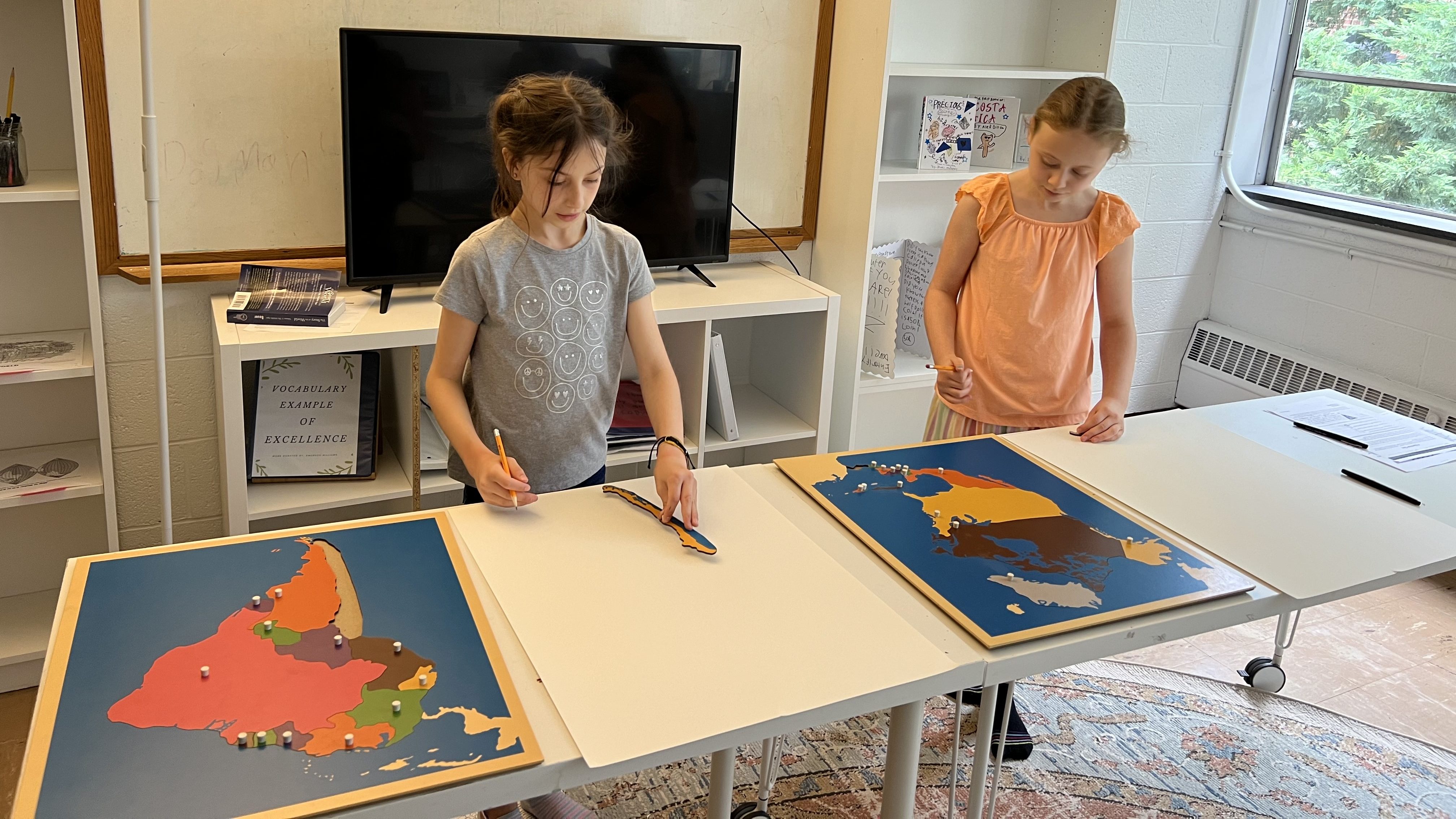
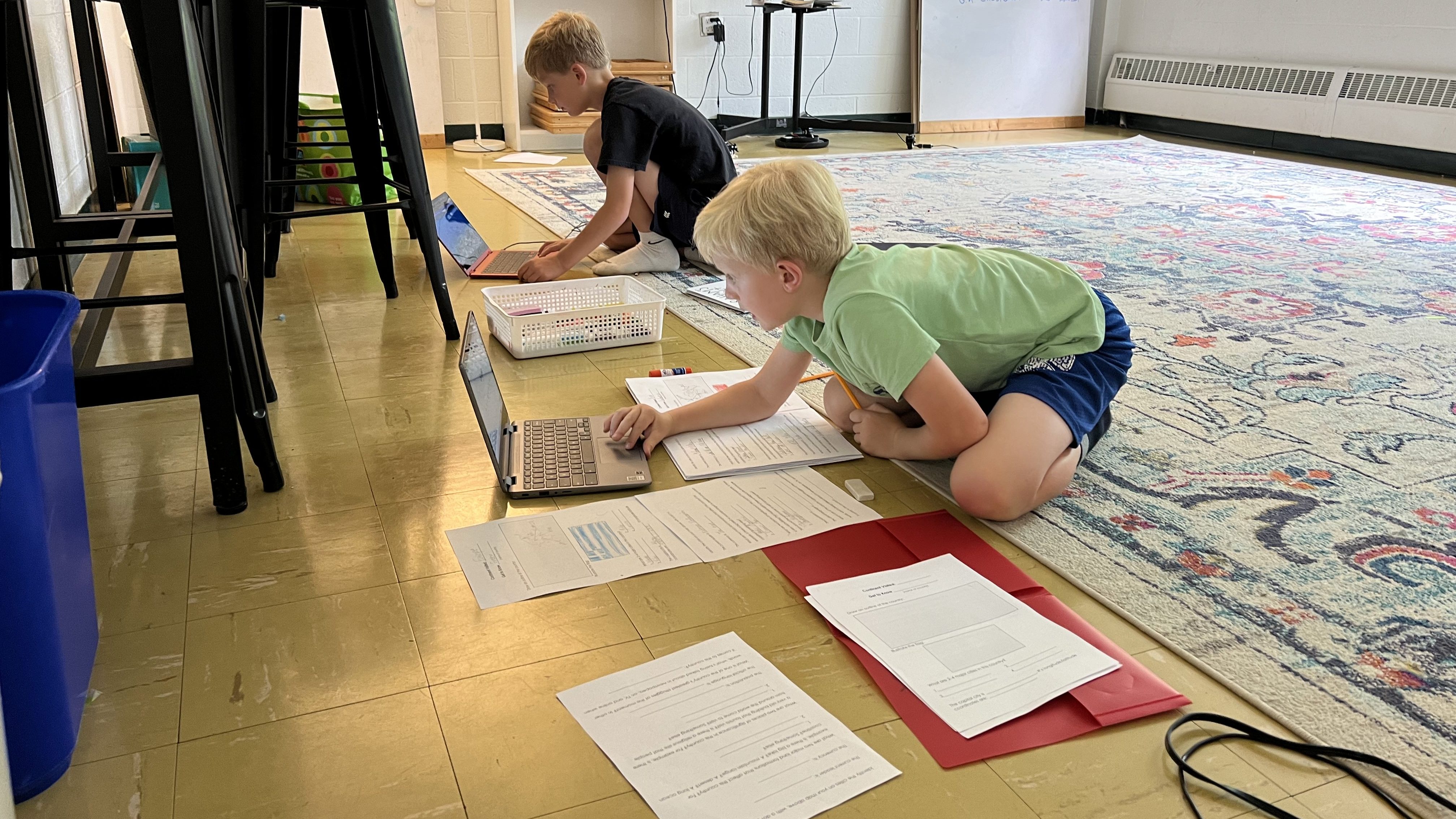
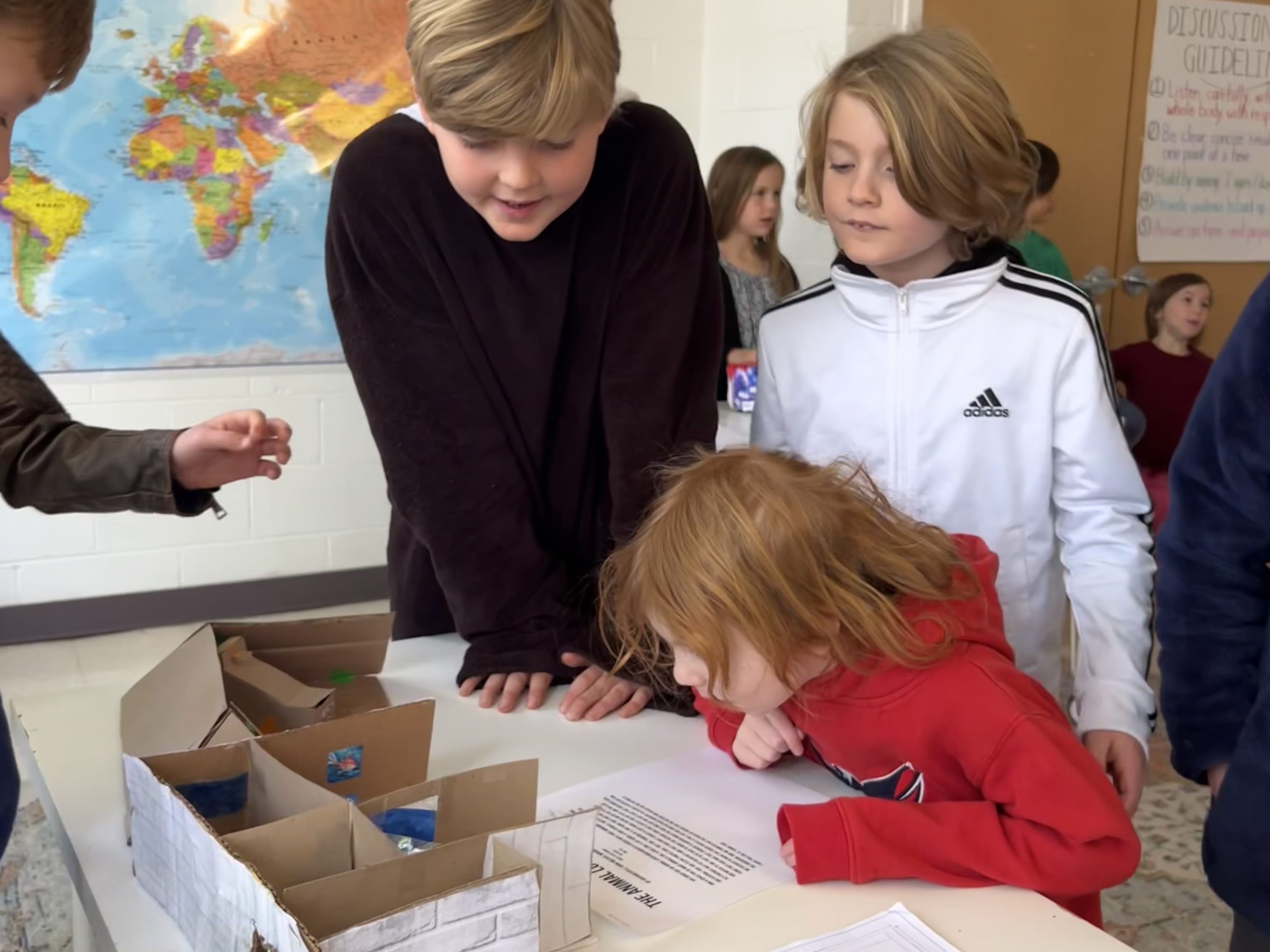
In this final session, Discovery learners will embark on a virtual journey around the world. We will learn about explorers, interpret maps, and dive into stories from each continent. Each learner will complete their own handson project to synthesize what they have learned. These projects include World Factbook, Cartography, and DIY Historian. Learners creating a World Fact book will explore different countries around the world and document their findings in their own hardcover book. Those diving into Cartography will explore maps before trying their hand at making their own of a continent. Lastly, participants of DIY Historian will choose an event in history to research and design a way to share their findings with the studio.
Keeping with tradition, the final Writer’s Workshop invites learners to reflect on their year in Discovery Studio. Learners will consider their most important lessons learned and use these insights to craft an inspirational speech aimed at uplifting and empowering the TVS community. As a right of passage, the learners endeavoring to transition to Adventure Studio next fall will share their speech during the Discovery End of Year Celebration along with speeches voted on by the studio!
Adventure
It’s Apprenticeship Season in Adventure this session – we wish them luck. Go Trailblazers!
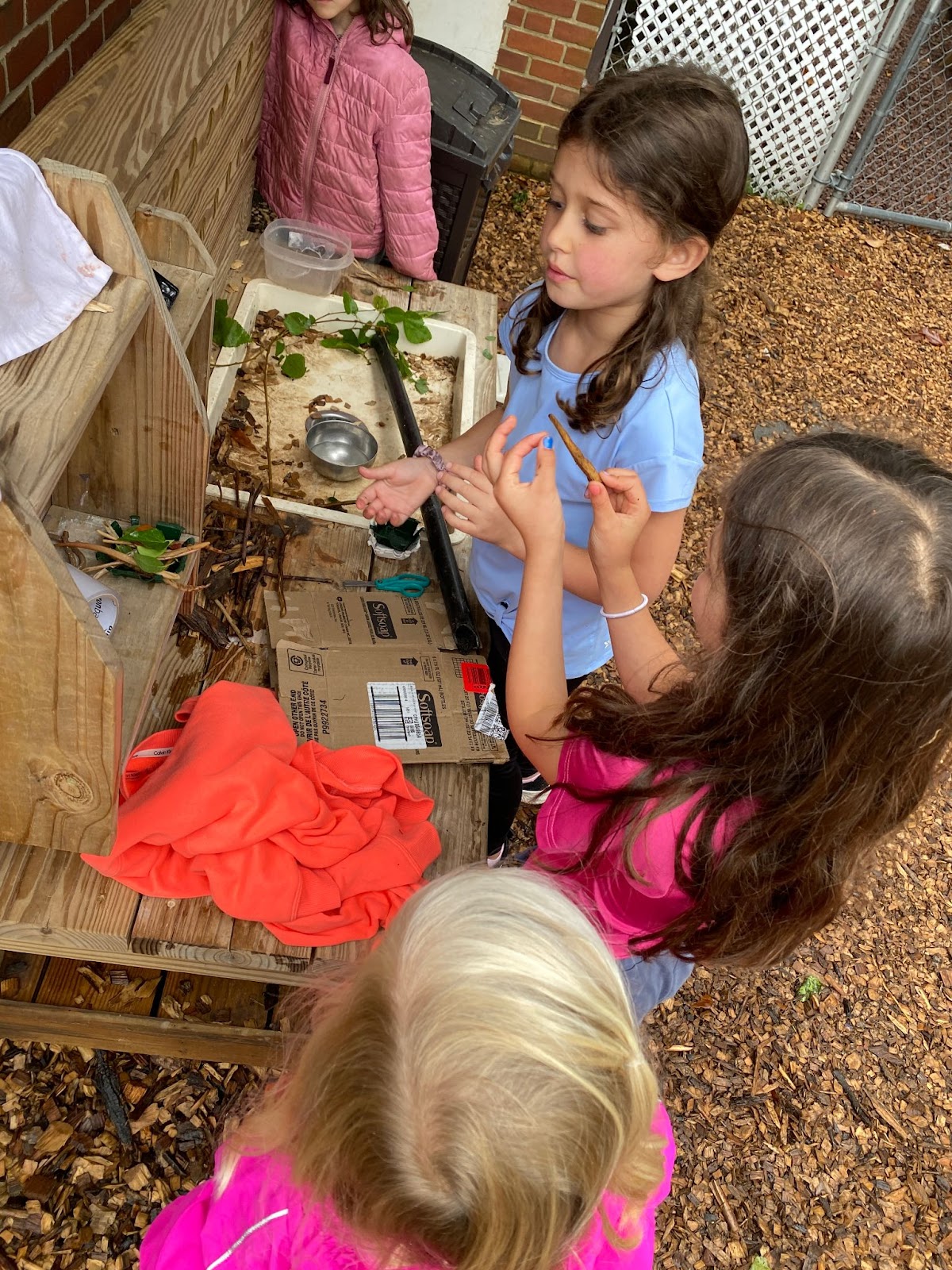
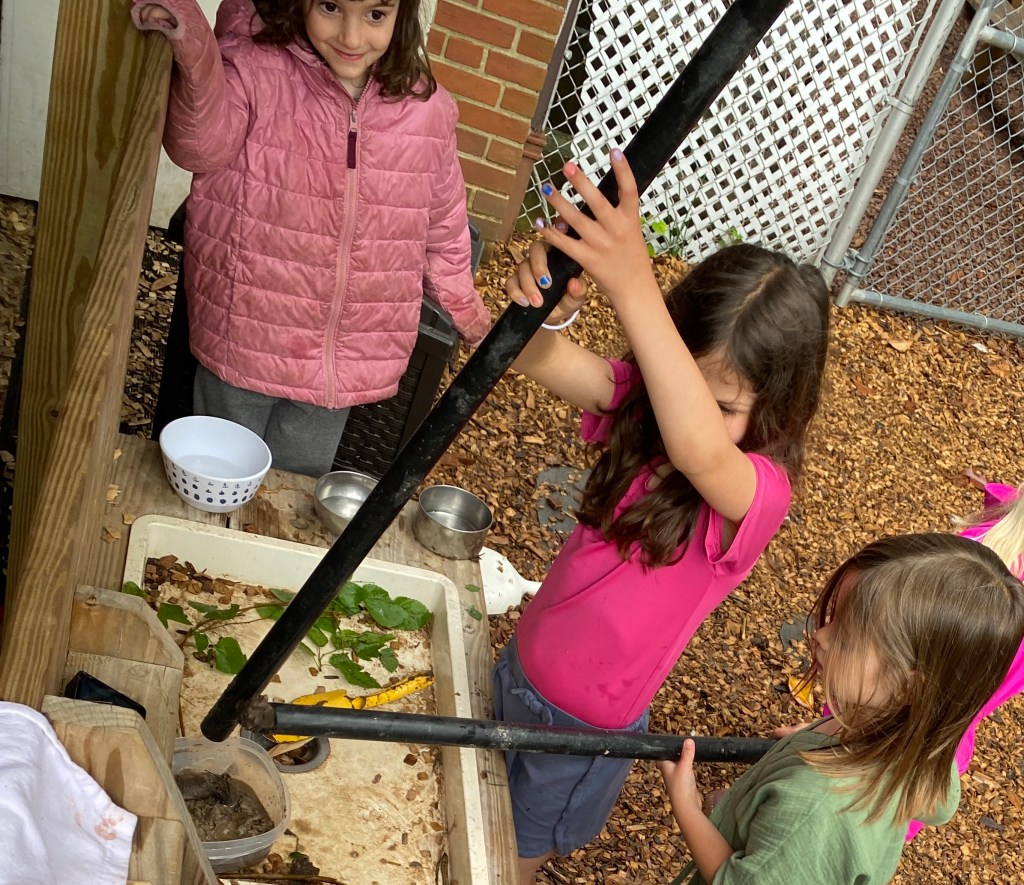
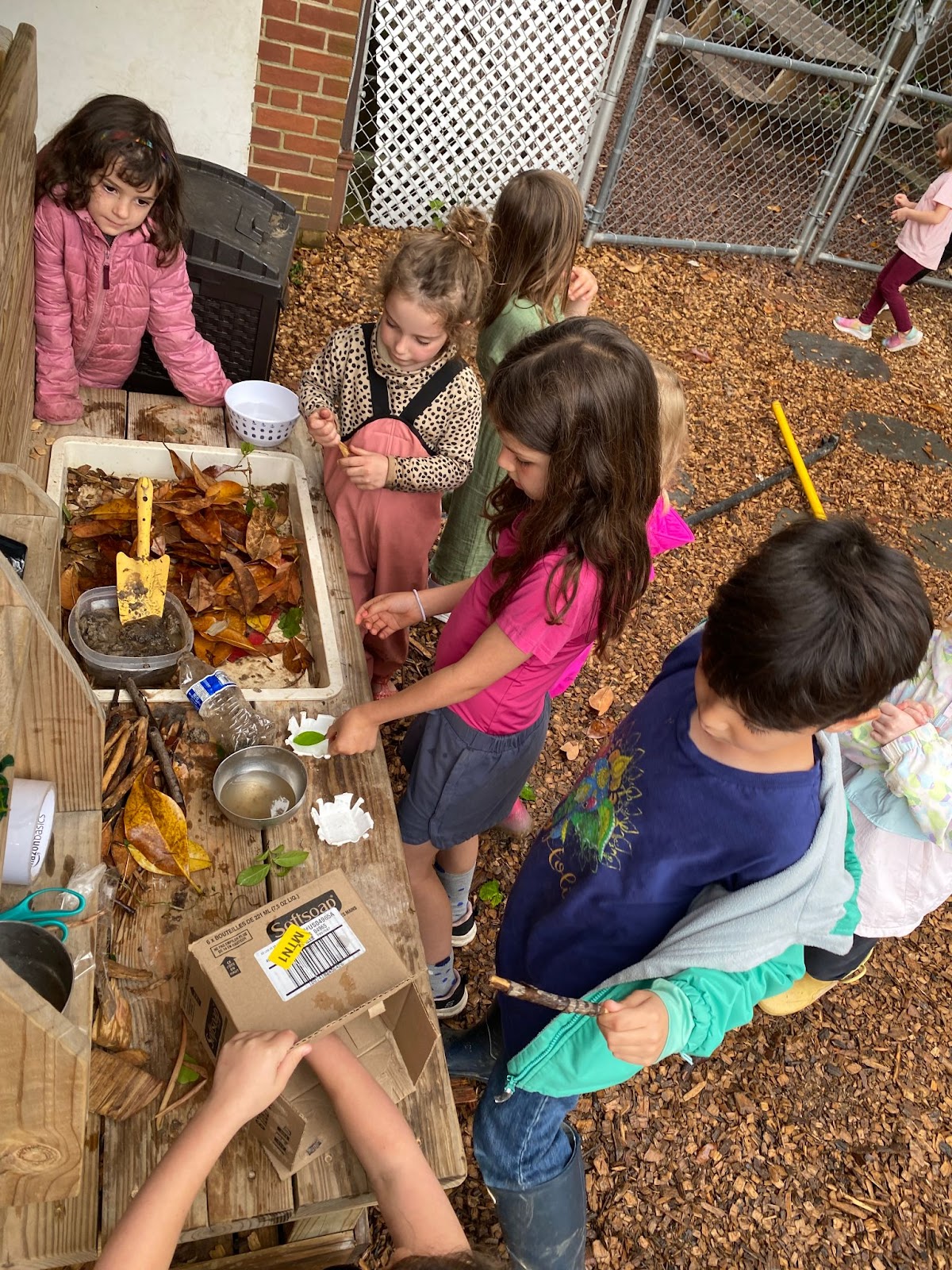
Halfway through lunch time, Spark learners noticed something moving in the window well, deep underneath the ground.
“There’s a baby bunny down there!”
“I think it has a cut!”
“Can we save it? Please?”
They brainstormed about how to get it out.
“Who has ideas?”
“Let’s ask Evan because he has like a thousand pets.”
“We are making a ladder so it can jump out. My bunny used to run up a ladder.”
“We need a bunch of sticks.”
They prepared a home for the rabbit while Ms. Gwyneth called animal control.
“You need water so the bunny can have something to drink.”
“Why do we need three bowls?”
“In case one gets dirty!”
“Guys, we have to filter the water. I’m trying to get out all the dirt (from the bowl).”
“Can we use this?”(A plastic water bottle)
“Here’s a food and water bowl! Green is for food and white is for water.”
“Here are some leaves.”
“My bunny eats leaves! Wait, who got this poison oak?! We are not feeding poison oak to a bunny.”
They wondered how they could aid in the rescue.
“Get some sand! We can use the sand to help stick it together.”
“We can tape the bottom so it doesn’t fall out.”
“More sand!”
“That’s too much!”
“Oh wow Alice, you really helped!”
“Mulch goes over there.”
“It’s just so adorable when you two work together.”
“I’m going to play baseball. I’ll be right back.”
“We should put a band-aid in, in case it has a cut.”
“Bunnies don’t know how to use band-aids.”
“We can put it on for them!”
Just before we had to go in, Officer Grace from Animal Control arrived to help us catch and release the bunny.Spark learners watched closely as she released it from her net.
They cheered quietly as it hopped away. After the dramatic rescue, learners had lots of questions for Officer Grace, who generously stayed for an impromptu Q and A.
Q: How many animals have you saved? (A: Many!)
Q: Have you ever rescued a bear? (A: We have a bear in Arlington County right now. We’re going to leave him alone and he will walk home.)
Q: Have you ever saved a bird? (A: Yep.)
Q: Have you rescued a really tall animal? (A: I saved a really big dog once, does that count?)
Q: Have you ever rescued a snake? (A: Yes, lots of snakes.)
Q: Have you ever rescued a cheetah? (A: Well no, not a cheetah.)
Q: Have you ever rescued an animal from a burning house? (I haven’t, but we took in animals who had been rescued from a house fire.)
“Thank you for being so kind and calling us to save the bunny. If something like this ever happens again, you can call us any time.”
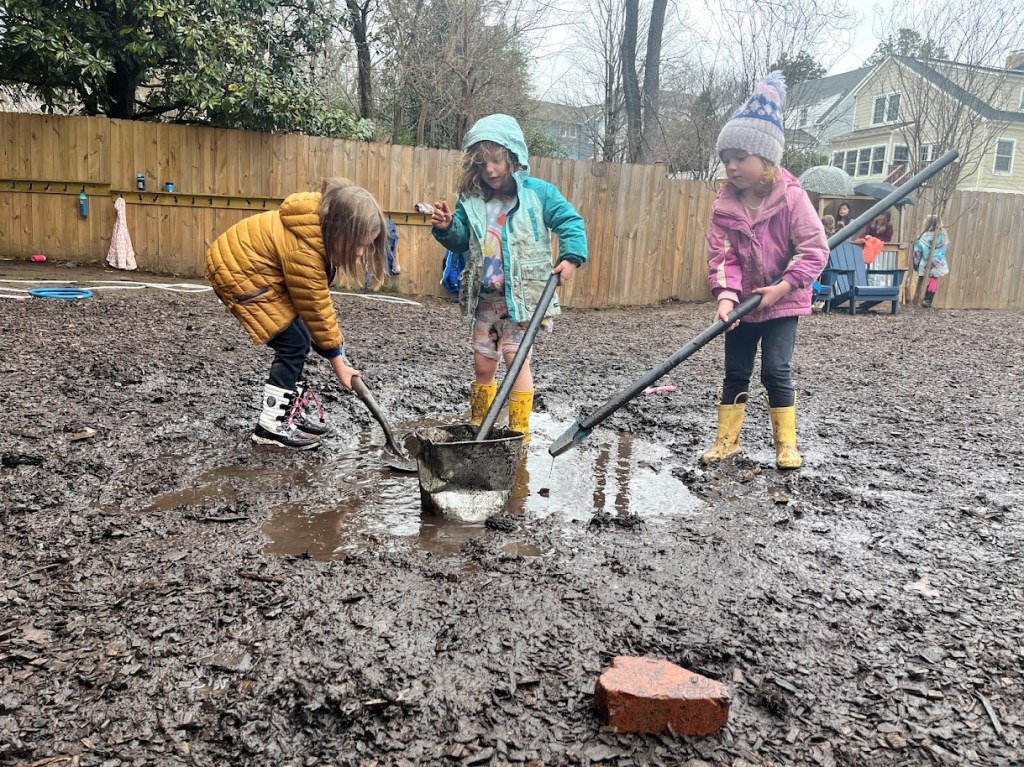
On the days when my kids climb into the car still glazed in sweat, their feet swimming in damp socks and mud-caked shoes, I close my eyes, take a deep breath, and feel a deep sense of gratitude for The Village School experience. I wouldn’t trade a clean car for anything because the dirt that cakes into the seats of my car, fills the backseat and one hundred percent makes it into my house is an indication that my kids’ day was full of active experience. They played hard and it shows.
On the days when my mind strays from gratitude and leans towards cleanliness and control, I remind myself about our life before TVS, when my kindergartener would get off the bus just as clean as she was when she left the house, with her bow still perfectly straight in her hair. Some days she looked more pristine than when she left. Her cleanliness was a daily reminder of her controlled and passive experience at school. Where were the grass stains? Where were her calloused hands worn out from the monkey-bars? Where were the abrasions from the asphalt? For the love – where was all the dirt?
This session has been a great reminder of our family’s “why” for choosing TVS and a reminder to me that a dirty car and dirty kids was an intentional choice made by our family. We chose the dirt, rain, mud, and all season experiences instead of the pressure of an enclosed classroom in which children rarely get to experience the benefits of nature.
The benefits of time outside can be seen in the remarkable differences of our older learners when they switch between a traditional educational environment to our program which values unstructured play. In a matter of weeks, our learners have built resilience, conflict resolution strategies, conversational skills, tolerance for being uncomfortable, and so much more! We see them blooming in a space that allows for so much freedom and time to slow down, enjoying the world around them.
The image of a dirty child is counter cultural. Just as children are expected to be “seen and not heard”, adults also expect children to be tidy and clean. Wash your face, change your clothes, and brush your hair – adults see messy children, where we see the dirt, unkempt hair, and muddy clothes as evidence of a day well spent. When attending private school fairs and open houses, we often see images of children dressed in uniforms, neatly ironed and pressed. As Guides, we find ourselves smiling about how our learners would certainly stand out in these environments, covered in mud and sand, dirt under their nails, expressing that they are “meant for the wild” as one of our Spark learners recently shared.
We don’t only welcome dirt when it comes to playing outside, we also welcome the “dirt” that comes along with our learning model. Our learning model is not neat and tidy, our learning model welcomes the mess that we know (from decades of research) is the path to deep learning. The “dirt” that occurs during project time might look like chaotic collaboration, loose parts and materials strewn about the studio, little bits of paper and glue all over the tables and floors, freedom of movement – and dare we say it “wasted time”.
Another form of dirt that we welcome is conflict. Disagreements, misunderstandings, and hurt feelings are all natural and important parts of learning and growing.
In a recent book our parent community read, The Anxious Generation, author Jonathan Haidt, shares about a school dedicated to unstructured play. At the Central Academy of the Arts, they found that
“unstructured free play addresses – heads on – making friends, learning empathy, learning emotional regulation, learning interpersonal skills, and greatly empowers students by helping them find a healthy place in their school community – all while teaching them life’s most important skills like creativity, innovation, critical thinking, collaborations, communication, self-direction, perseverance, and social skills”.
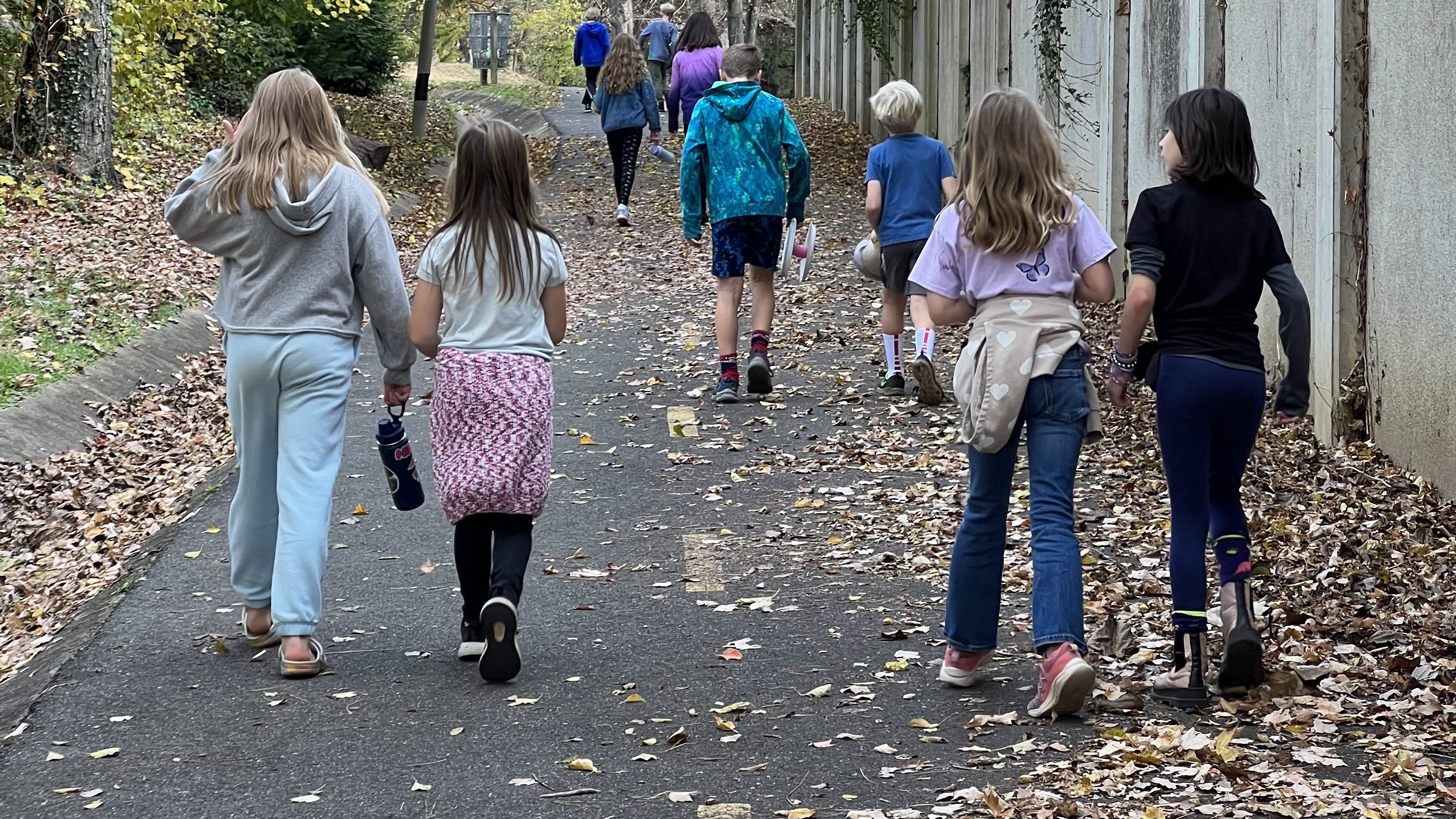
At The Village School, we are proud that our learning model incorporates project-based learning AND unstructured play AND daily opportunities to get covered in all versions of dirt. Just this week our youngest learners were spotted dragging planks of wood across the playground to build a fort while others made “cupcakes” made of -you guessed it- dirt. Our elementary age learners have spent every afternoon at the local park conducting experiments to test the water quality in the creek while also noticing snakes, catching crayfish, chasing turtles, and getting dirty. Our middle schoolers spent their outdoor time yesterday using the playground hose and loose parts to create a wading pool complete with a surfboard and fountain feature.
We would apologize for the grit and grime (and maybe some creatures) that we know for sure made it into your car and probably house – but all of that dirt was by design. So, the next time you bravely peek into the backseat of your car or the bottom of your learner’s backpack, we hope you’ll remember that you chose dirt – and we are so grateful that you did!
As a guide who recently graduated college and moved states away from my family, I’ve been grappling with some personal challenges, which made last week particularly tough.
However, amidst those difficult times, I also experienced an overwhelming amount of love and support when I came into work each day, not just from my fellow guides, but from every learner in the Adventure studio.
On Monday, some of my coworkers noticed I was upset and surprised me with lunch and snacks, bringing me to tears. The learners noticed that I wasn’t myself, and offered support: “Are you okay?”, “What happened?”, and “What can I do to help you?” Feeling the overwhelming love and support, I went home that day thinking, “Wow, I can feel the support of the community” and “I am so extremely grateful to be a part of the culture we are building.”
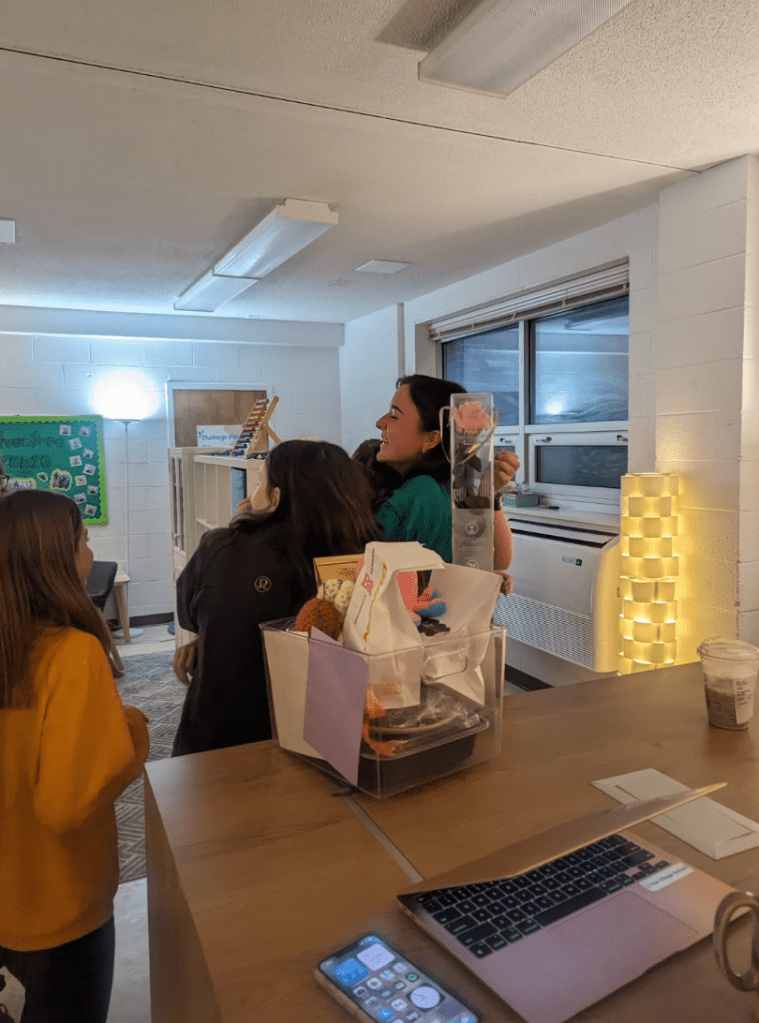
The next morning a group of Adventure learners approached me with another form of support – a bin full of goodies, from homemade cookies and brownies to a stuffed animal they made. Included was a card that read “I just want you to know we are here for you. Whether you need to talk to someone, you need someone to make you laugh, we are here!”
At that moment, I thought to myself, “I can see the model working. I can really see how this school differs from every school I have been to and any place that I had worked before this.” I was blown away by the compassion and empathy the learners had.
When I shared this story with my friends and family, they responded “your middle schoolers did what??” followed by, “Oh Gosh, that would’ve never happened at the schools I went to.”
These are not the only stories of empathy at The Village School, but just one of many.
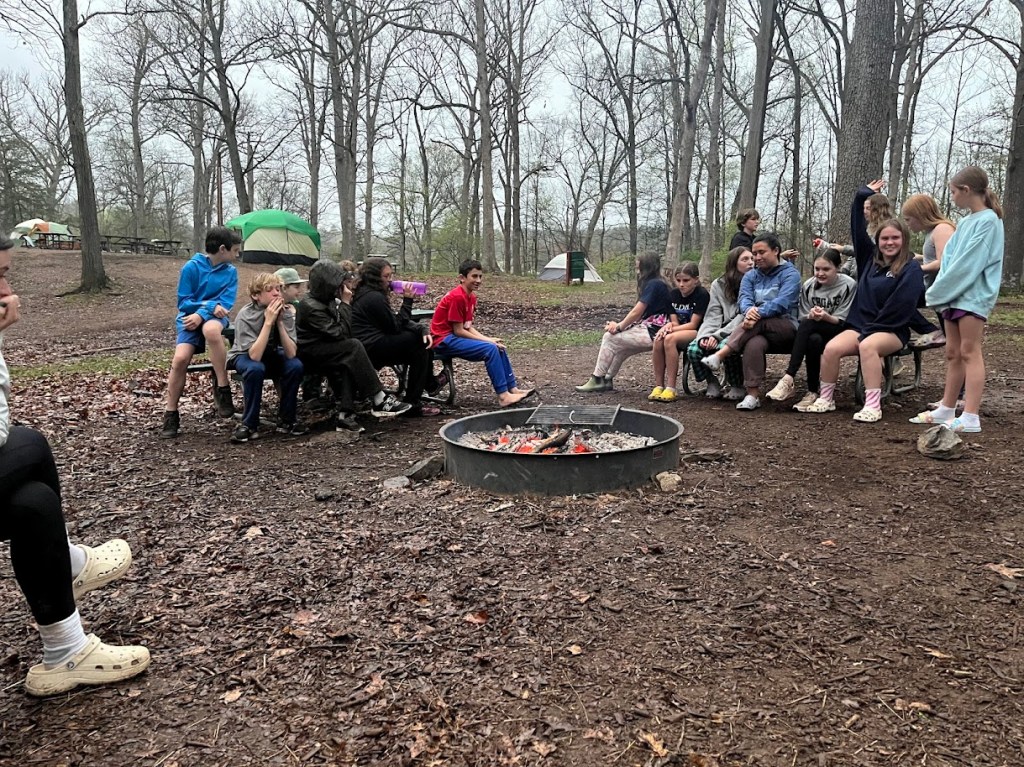
I’ve also witnessed this sense of belonging and support many times since the beginning of the year. Recently the middle schoolers went on a three day camping trip. After a long day of hiking in the rain, the girls settled into their tent and realized that one of the learners’ sleeping bag was completely soaked through, and she was freezing. Without a thought, another learner rearranged their own set-up to make more room and dry space. What strikes me as so special about this moment and the other moments like it, is that the learners do the next right thing without asking for help, assistance, or guidance. They do the next right thing because it’s the right thing to do and they really do care about each other.
These stories of empathy also include moments during work periods when learners notice a friend struggling to meet their goals. Just this week, a learner completed their pre-algebra badge and the entire studio erupted in cheers, acknowledging all the hard work that had led him to that point. This is evidence of a culture of care and collaboration, which is in contrast to the culture of competition that is the status quo in many schools.
At The Village School we care about who the learners are, rather than what they know and these stories are just some examples of how a culture of belonging and support are enacted in our studios every day. We lift eachother up when we are down. We help each other through the lows, and cheer for each other through the high.
Our learners have the opportunity to cultivate close relationships with their guides and peers. Unlike traditional schools, where students frequently switch classes, here they work closely with guides across subjects. As guides, we strive to understand each learner individually, including their progress, passions, goals, needs, strengths, and learning style. This understanding extends beyond academics, allowing us to nurture a community that is empathetic, loving, and kind. We genuinely care about each learner, demonstrating to them that they belong and are valued in our community.

















 villageschoolnova.blog