Businesses Built and Soft Skills Secured

“What’s the most stressful situation you have handled, and what was the outcome?”

“Can you think of a time when you worked with someone difficult to get along with — how did you handle interactions with that person?”

“Tell me about a time when you set a goal for yourself and what you did about it.”

At The Village School, we often discuss our ‘Why’. Why do we emphasize character and community building? Why do we embrace struggle? Why do we believe we are best able to prepare the children we are trusted with for long term success? While considering which of the innumerable answers we have as a community, I was struck by the paradox presented in our most recent project.

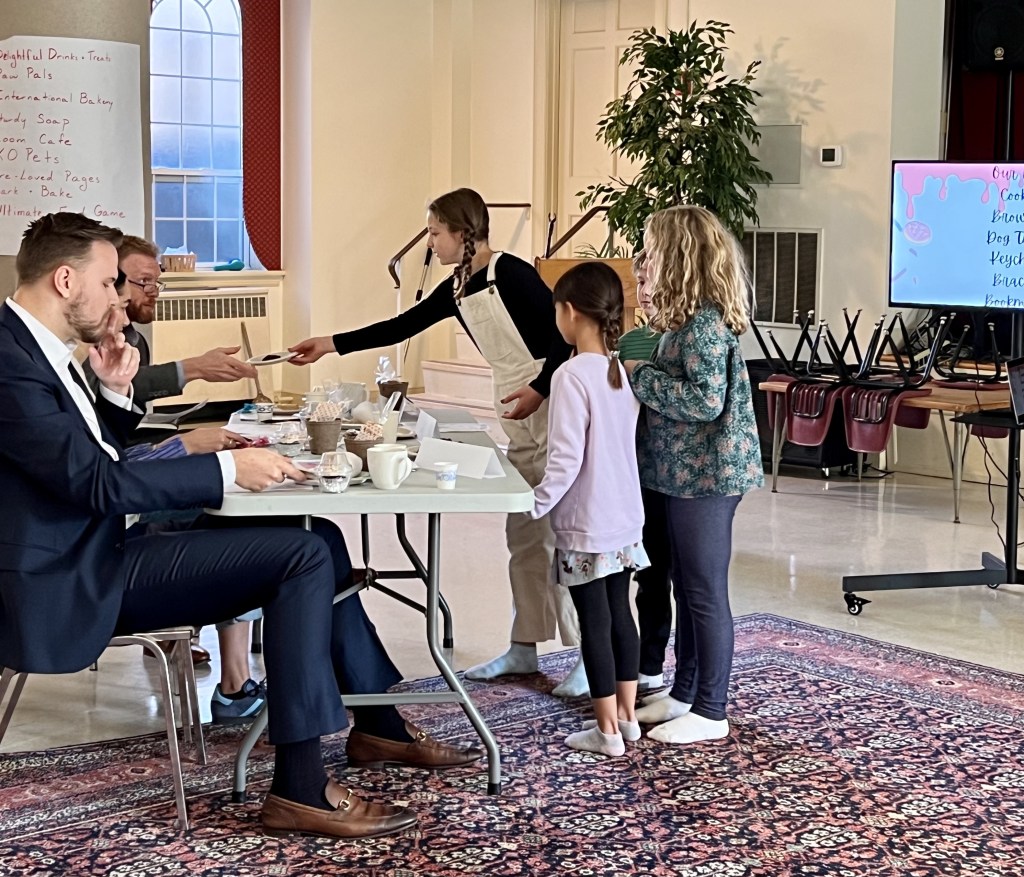
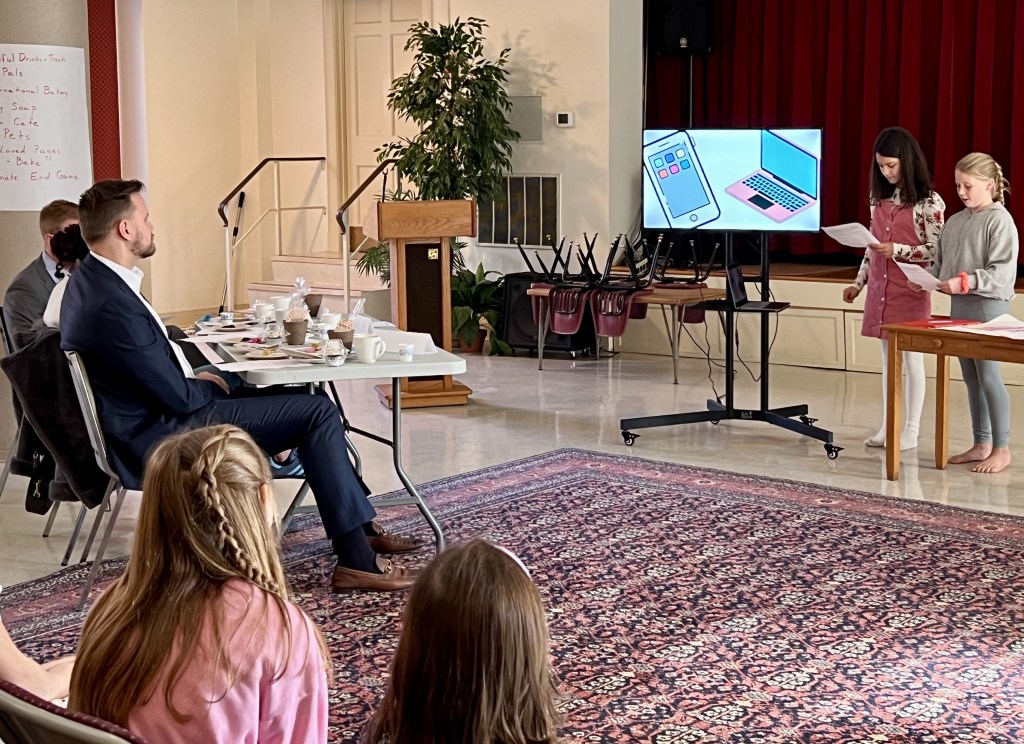
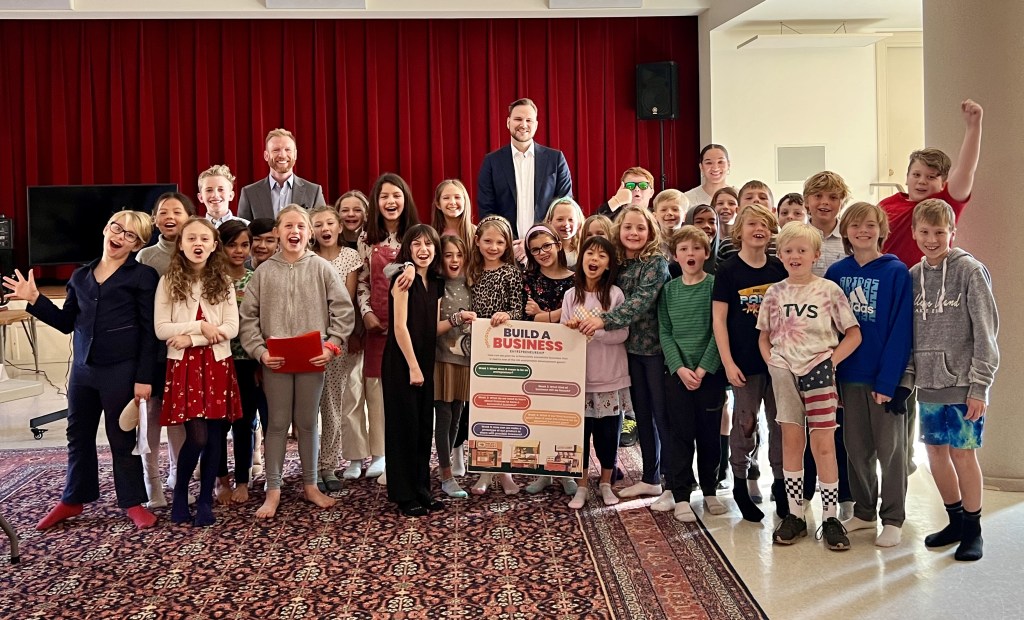
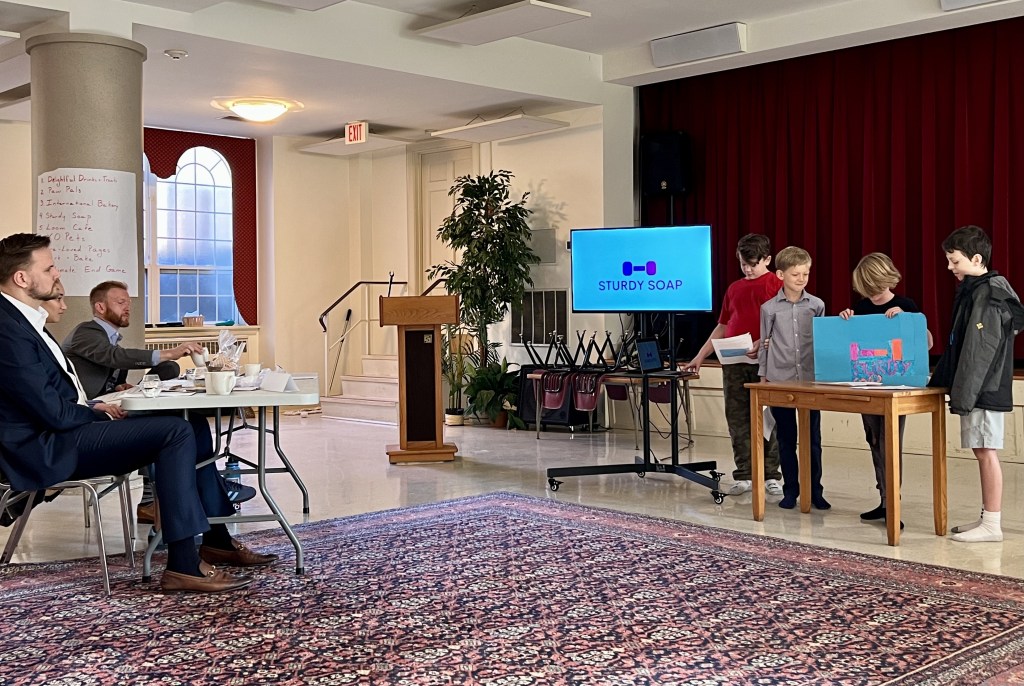
In session 2, Discovery Studio’s Project and Writer’s Workshop was all about Building a Business. Learners were challenged to plan for a financially successful business that was tied to one of the UN Sustainable Development Goals. To this end, learners conducted market research, learned about competition, used mathematical skills to create a realistic financial plan, and wrote a persuasive pitch to present their business. The culmination of this work  was a presentation of their product prototype, formal business plan, and a group pitch presented to a panel of local entrepreneurs judging as investors. 

I am still teeming with pride for our learners and the conclusion of this project. A TV and table centered in front of the stage of the vast empty room. Tables angled to the left with three chairs and three accompanying name cards. The rest of the open space, filled by chairs set in neat rows of five on the ornate rug of the Parish Hall. Learners, ages seven to eleven, excitedly entering and finding a seat. Our judges, on that day referred to as Sharks, taking their designated seat. Discovery learners were not only prepared, poised, and polished, but also fielded questions that pushed the already extensive thinking they had done about their businesses. 

However, my joy seeing the weeks of effort come together is only eclipsed by the admiration I have for our learner’s when reading their Session Reflections. Not one mentioned the laminated menus or powerpoint presentations prepared, but rather their answers all spoke to some part of the journey: the lessons learned, challenges overcome, and fears faced. It is these moments along the way that have already armed our learners with answers to the interview questions posed at the start of this post, all taken from Forbes’ article “Soft Skills are Essential to the Future of Work.”

“What’s the most stressful situation you have handled, and what was the outcome?”

“I didn’t know that I could talk in front of the sharks”

“A challenge I faced was being really scared and nervous to share to the sharks but I did it!”

“Can you think of a time when you worked with someone difficult to get along with — how did you handle interactions with that person?”

“It’s okay to not agree” “I have grown in my ability to be a leader. I like helping others!”

“I learned to be patient”

“Tell me about a time when you set a goal for yourself and what you did about it.”

“I learned hard work equals being proud”

“I learned that building a  business is harder than it seems”

By engaging our learners in a project acquiring the hard-skills associated with building a business, we also offered them an opportunity to acquire all the soft skills that may someday get them their dream job. Looking forward to sharing more trailblazer inspired ‘Why’s!
Space to Wander and Wonder

For many Spark learners, Friday is easily the best day of the week. Instead of heading to The Village School in Arlington, their cars and minivans steer two miles away to Ms. Jenny’s house. Jenny Thomas is a Community Partner, longtime educator, parent of a former TVS learner, and strong advocate of our program. Her historic two-acre property is an unusually large space in Falls Church City. In her words, “it begs to be shared.” With their unending grassy areas and spaces to explore, the grounds perfectly complement the environment at TVS. So much of our focus is on character building, relationships, following your curiosity and passion, etc. Some might argue that our deepest learning happens on Fridays.

The crunch of tires on gravel as the first minivan makes its way up the long, stately driveway signals that the morning has begun. After saying a quick hello to the guide, children thud to the ground one by one and sprint for the backyard. After hanging their backpacks, lunch boxes and coats on the picket fence, they greet the animals awaiting them. There’s often a foster puppy (or five) waiting to play catch, or one of the three cats scurrying for a hiding spot.

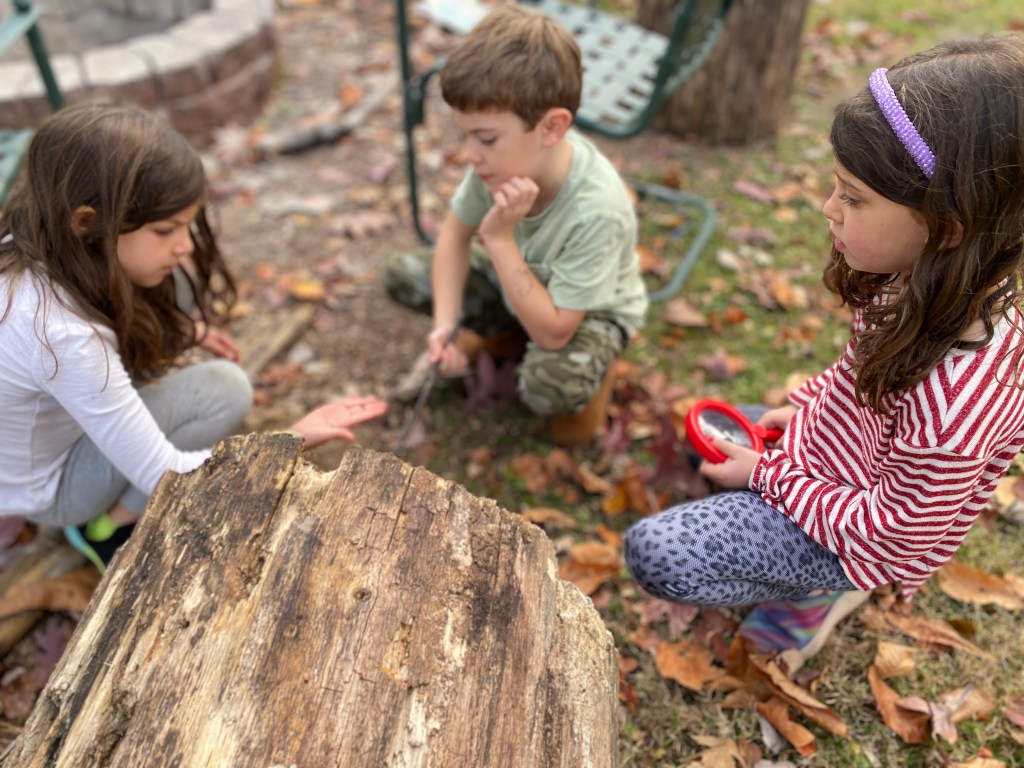
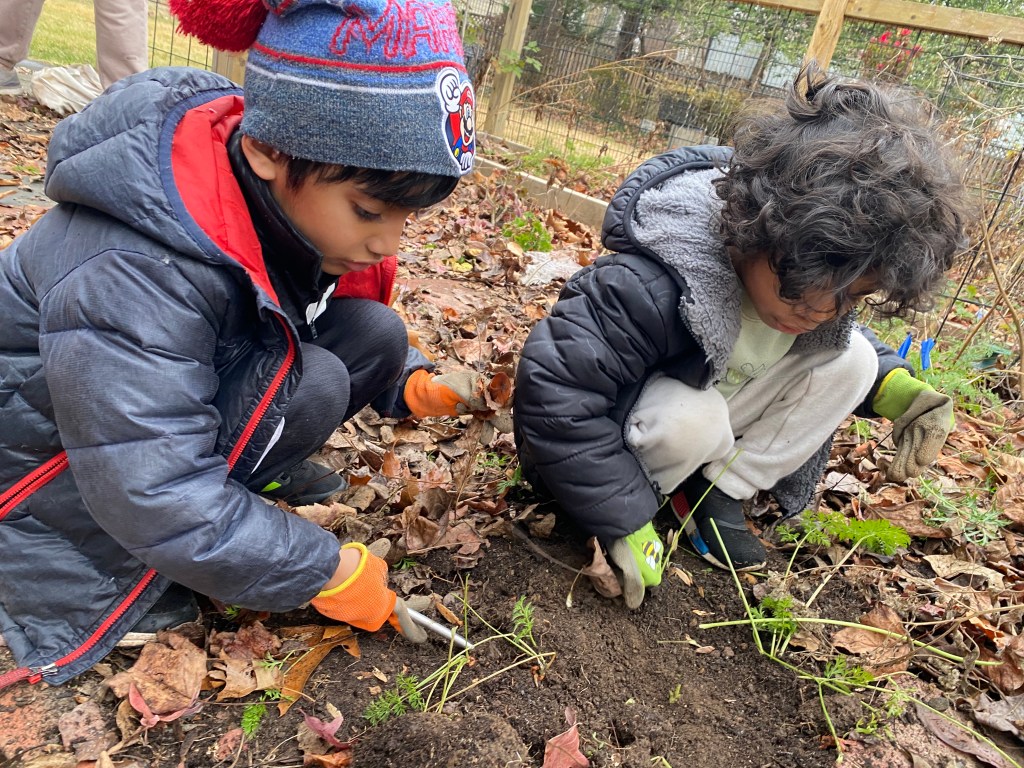
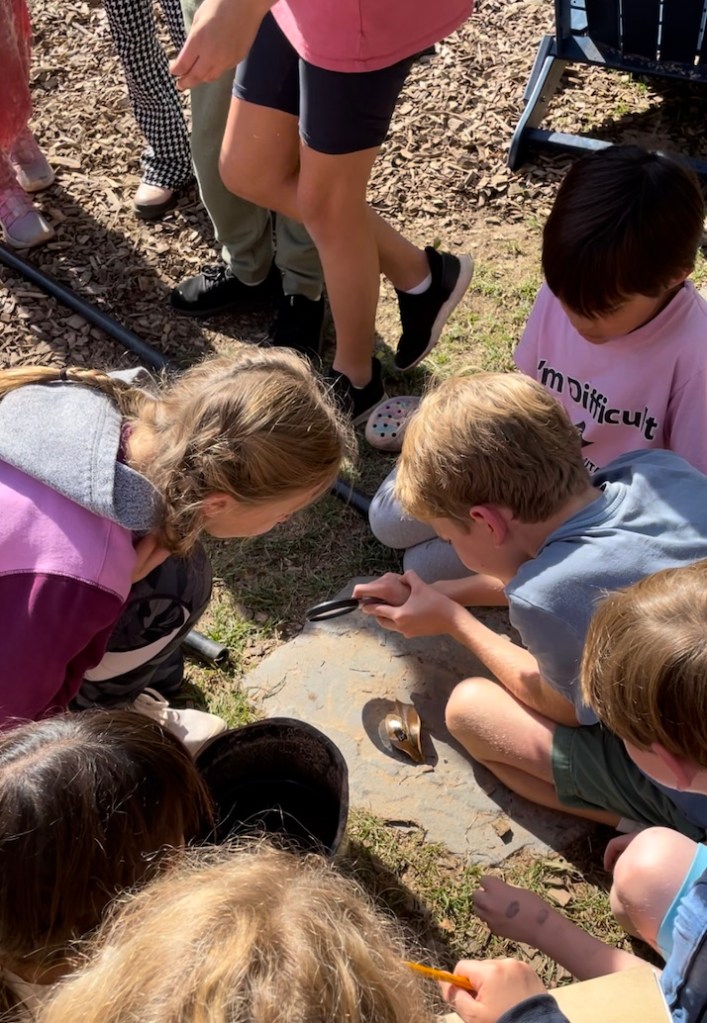
Some learners waste no time in turning over the giant logs surrounding the fire pit or rocks outlining the gardens. After having laid undisturbed for a week, these spots teem with new critters. Finding a stag beetle or two is all but guaranteed year-round, but the children marvel when they unearth the occasional centipede or spot a woodpecker. Last week, they found a salamander guarding its tiny, translucent eggs.

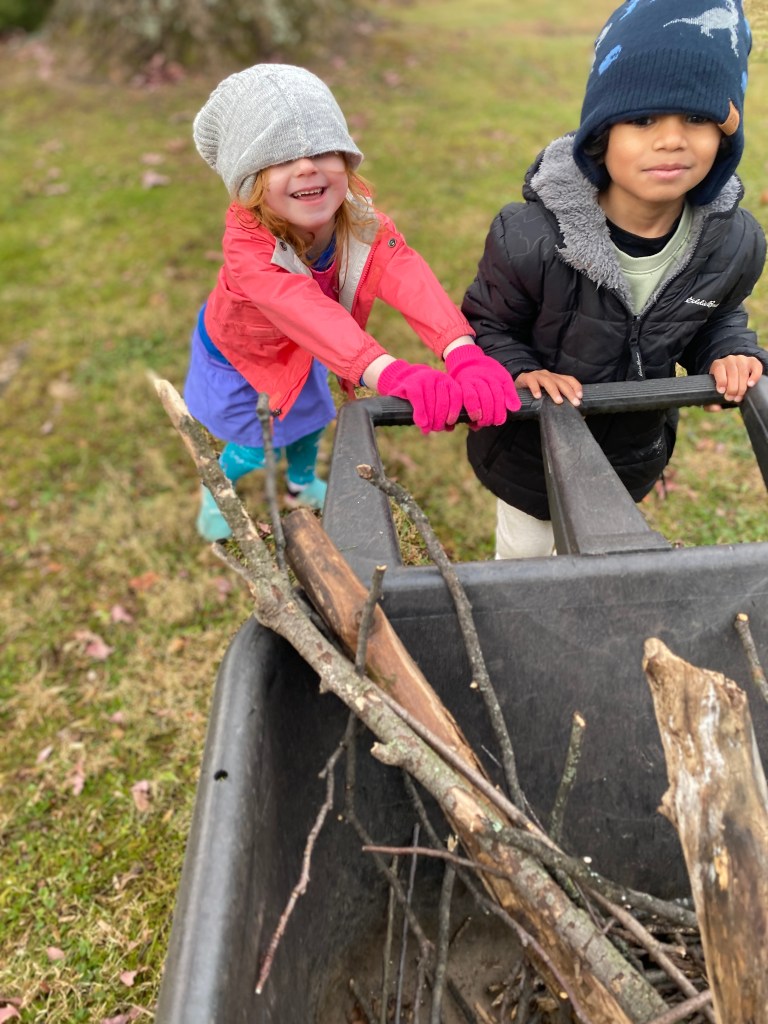
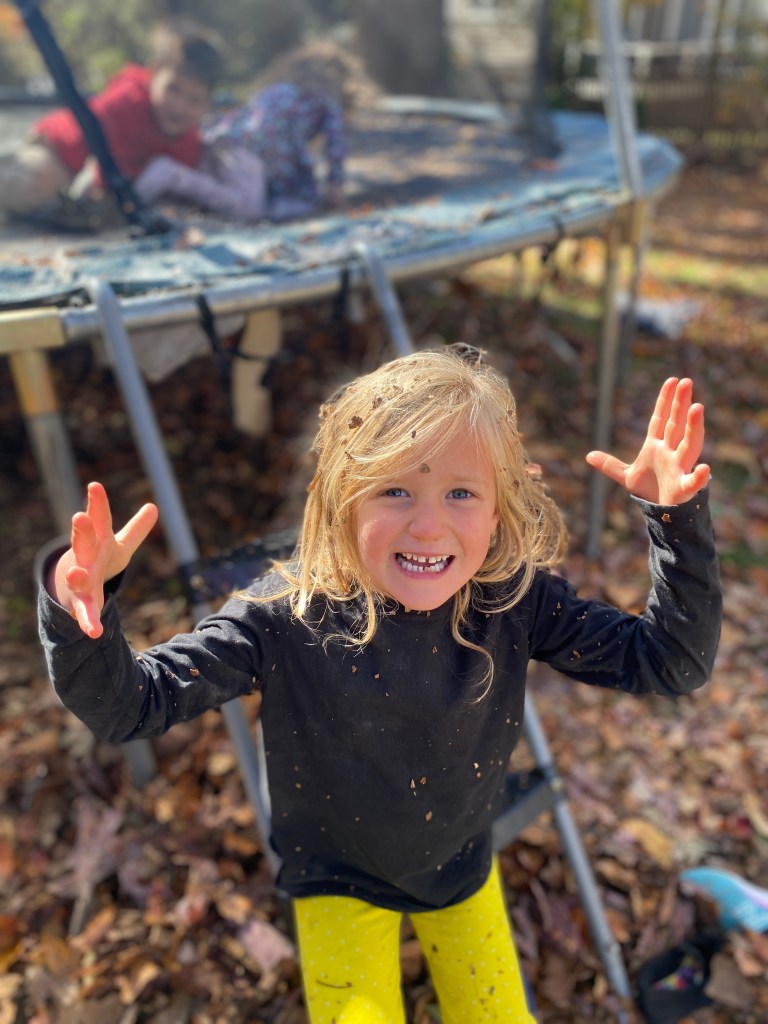
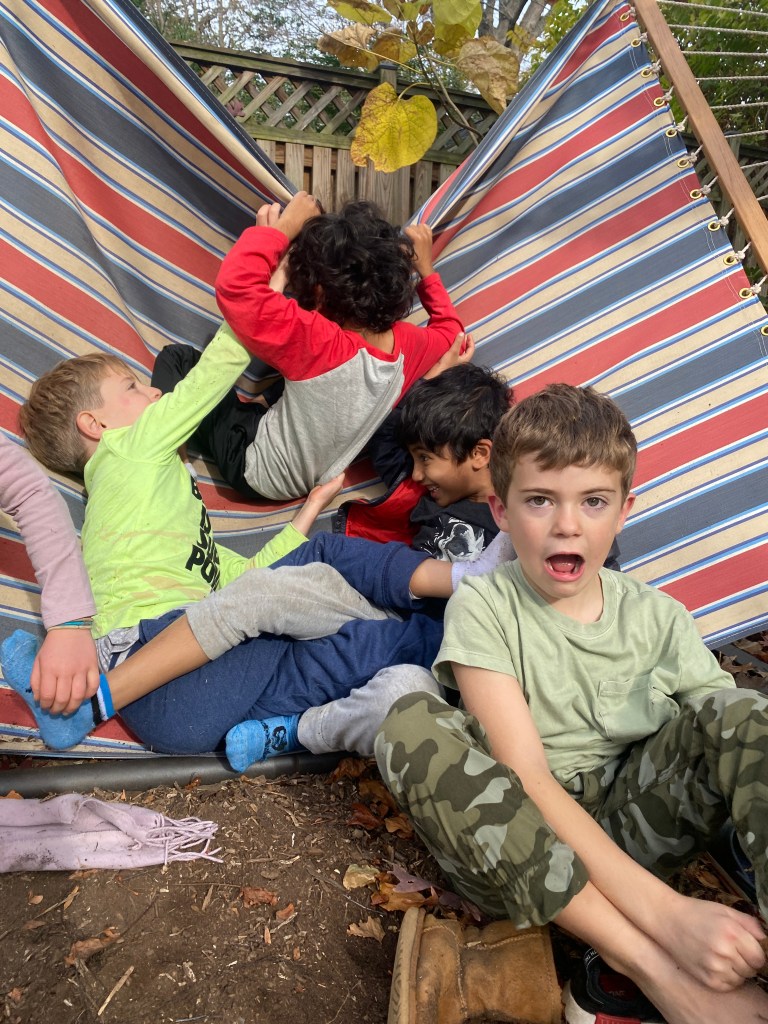
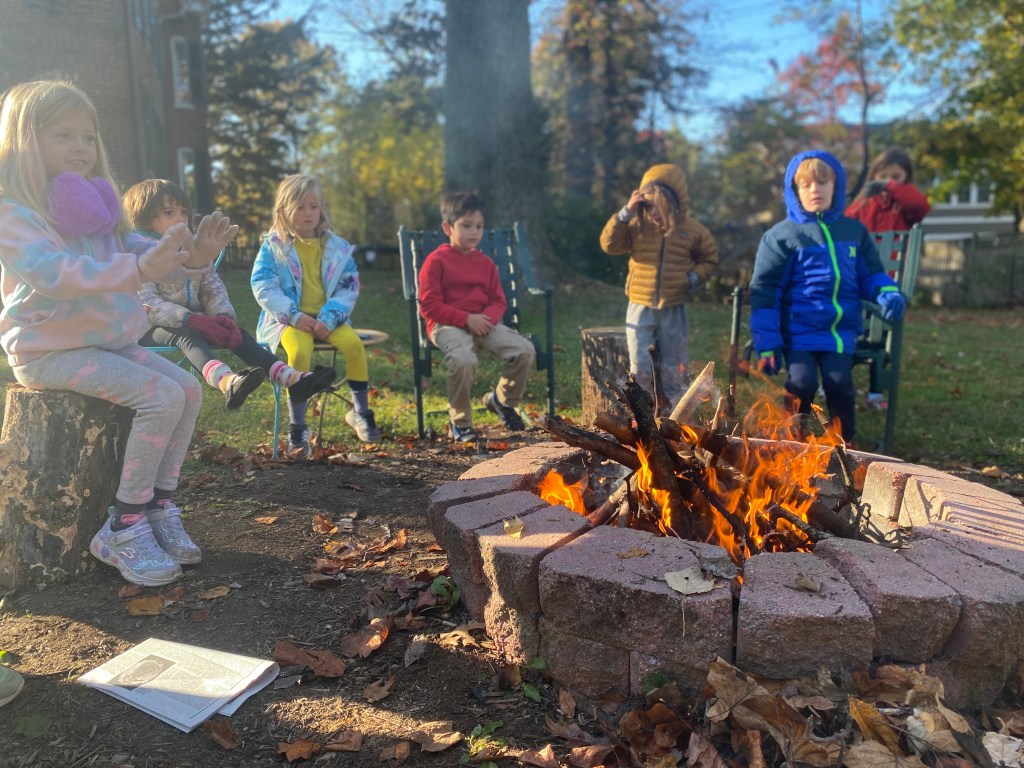
Other groups collect sticks for the afternoon fire, assemble “soup” ingredients, or swing on the hammock strung between two hundred year-old trees. In the autumn, oak leaves blanket the lawn, just waiting to be raked into piles. It’s amazing how much organization this takes, inspiring even the little ones to step up and lead. They all take turns leaping in and burying each other.

Then they let loose and run. Oh the running! They smile big and often as they gather speed and tear across the lawn, lungs gulping the fresh air. They shout to their heart’s content. It’s not unusual to see a learner stroll off by themselves, enjoying time to think quietly, let their mind wander, and rest in the moment.

According to Balanced and Barefoot, a therapist-recommended book by Angela Hanscom, young children should play outside 4 to 5 hours a day for optimal exercise and mental health. We do our best at TVS, giving them more than two hours a day. But at least one day a week, Spark learners get seven straight hours to let loose, jump on the trampoline, lift heavy sticks and logs, play tag football, and more. (Notice how they sleep really well on Friday nights?) 

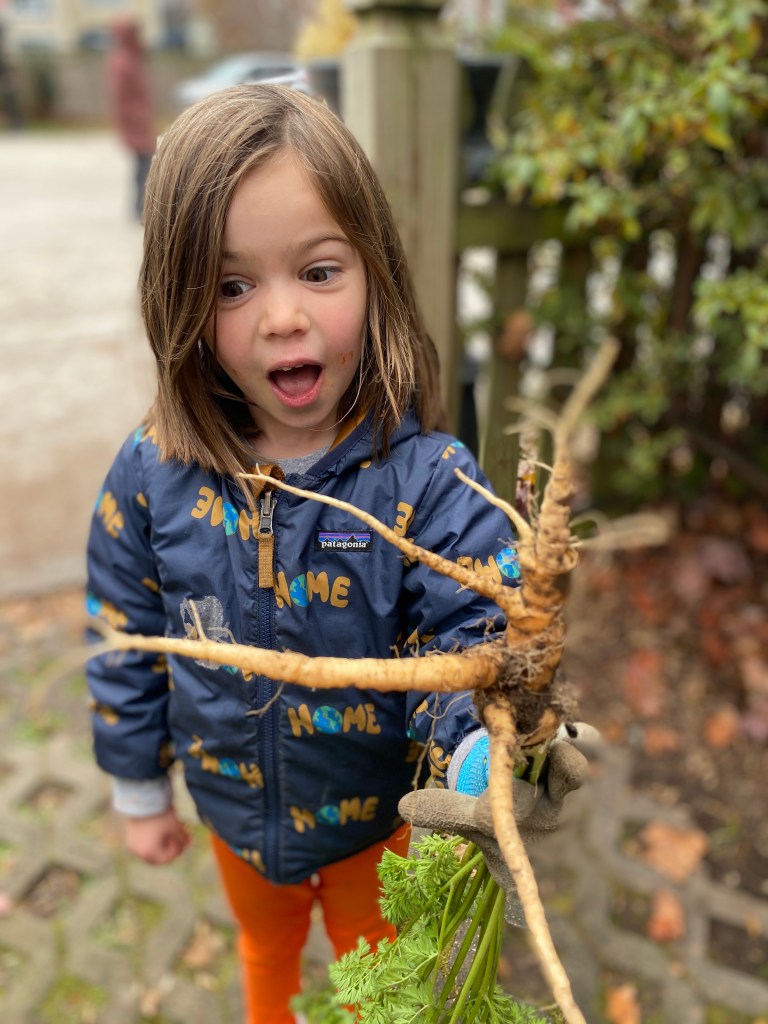
In Spark, this is experiential learning at its best. Children learn to do as they build fires in the pit built for 20. They learn about the limits of their balance as they climb on the hammocks and trees. They learn to live together as they mediate arguments over turns on the swing and retrieve ice packs for their hurt friends. They learn to be, to treat each other with kindness when they find out what is fun and what hurts others. Perhaps most importantly, they exercise autonomy over their entire school day. If they want to spend hours around the fire or take six turns on the trampoline, so be it. If they want to harvest carrots in the garden or help Ms. Jenny mow the lawn, that’s fine, too.

Seven uninterrupted hours allow play to evolve and new friend groups to form. Adapting to cold, rainy weather also helps build resilience. (Don’t worry–when it storms, indoor areas like the wraparound porch, craft room, and lofty barn provide shelter.) Children enjoy cozy traditions, such as sharing blueberry tea, roasting marshmallows over the coals of a dying fire, or wrapping up in blankets to enjoy a story or two at the end of the day. We have yet to enjoy a snow day here, but we have our fingers firmly crossed for the upcoming winter!

Guides look forward to Fridays, too. It’s time to observe each learner and see what they are capable of outside our school setting. We see their bravery, leadership, and skills in conflict resolution evolve. We can’t wait to return next week and see what they’ll do next. Personally, I relish the opportunity to talk as little as possible. This is time to just watch the learners play, play a little myself, build relationships with them, and get ideas to take back to school.

All this is crucial to our learning model at TVS. Children set and work toward their own goals, come up with their own rules, and get good and dirty. Children who play messy can think creatively. Spark’s unofficial motto? The dirtier the better!

I could go on about the learning opportunities at Ms. Jenny’s house. Suffice it to say, what may look like a throwaway day from the outside holds some of the richest learning experiences on offer at TVS. It is something that makes learning here truly unique!

Session 3 Sneak Peek

Spark Studio

In Session 3, learners will continue exploring all aspects of entrepreneurship. Spark will begin the session with a guest talk from an entrepreneur, Lisa Bourven of Toy Nest, who reimagines the way we buy and use toys. Each learner will then work with a small group to create their own business. They will have the opportunity to incorporate animals, sports, holiday related themes, and food and drink into their products as they solve a solution to a world problem. 

Wondering if math, reading or writing are important in designing and owning a business? Learners will work with hands-on materials in each area of the studio to see how these basic skills help them as they own and operate a business. They will conclude the session with a business fair to showcase and sell their products.

Discovery Studio

Photo by Alena Koval on Pexels.com

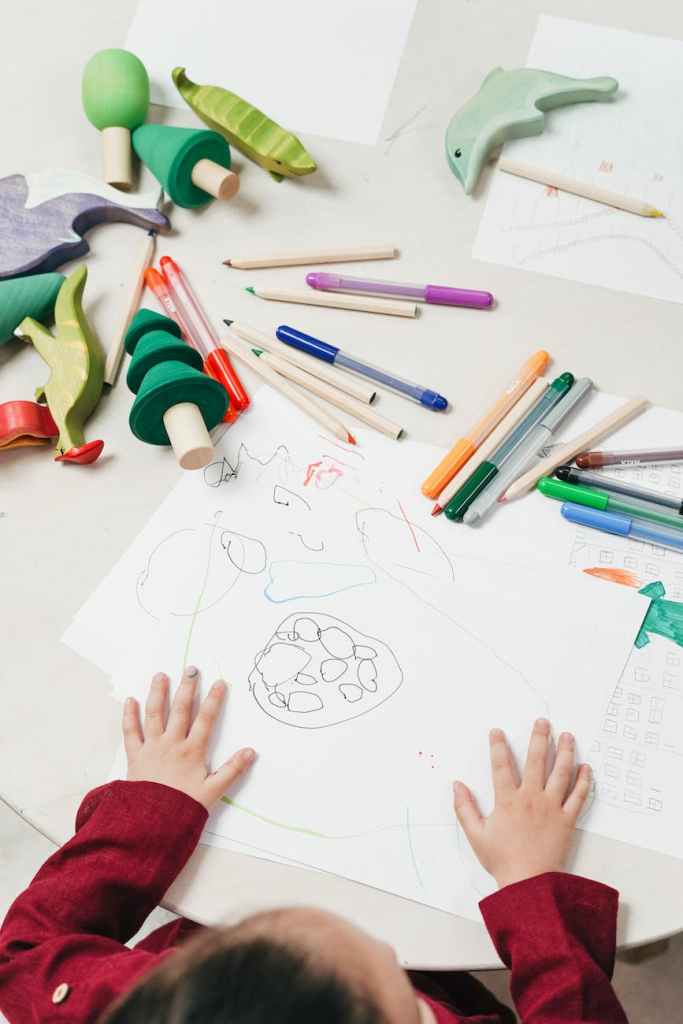
This session Discovery learners will lean into their Trailblazer identity and consider what it means to be a changemaker through graphic design. Learners will study the impact and effect of persuasive graphic design through research on three rhetorical appeals – logos, pathos, and ethos – and four graphic design principles – proximity, alignment, contrast, and repetition. They will hear Trailblazer talks from several local graphic designers and artists to inspire them in their own design creation. What will they persuade us to think and believe? We can’t wait to see their final products at the end of session exhibition. 

The Session 3 Writer’s Workshop will invite learners to explore the art and practice of journaling.  In this technology-free project, learners will write their own journal entries inspired by reflective journaling, creative journaling, travel journaling, and gratitude journaling. The project will kick-off with the “discovery” of a time capsule that holds journal entries written by famous historical figures. At the end of the session, learners will choose one journal entry to put in a time capsule that will be opened in four years, the next time this Writer’s Workshop is offered in Discovery Studio!  

Adventure Studio

Photo by Foodie Factor on Pexels.com

What do you get when you mix history, science experiments, and sugar? The Chemistry of Candy Project! This Session Adventure learners will explore the origins and history of one of the world’s sweetest discoveries, dive into the science of candy, and learn about the processes that go into mass production. Learner’s chemistry skills will be put to the test with the challenge of creating their very own brand of Edible Slime at our “Edible Slime Tasting Exhibition” at the end of the session. 

Adventure learners will also begin the process of securing an Apprenticeship this session. Learners will spend time considering their values, strengths, and skills in order to determine what apprenticeship might serve their dreams and passions best. They will make decisions about their dream apprenticeship opportunities and create a social capital map that will help them in realizing who they know and who might be able to support and guide them in their journey. 

Health & Wellness

“Lighten up on yourself. No one is perfect. Gently accept your humanness.”

–Deborah Day


Self-care is essential to our physical, emotional, and mental health. The holiday season can often be a time of joy, comfort, and fun. It can also be a time when we all feel busy and stressed. During the last session of 2023, health and wellness will be a time of introspection. The learners will be challenged to reflect on how they take care of their minds, bodies, and spirits. In the linked research article, the authors explain how students learned about how to take care of their minds through reducing stress, their bodies through healthy exercise and nutrition, and their spirits through finding connection with themselves and their purpose. Each learner will be given tools for reflecting on the self-care they engage in now and what they would like to focus on in the future.

Building Empathy

“Empathy is caught, not taught.”

– Mary Gordon, Founder of Roots of Empathy

As the Wellness Guide at The Village School, I often find myself seeking moments where I can support our learners with empathy building. Having empathy for others and empathy for yourself is developmental and depends on a number of factors in one’s life. It is not a skill that one day you wake up with and all of the sudden you are able to put yourself in someone else’s shoes or feel what someone else feels. In reality, having empathy is hard. It is a skill that needs to be practiced and experienced in order to be developed. It is also a crucial skill that our world needs more of. According to research, empathy is the most important leadership skill needed today. 

Opportunities arise throughout our day at TVS to allow our learners to experience empathy. One way that we plan for this is through storytelling. Storytelling is an essential component of our curriculum. Listening to the stories of others allows us to connect to the human experiences that other people go through, activating our ability to develop emotions and connections with others. Making connections to people that are different from us, builds our ability to have empathy.

One of the most important ways that The Village School builds empathy is through the caring relationships our learners experience. When our learners struggle, our Guides are the model for patience and compassion. Even in a small environment, our learners are not isolated from the stress of the world around them. They all experience bad days, hear about world events, and have outside sources of stress that they carry through the doors of our building. Modeling patience and compassion for each learner builds their ability to have empathy with others. I often find our Guides taking a moment to listen to a learner, or several, as they are struggling to cope with a life stressor. As our learners experience the empathy they are given, those feelings of being heard, being understood, and being valued stick with them. The compassion of others becomes a part of their story until the opportunity arises for them to be the model of empathy, to lead the path for others to experience the same feelings of being heard and being valued. 

Exploring the Five Character Traits of Learning to Live Together

“We believe that the kind of person our learners become is far more important than how much they know. By viewing each of our learners as trustworthy, capable, and kind we know we are making a profound difference in their self-worth and who they become.”

The Village School

This session, Adventure learners are exploring the five Learning to Live Together character traits outlined in the TVS Profile of a Learner: accountability, compassion, servant leadership, collaboration, and respect.

Accountability

“By rising above and consciously holding ourselves accountable, we will be able to overcome what was holding us back and achieve things that we never thought possible.”

Janyssa Berrios

Learners dove into Session 2 with Janyssa Berrios’s Tedx Talk on accountability. After reflecting on Berrios’s ending challenge (see above quote), learners were invited to share any tools and strategies that they could use to hold themselves accountable during Session 2. One learner said, “I need to break big tasks down into small tasks. That will help me reach my goals.” Another learner stated, “I want to make daily goals and have a list of things I need to do.” To utilize these strategies and provide the space for each learner to make progress at their own pace, learners have been writing at least two goals of their own on a shared whiteboard in the studio each day. For example, one learner might plan to do forty-five minutes of math and thirty minutes of reading, while another learner may choose to write a Deep Badge Book review and complete research for Civilizations. 

At TVS, learners have a lot of freedom and responsibility. One of their biggest responsibilities is taking ownership of their learning and putting their best effort into their work and community.

Compassion

“We don’t get harmony when everybody sings the same note. Only notes that are different can harmonize. The same is true with people.”

Steve Goodier

During the second week of Session 2, learners explored compassion as a way to help each other overcome obstacles. Naturally, this deep dive began with a story–a story about a snail and a caterpillar. In the story, a snail and a caterpillar are going to a garden party and face an unexpected challenge along their path–a wooden door. The snail’s shell is too big to fit under the door so she asks the caterpillar if they can go another way. At first, the caterpillar has a hard time understanding the snail’s request because he has never personally experienced that challenge. After talking things through with the snail and doing his best to see the situation from the snail’s perspective, the caterpillar and snail work together to find a different way to the party. 

At the end of the story, learners were asked the following question:

Which of the following is the most important for seeing another perspective so we can help each other overcome obstacles?

  1. Focused listening
  2. Reminding yourself that everyone faces different challenges in different ways
  3. Asking thoughtful questions with sincerity
  4. Something else?

Though there were individuals in each camp, the majority of learners chose option B. Learners then discussed the benefits of tapping into compassion, shared several concrete examples of approaching situations with understanding, and explored how compassion can build a team.

Servant Leadership

Leaders eat last.

Simon Sink

At the beginning of the year, Adventure learners watched a talk given by leadership expert Simon Sinek on how to build trusting teams. In the talk, Simon challenges the audience by asking, “How do we create an environment in which our people can work at their natural best?” and stating, “Leadership is not about being in charge, it’s about taking care of those in your charge.” Simon’s question and statement served as two touch points for the learners while building the team last session. Now, two months later, learners have been challenged by Sinek’s words once again.

Sinek discusses servant leadership in his account of how he developed the title for his book Leaders Eat Last. Sinek proposes that the phrase ‘leaders eat last’ is very literal and that leadership itself is servant leadership. When asked what the phrase ‘leaders eat last’ looks like in day-to-day life, one learner responded, “Servant leadership looks like making sure everyone is taken care of.” A second learner added, “Leaders eat last looks like checking on someone when they’re having a bad day.” A third learner shared, “It’s helping people when they need it.” 

Collaboration & Respect

Learners will wrap up their deep dive into the Learning to Live Together character traits by exploring collaboration next week and closing out the session with respect.

Learning to Live Together

At TVS, learners learn how to live together. The environment is often messy and the community is constantly changing. As each trailblazer ascends their mountain, they’re equipped with the tools they need along their path and, more importantly, choose who they are as they climb.

Fostering a Growth Mindset

“If parents want to give their children a gift, the best thing they can do is to teach their children to love challenges, be intrigued by mistakes, enjoy effort, and keep on learning.  ― Carol S. Dweck, Mindset: The New Psychology of Success

Carol Dweck, a psychologist and professor at Stanford University, proposed the concept of “growth mindset” nearly 20 years ago in her book Mindset: The New Psychology of Success. She illustrates the difference between a fixed mindset–believing ability and talent are predetermined and limited, versus a growth mindset–believing success depends on motivation, time, and effort. Those with a fixed mindset believe that skills are static and unchangeable. Meanwhile, those with a growth mindset, believe that skills can be developed and improved. Those who have a growth mindset view mistakes and obstacles as opportunities to learn rather than evidence of failure. As an outcome, they are more likely to take on challenges. At The Village School, learners are empowered with growth mindsets that allow them to seek challenges and explore the unknown. 

Here at The Village School, learners are instilled with a growth mindset as they are continually encouraged to step out of their comfort zone, make mistakes, and take responsibility for their education. Rather than relying on standardized tests or grades to dictate academic performance, learners earn badges at their own pace. This alleviates the negative pressure caused by academic grades and allows them to grow academically from a place of curiosity and passion. Instead of utilizing punishments such as time-outs or detentions, learners collectively create a contract that forms an environment where everyone in the studio can thrive. The learners spend lots of time and effort into the contract as they experiment and brainstorm on what is needed to make their studio a sacred space. By giving them room to make mistakes instead of relying on punishments, the learners become open-minded and willing to take risks. Learners are continually empowered to work in their “challenge zone.” They find their challenge zone when they take on tasks that push the boundaries of their skills without feeling overwhelmed and pressured to succeed. This philosophy allows learners to develop a growth mindset, which will serve them greatly as they pursue passions and interests at TVS and beyond.

Families can also help instill a growth mindset in their children at home. The way children are praised at home can have an immense impact on the mindset they develop. Rather than praising them based on their accomplishments and traits, praise them for their hard work, time, and effort. Here are some things you can say to praise your child and nurture a growth mindset:

Instead of…Say…
Good job!I can see you worked really hard on this!
What a nice drawing!I can see that you put a lot of detail in that picture! Can you tell me more about it?
Your project could use some work.I can see that you are making a lot of progress!
Looks like you didn’t make the team, better luck next time!You showed a lot of bravery and courage by trying out for the team!  
You’re a good person for being nice to your friends.I noticed being kind to your friends made them really happy.

Another great way for families to nurture a growth mindset in their children is to speak openly about mistakes made, and what was learned from them. When parents treat obstacles and struggles positively, this will show children that taking risks and making mistakes are a natural part of the learning process. Having a growth mindset gives people endless possibilities to achieve their goals and dreams!

Trash to Treasure: the Power of Loose Parts in Cultivating Divergent Thinking

“It’s not what you look at that matters. It’s what you see”- Henry David Thoreau

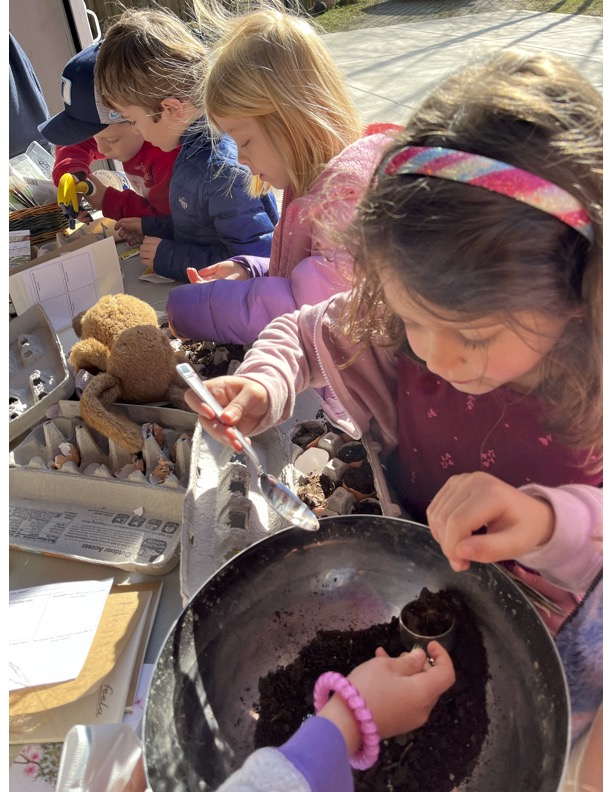
The Spark Studio project room is buzzing with energy.  Learners explore materials, gather piles of objects, ponder their next creation, question each other about their ideas, and narrate their thinking processes as they arrange and rearrange their projects. The table beside the learners presents a buffet of everyday recyclable objects: cardboard, egg cartons, paper towel rolls, lids from applesauce pouches, and rolls of colorful tape. The goal?  Unleash the power of creativity by untethering play from a specified outcome. 

Young children are masterful practitioners of divergent thinking—the ability to spontaneously generate many possible solutions to a problem or challenge. Research shows that divergent thinking is at its peak in children 4-6 years old and then drops by 60% by age 10. This incredible potential to freely generate ideas and experiment with many possibilities becomes lost and devalued in favor of more convergent thinking in which one solution is the goal. 

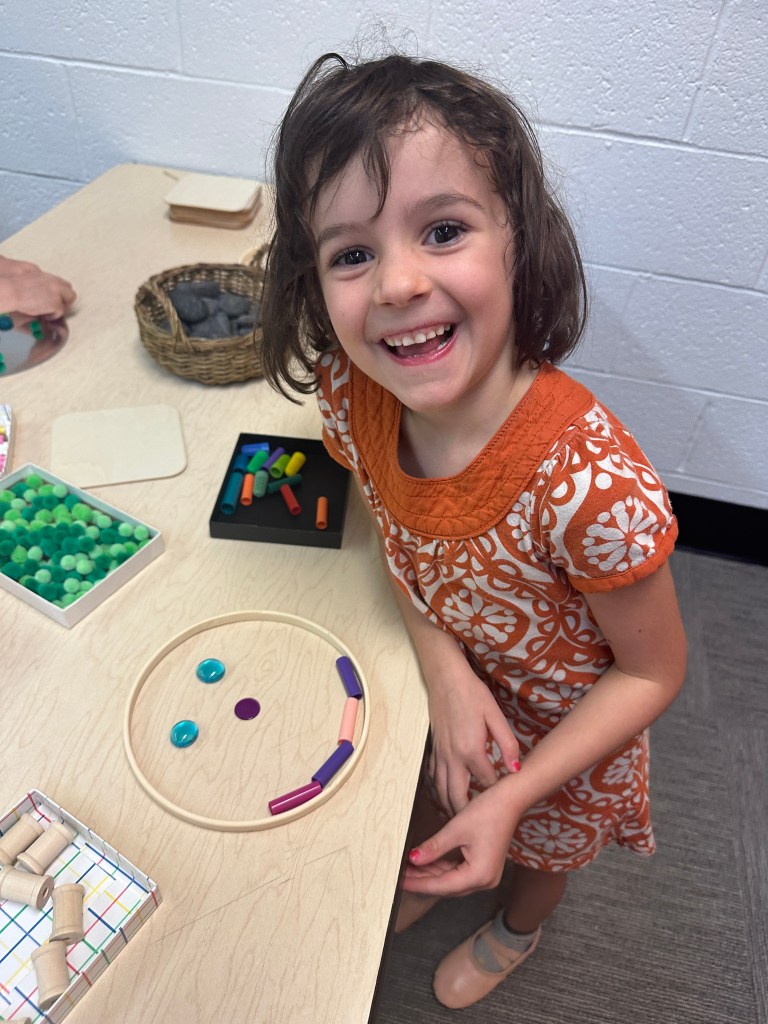
The Spark Studio project room is designed to foster divergent thinking. Instead of toys or objects that have a specific, predetermined purpose, learners use a variety of loose parts. Loose parts are natural or manmade objects that are open-ended and can be used in various ways with no expectations. They allow the children to do the thinking as they experiment with possibilities. Autumn, with its acorns, multicolored leaves, fallen sticks, and seed pods, presents natural opportunities for play with loose parts, as Spark learners will discover in Session Two. 

Often, when presented with these and other objects, such as buttons, jar lids, or packing peanuts, learners will ask, “What are we doing with this? What is this for?” These are precisely the questions we love to hear as learners practice creativity in a judgment-free space instead of trying to conform to one solution or end goal (usually provided by an adult).

Divergent thinking with loose parts also enables learners to practice building relationships and working in large and small groups. Sharing ideas with others, testing hypotheses, and having room to try ideas that ultimately don’t work are key components of the project room learning design.  In session one, learners began circulating through the group, asking if anyone minded if they contributed an element to the group project; this consideration for the broader community was entirely learner-driven.  When learners are free to think divergently and practice sharing, listening to, and giving and receiving feedback on new ideas, they build the foundation for lifelong learning and discovery that is central to our mission at The Village School.

Session 2 Sneak Peek

Spark Studio

Imagine our youngest learners designing their own individual products and pitching a slogan to sell their creations? Would their words intrigue you enough to buy their product? 

Spark learners will kick Session 2 off by learning about entrepreneurship. They will explore how they can start their own business, what they can use, and what counts as a business, how selling items with friends can have a positive or negative impact, if selling or renting has any advantages, and courage to continue when there is a setback in their business. Learners will seize their opportunity as entrepreneurs at the business fair held in Session 3 as they bring everything together and put their ideas into action. 

Discovery Studio

“The best way to predict the future is to create it” -Peter Ducker

If you had the tools to create a better future, how would you do it? If you had the power to shape products, services, and experiences that could change the world, what would you create? These are the questions Discovery learners will face as they embark on the journey of becoming an entrepreneur in Session 2. On this journey, learners will build their own business with fellow trailblazers using collaborative, creative, analytical, and critical thinking skills. Learners will conduct market research, learn about competition, and use mathematical skills to create a realistic financial plan. They will then create a prototype of their product and pitch their business to a panel of investors. By the end of this session, learners will have built a business that has the potential to change the world. 

Adventure Studio

“Entrepreneurship is about turning what excites you in life into capital so that you can do more of it and move forward with it.” – Richard Branson

In session two, our Adventure learners will embark on an exciting entrepreneurial journey, designed to enhance their skills and ignite their creativity. To kick-start this session, learners will dive deep into the fundamentals of what defines a business, exploring its significance in our lives, communities, and the sustainable landscape. 

Learners will be challenged to generate their own unique business plans, setting their ideas apart from the rest. They will uncover the complexities of launching a business, unraveling the mysteries of startup costs, profit generation, and the art of maintaining a consistent cash flow. Armed with their well-crafted business plan, learners will take their ideas to the next level, bringing them to life through the creation of prototypes. Lastly, Adventure studio will have the chance to showcase their innovation and hard work in a thrilling pitch to a panel of local investors in week five. 

Health & Wellness

“In order to have a friend, you have to be a friend.” – Maya Angelo

Building a peaceful community takes leadership, patience, gratitude, acceptance, kindness, and courage. Throughout session 1, the learners explored their emotions and how they affect their behavior and inner dialogue. This session, we will continue to work on building our peaceful community by reflecting on our relationships. The learners will explore what it means to be kind, take part in acts of kindness, and role play what to do when a friendship feels uncomfortable.

Mindful Mornings

Mindfulness is the basic human ability to be fully present, aware of where we are and what we’re doing, and not overly reactive or overwhelmed by what’s going on around us.” – Mindful Staff

Picture this…

It’s a Wednesday morning. Your alarm goes off, you press snooze. You fall back asleep. Before you know  it, you are behind but just by a few minutes… everything will be fine, as long as the kids can get dressed and ready for school. 

You wake them up, get your coffee, tell them to get dressed but your little one doesn’t have the breakfast they were hoping for. They start crying. You quickly try to solve it while helping to pack lunches. 

Now you are 10 minutes behind. Someone spills their milk all over the floor. Your little one is still crying… now the dog needs to go out.

Your partner wakes up sick, they can’t get out of bed to help. No one can find their socks! Now you are yelling, “If we don’t leave in 2 minutes, you will be late to school and I’ll be late to work!” “Where are your socks?!?”… “Forget it, just wear your shoes!”

“I can’t find my shoes!” someone screams. 

“Just get in the car!”  Everyone gets in. Someone forgets their water bottle…. You get the picture. 

I am sure that we have all had these moments. Moments where we get in the car after a hectic morning, look in our rear view mirrors, and just hope that when our children arrive at school, things will all be okay. 

Mornings like these, where we are all tired, all rushed, it feels like everyone is yelling leads to all of us starting our days off feeling just yucky. There are days when life feels really hard. Having moments like these make it difficult for us to attend to ourselves, our relationships, and our goals. 

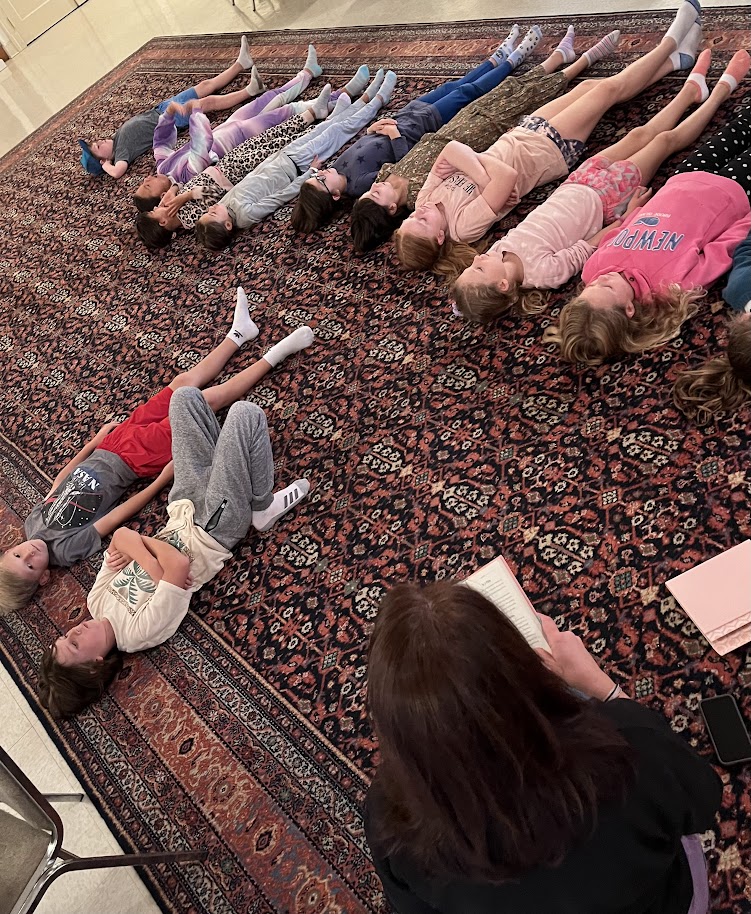
Mindful mornings have given our TVS learners a space to pause, tune out the chaos, and attend to whatever is going on inside of themselves without judgment. Every Tuesday, Wednesday, and Thursday mornings, we provide a 10 minute mindfulness routine. The learners know that in this space, it is truly okay, not to be okay. We begin with a check in, on a scale of 1-10, how are you doing today? The learners share about how they slept the night before, what their mornings were like, and what they are most looking forward to. 

Then we jump into mindfulness practices. Each routine supports the discovery of an emotion and how to cope when you feel uncomfortable. They have learned routines to cope with feelings of anger, stress, pressure, pain, and tension. One of the learners’ favorites is a relaxation technique (number 7 on this list), where you scan your body, holding and releasing each muscle group to find tension or relax before the day ahead. 

Recently, we have been discussing our mind’s control tower, taken from Mindful Me: Mindfulness and Meditation for Kids by Whitney Stewart. The learners have eagerly shared about the emotions that sometimes “take off” in our brain’s without us in the pilot seat. When this happens, we often say or do things that we do not mean. In those moments, it’s important to practice mindful breathing and turn inward, asking ourselves about our emotions, thoughts, and what feels out of control. This way we can get back in the pilot seat and make choices that feel right for us. 

There are many benefits to mindfulness. Some of these include a reduction in rumination and stress. Mindfulness can help us to better focus and find flow throughout the day, a goal that each of our studios have sought to achieve in session one. Mindfulness can also help with our emotional regulation. Whatever the emotion, however your day begins or unfolds, mindfulness is a tool to bring us back to ourselves. Mindfulness is a gift of patience and grace that we all need and a gift we all deserve. 

A Team of Trailblazers

“If you want to go fast, go alone. If you want to go far, go together.”

African Proverb

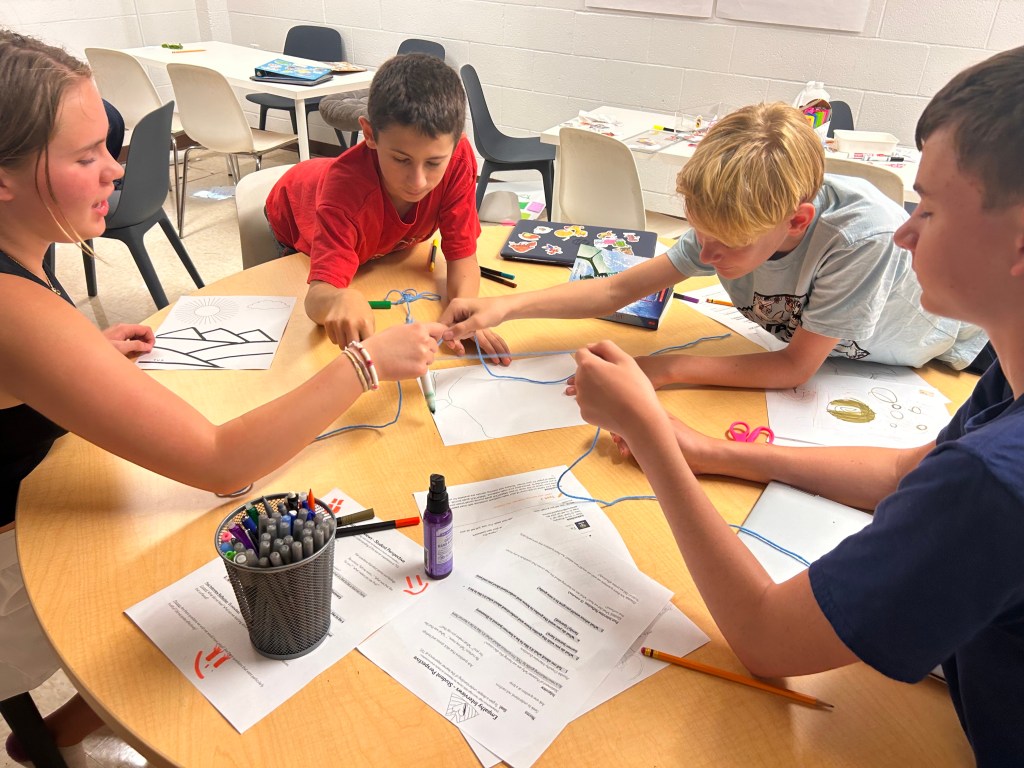
The first session of the year is all about building community, creating culture, and finding a rhythm. In contrast to a more traditional middle school where only one day or week might be reserved for community building, in the Adventure Studio, learners focus on the Build the Team Project and spend an entire six weeks completing challenges that intentionally build community. With every challenge, the adventurers learn more about their roles and responsibilities as members of a community, and dig deeper into what it means to be a trailblazer. One of the first team-building challenges learners faced was the Frostbite challenge. For the challenge, learners were divided into small groups and given the following scenario:

“Imagine this: You and your crew embark on a new adventure and decide to climb Mt. Elbrus, the highest peak in Russia. Though you thought this would be one of the best trips of your life, your arctic adventure turns into an arctic expedition gone wrong. As a storm approaches, your group leader gets frostbite and can no longer move. To make matters even worse, the UV rays reflecting off of the ice and snow cause the rest of your group to develop snow blindness and they can no longer see. As the storm draws nearer and nearer, your mission is to work together to build a shelter that will survive arctic wind and snow. Your leader will verbally guide you as you build your shelter. Good luck!”

As soon as the 30-minute timer began counting down, the pressure was on! Some learners patiently attempted to identify their mystery objects, some started throwing things together as quickly as they could, and others waited for instructions from their leader. Newspaper was ripped, paper cups went flying, bits of plastic were hastily flung over leaning structures, and tape was furiously wrapped around anything and everything. When the timer hit zero, learners presented their shelters to the whole studio and then reflected on the process of building a shelter together. Learners identified the mindsets and skills that are necessary for building a team, as well as the challenges that naturally come with having so many different perspectives. One learner shared, “When one of us did something wrong, our leader would correct us and no one got frustrated. We just took a deep breath and tried again, this time listening to all of the instructions given to us.” Another learner stated, “It surprised me that my team was actually able to build a structure that may be able to survive a big storm/blizzard.” A third learner shared, “I was surprised that everyone had their own idea!”

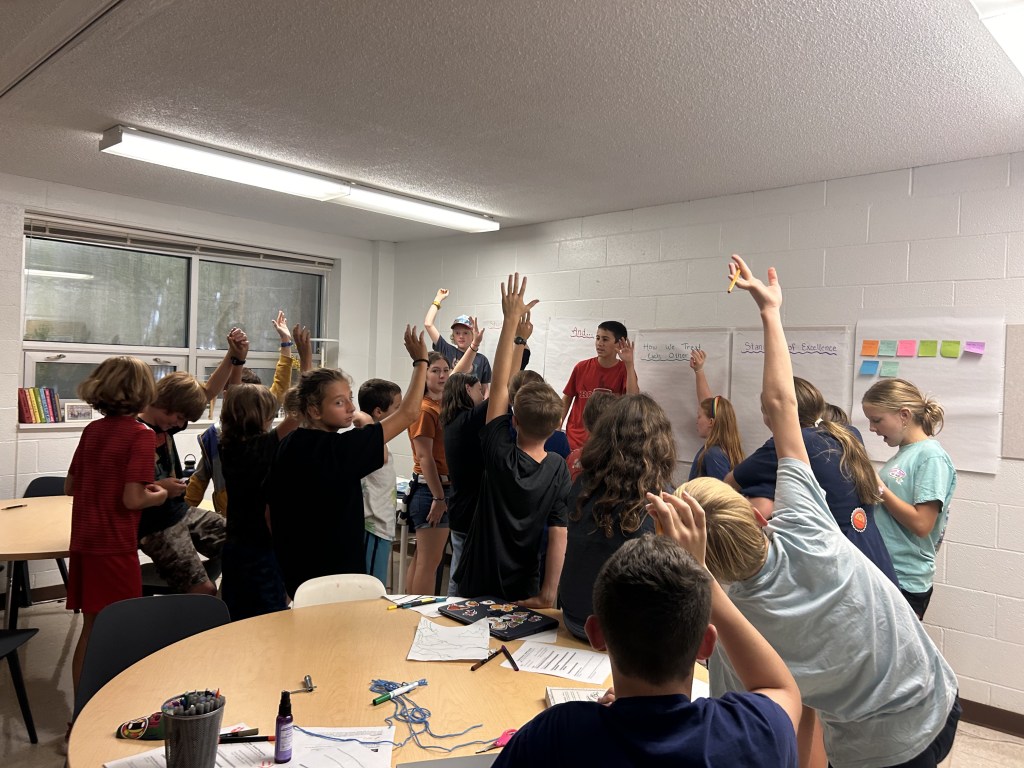
Here at TVS, learners are trailblazers. Trailblazers are empowered to take risks, overcome obstacles, make choices, be leaders, and claim ownership of their journeys. Since the Frostbite challenge, learners have used their unique talents and gifts as trailblazers to come together and craft a studio contract, build badge plans, create a music video, and plan a field trip. That’s not all. These trailblazers have also stretched their critical thinking skills by engaging in challenging discussions, changed and improved studio systems, practiced holding each other accountable to their studio promises, and gained confidence in advocating for themselves and others.

Here, learners have the special opportunity to craft the environment and culture they want to be part of. In just a few weeks, learners have taken several steps towards not only becoming independent individuals, but also becoming a strong, capable, and resilient community; a community that strives to be a team of individuals who choose to show up and be present, learn from failure, and lift each other up. 

Here, learners unite to be a team that trusts, a team that leads, a team of trailblazers.