And checkmate!

Session 4 Wrap-Up

What a session! This week, Discovery learners wrapped up their Chess Quest and reflected on their journey.

Many minds strategize

One learner reflected, “ A few weeks ago, when I first started playing chess, I didn’t even know how to set up the board.  Now I have just beaten the third level robot. What I’m trying to say is that some things don’t come naturally but if you keep trying, you will get better.”

Another said, “I think I was successful because I love a good game of chess, and I think that love has only grown more since we started this chess quest.”

One summed it all up, “When I learned how to play the game, I never wanted to stop playing ever again.”
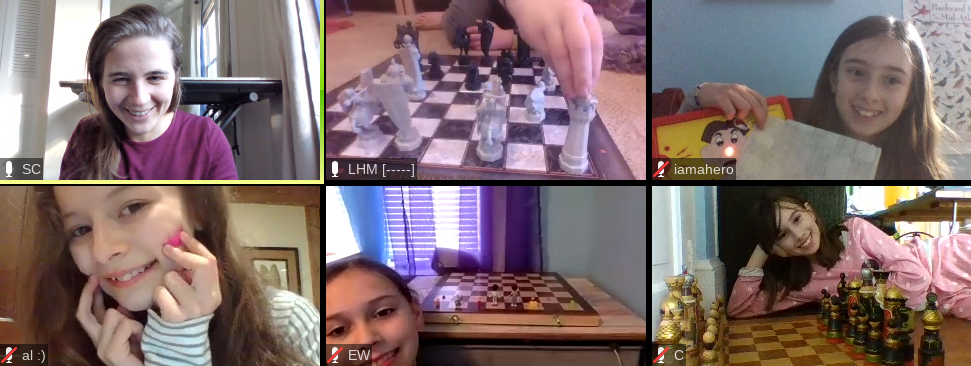
Learners share their chess boards and pieces

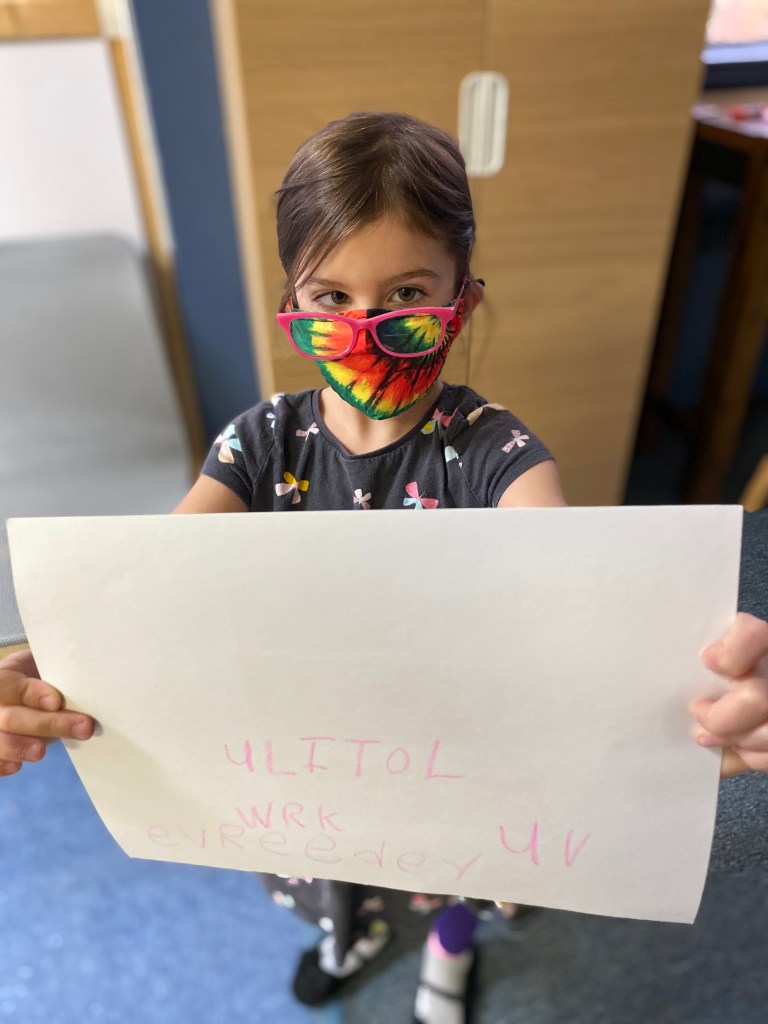
And we asked them to creatively sum up 1 lesson learned about chess in an acrostic poem. Here is one example:

Parents

Are 

Helpful 

When you 

Need

Some help

Virtual Discovery learners continued their exploration of Civilization. When learning about an emperor who saved and burned books, one hero remarked, “You need multiple views of history to have an accurate understanding.”

The Virtual Discovery Studio wrote in journals throughout the session. Here is an excerpt from one entry, “I’m sure when you read this in the future you would be thinking: virtual school?! That’s not possible! And I wish I could think the same thing, but no. Hopefully in the time that you are reading this you can go to in person school, and see your extended family and friends, and even maybe just maybe ( not sure if this could actually happen) but just imagine if you could take off your mask when you are under six feet!”

In-person Discovery Heroes teamed up with Adventure Studio for Process Drama, a combination of art and Writer’s Workshop. Twice a week, they explored elements of storytelling, improvisation, and got (more than!) comfortable speaking and performing in front of their peers. The session ended with a final performance where learners performed plays that they wrote and created – totally self directed. They made props, costumes, and some even wrote music to go with their play. While the plays themselves were successful, the learners learned even more important skills in the process – collaboration and problem solving. Congratulations, Discovery and Adventure Studios!
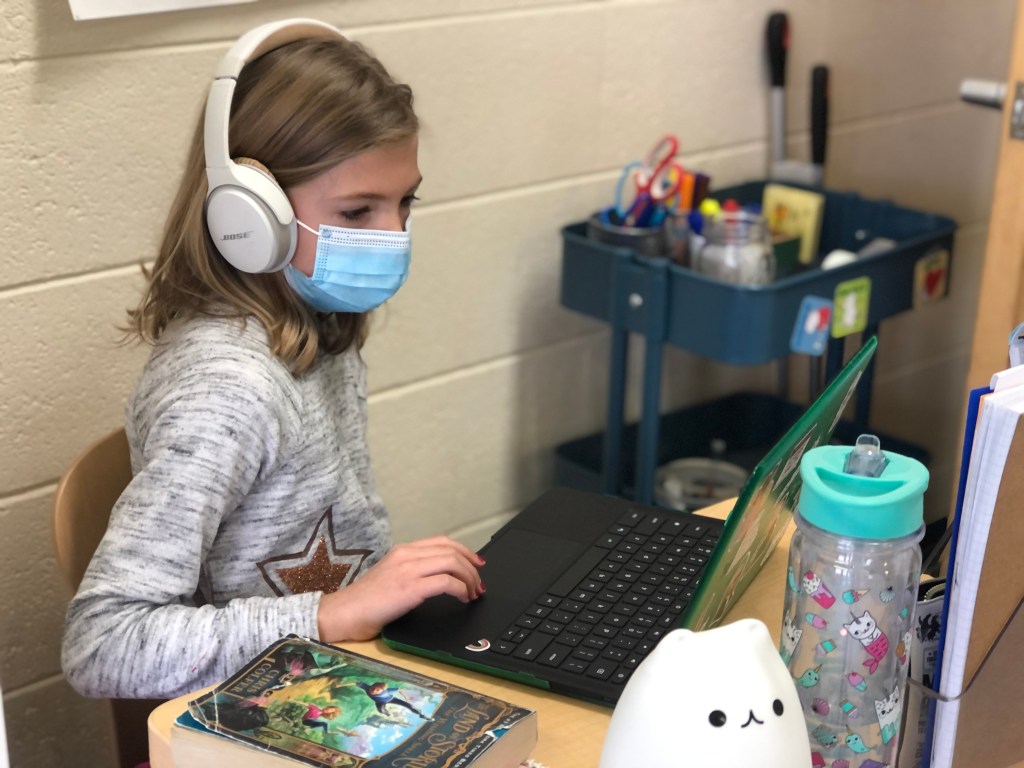
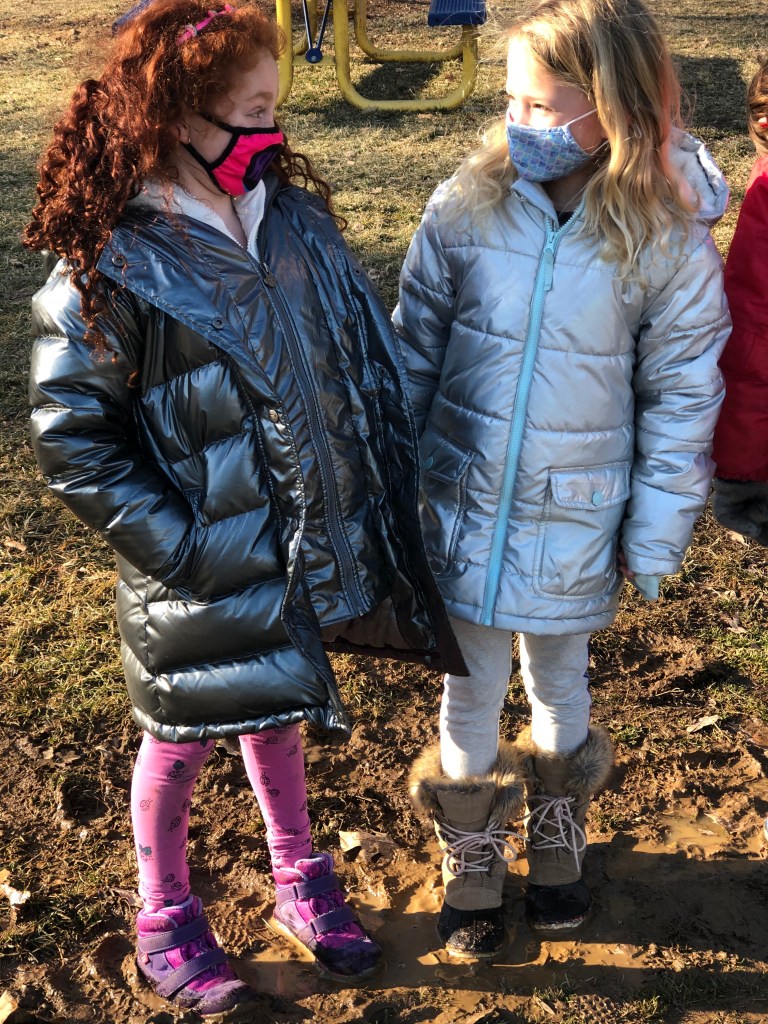
Skill-building in Adventure Studio

From the very beginning of a learner’s time at The Village School, he or she is in an environment that is focused on skill-building- not meeting academic standards. We describe this as the difference between learning to learn and learning to know– the latter, the primary focus of traditional education. (Don’t get me wrong, our young people learn about a lot of really amazing and interesting things, it’s just that accumulating knowledge of facts and figures is not our focus).

It might start like this: In Spark Studio, learning to learn might be as simple as staying focused for 10 minutes on a task. In Discovery Studio this looks like learning how to set SMART goals consistently, how to navigate the systems in a learner-driven community, and how to take responsibility for their choices. In Adventure Studio, our learners rely on these skills to thrive in the face of challenging work, high standards, and real-world projects.

By Middle School (Adventure Studio), our learners are well-versed in the three main obstacles they face in accomplishing their goals: Distraction, Resistance, and Victim-hood. Most importantly, they can identify which one they struggle with the most.

“Resistance- or as I call it, procrastination is always my biggest obstacle,” said one Adventure learner recently.

“I would say distraction is mine. I will often stop and help others. I like doing this but sometimes it distracts me from my own work,” said another learner.

Being self-aware is a start. Building even one good habit that works to counter these tendencies, or at least keep them in balance, is a step in the right direction. Having an arsenal of “learning to learn” skills AND a Heroic mindset is the ultimate toolbox that will allow our learners to “punch procrastination in the face”, as one of our learners humorously declared.

But, building this toolbox is hard work and our young people are still adding these tools. Some sessions they might stop at awareness. Another session they may develop one new positive habit- like planning out their week on Sunday, submitting their work before it is due, or blocking out “do not disturb” times to minimize distractions.

Other sessions, for one reason or another, these self-identified obstacles loom large and our learners struggle. They struggle with finding focus, creating quality work, and/or meeting deadlines. They struggle with facing the consequences of their choices, with linking the chain reaction of events, of identifying how one thing led to another. They struggle with embracing that hero’s mindset.

But, they are building skills here too.

Just like in the real world. Sometimes we manage to “punch procrastination in the face” and sometimes we don’t.

Are We Ready For Change?

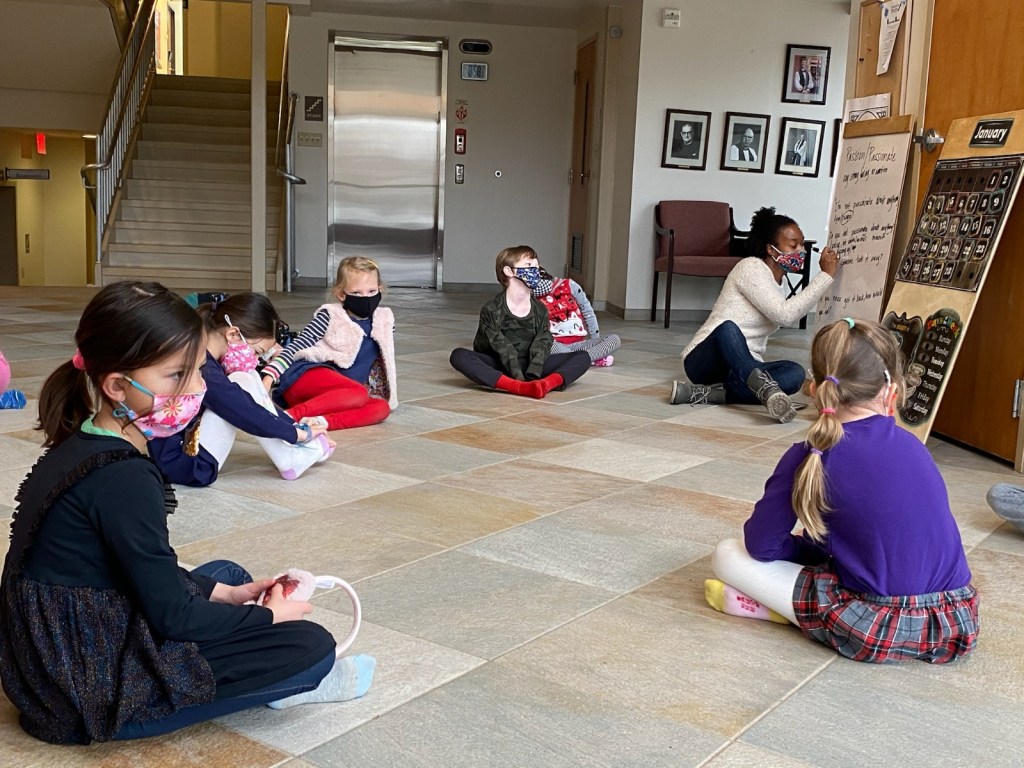
Do things need to change? Spark learners think so. They believe that they can change the world, as they voiced with us during circle times. We’re behind them! We discussed the past, present, and future of things like racial equity and women’s rights during our morning and closing launches. We have at least one future lawyer who is willing to make sure no one is treated unfairly. Learners won’t give up until they reach this goal!


Learners empathized with the frustration and embarrassment past heroes felt when everyone wasn’t viewed or treated the same. At times, learners have been candid about their intention to work hard to change what they do not like. Laws and ideas need adjustment, they’ve told us. They’re willing to take the necessary steps needed to foster a positive community like the one they’ve created in Spark studio. Characteristics like perseverance, pride, self-control, unity and passion, all of which we’ve discussed, will lead them along their way.  Learners are coming together, voicing their concerns, and providing solutions to the problems of the world we talk about in the studio. The awareness shown to their guides make their journey to leaders that much more likely. 

Watching and listening to Ruth Bader Ginsburg talk about women’s rights inspired learners to be happy about how some things in the world have changed. They told us how dads would not have time to give hugs because they would have to work more than usual. They told us that they like how moms and dads work together in teams. Some learners even felt that they might not be at The Village School if these changes hadn’t occurred. Let’s challenge ourselves and our learners to a create a world where change is encouraged and accepted!

A Day in the Life

*Guide Note: Virtual Discovery heroes are writing in journals this session. This week, they were asked to write a composite “Day in the Life” to describe what virtual school is like. This blog post was entirely written and edited by Discovery Heroes.

Welcome to the Virtual Discovery Studio!

I crawl out of bed trying to stay awake. Then I brush my teeth and get dressed. Next I eat breakfast and then I’m all set.

For core skills, I like to do my hardest subjects first, like math, before I get to the easy stuff like reading or writing. You also get to be with your family and pets, and you can still see your friends just not in person.

Hanging out with pets

When we log on for our 11:05 meeting, we get to play games, my favorite game is probably when we get to do fun exercises. My favorite part of an 11:05 launch is talking to my fellow travellers. My favorite part of an 11:05 launch is probably the exercise videos because they are very fun and challenging. 

After that meeting we always get a delicious lunch, my favorite is probably either a grilled cheese sandwich or graham crackers and peanut butter. My favorite lunch to have is a quesadilla, one time for lunch my family ordered mexican, I got a quesadilla. My favorite lunch during virtual studio is probably apples and grilled cheese. Sometimes I would have peanut butter with my apples too.  one time mommy made me goldfish crackers and cheerios

Each session we get a new quest, this session was a chess quest. Chess is a game that is well known for its concentration. It has helped me learn that losing helps you learn and get better strategies. When chess quest comes, there’s lots of things to do, you learn new things about chess in lessons, or you can play as many games of chess as you want.

One thing that I have learned about chess is that you can’t just think of a move in one second, you need to think of a strategy and think stuff through. Chess quest is really fun.

My favorite thing to do after school is play outside. Usually, I play on my jungle gym, but sometimes I like just run around with my dogs. My favorite thing to do would probably be to read. I think reading is very fun, challenging, and relaxing. Board games and football are my favorite after school activities.  After school my favorite thing to do is go outside and make up new games that we can play. 

This is my virtual studio life.

Celebrating a great week in Virtual Discovery Studio

Self-Discovery in the Studio

This week in Discovery Studio, we focused on a new character trait – intentionality. During Monday’s launch, Discovery Studio was asked two questions. What was their best trait, and what was a trait they needed to be more intentional about. The surprising answer to both? Honesty. 

I’m not surprised that our learners thought the strongest trait in our studio was honesty. They are honest almost to a fault – a striking difference from my time at more traditional schools. If you ask them a question, they answer honestly, even if they aren’t proud of the answer. They take responsibility for their own actions, and they are always willing to talk things through with others. That’s one of most exciting parts I’ve discovered in my role as a guide –  at The Village School, the guides and learners are on the same side. No longer am I a disciplinarian; instead, I’m a confidant and ally. I think both of us are happy with the arrangement.

I was surprised, however, when learners unanimously decided that honesty was the thing that they needed to work on in the studio. Again, these young people are honest even in situations where they are implicated. However, they were introspective enough to realize that they were being honest with everyone except one person – themselves.

Discovery learners said that, while they were easily honest with their fellow studiomates, they struggled to evaluate themselves and their own work honestly. They identified that it was easy to lie to themselves about how hard they were working or whether their own work was excellent.

Our learners at the Village School are doing something that even I still struggle with – honest self reflection. They are able to analyze themselves and ask themselves tough questions, and they are able to use this reflection to improve themselves. This is one of the greatest tools we could hope to equip our learners with – the ability to discover within themselves what they can improve, and the drive to do so. This is a skill that they will find useful throughout their journey here at The Village School, but more importantly, a skill that will prepare them for the real world and help them build successful, fulfilling lives.

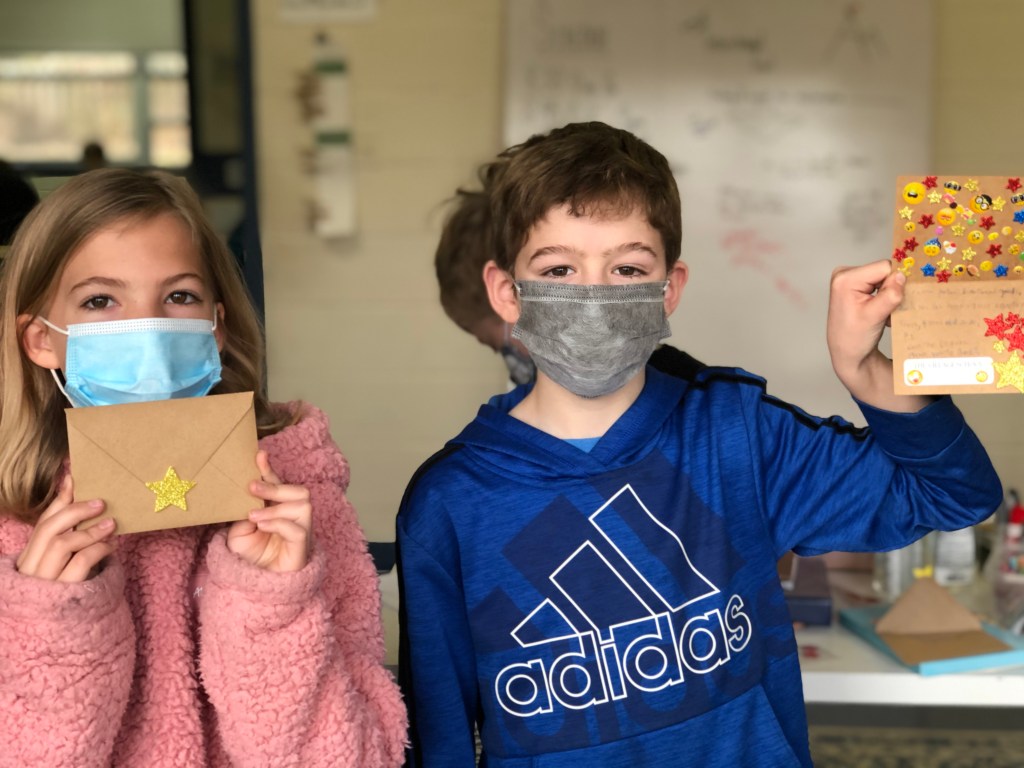
After a learner mentioned bringing cookies to Capitol Police and the National Guard, some Discovery Studio learners decided to write (and decorate!) letters for some local heroes.

New Year, New Goals

Ah, the start of a New Year—a blank slate, a fresh start, a chance to turn over a new leaf…and a perfect time to set some new goals. At the Village School, we talk a lot about goals. Having learners set their own and map out the steps needed to get their puts them squarely in charge of their own learning. This will serve them here at TVS and well into adulthood!

For our deep dive into goal-setting in Spark Studio this week, we spread our discussions out over several days to make the information more digestible. We introduced the concept on Tuesday, asking what goals are and what the heroes would like to achieve over the next session. We heard aspirations such as taking on more challenging work, getting better at reading, and doing more math.

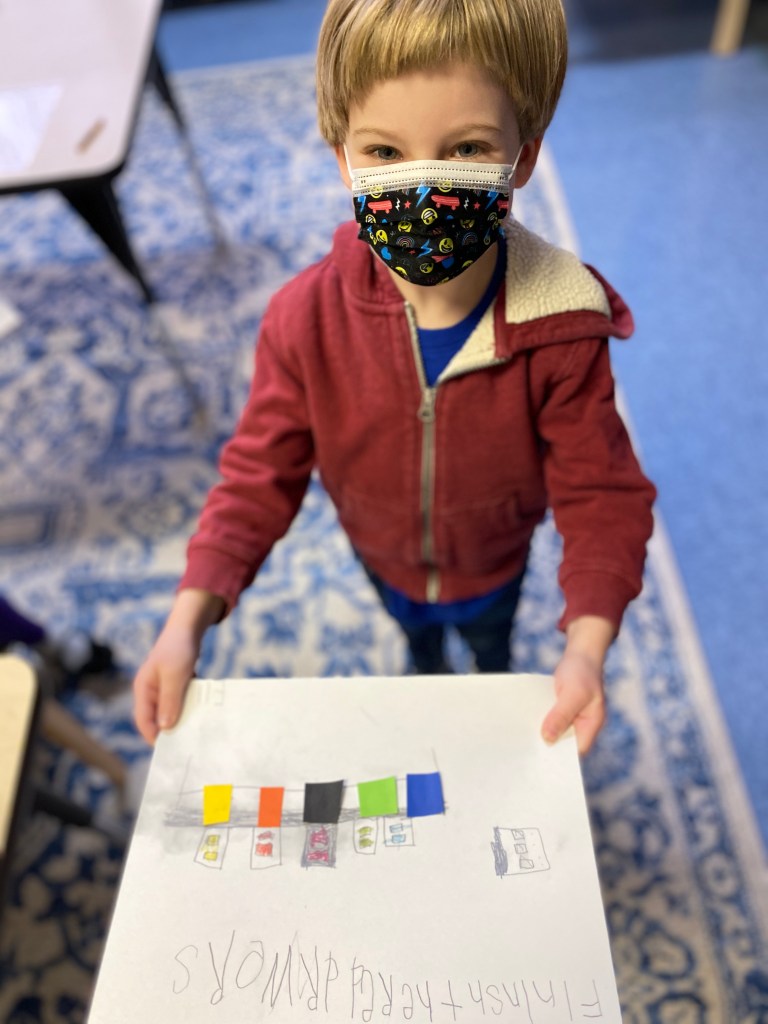
The next day, we emphasized that achievable goals are specific. The heroes responded by narrowing their focus, proposing goals such as completing the orange reading drawers, mastering Golden Bead Addition, or completing sound object exploration. We even heard goals that had to do with physical activity and creativity—making a city from the metal insets work and getting across all the monkey bars, for instance.

When the heroes had their Session 4 goal in mind, they wrote it down in their writing journals. We then talked about how to break these larger goals into smaller, achievable steps, either with a mind-map or step-by-step instructions.

The next day, they copied their goals onto art paper and decorated them with markers, cut-up paper, oil pastels, crayons–whatever would help visualize their ambitions. They then hung those pictures on the wall of our studio to serve as reminders throughout the session of what they want to achieve.

We have little doubt that the heroes will be eager to dig in to their goals next week. But if they reach a lull in working toward them, we might offer a helpful nudge by asking: What work would you like to do today to help work toward your goal? How much work do you need to do every day to help you reach your goal? How do you feel now that you are close to your goal, or now that you’ve achieved it?

We are excited to see where this takes us at the end of the session.

Stay tuned, and Happy New Year!

Will the colonists rebel?

The year is 1776. The Discovery and Adventure studios have been taken over by King George III. Decrees and proclamations travel across the sea from England and enforced by the Governor.  Heroes are Patriots or Loyalists with equal enthusiasm.

Day 1: the colony is already in an uproar. Every time the bell rings, colonists must line up for an announcement and chant, “Hail to the King! Hail to the King! Hail to the King!” or face a penalty tax. By the end of the day, King George has received over 50 letters from angry Patriots or supportive Loyalists.

Day 2: Tensions escalate with new taxes. Frustration boils over into vandalism on King George’s portrait. 

Day 3: More letters to King George and some acts of outright rebellion. The colonists decide to hold a Boston Tea Party in defiance of the King!

Day 4: Freedoms in the colony are severely restricted. Taxes are all-encompassing. Will the colony write a declaration of independence and rebel to free themselves from the tyranny of King George?

The stakes are high. If the colonists lose (and the odds aren’t in their favor), King George will rule over the colony for another week without the option for colonists to rebel. If the colonists win, they will form a new nation. A brave fellow throws the dice- the colonists have won! Cheers and shouts fill the courtyard. 

This week, the work of building a new country commenced. The heroes fought in a simulated Battle of Trenton. They researched the history of the original 13 states and designed a new state flag. They went to the Constitutional Convention and debated the finer points of national government. 

This session, the heroes didn’t just learn about the American Revolution. They experienced its frustration and uncertainty. They were brave and make tough choices. They supported one another and worked together to overthrow the rule of King George.

The Village School in a nutshell: learner-led, experience-driven, and character-based.

Collaborative Learning

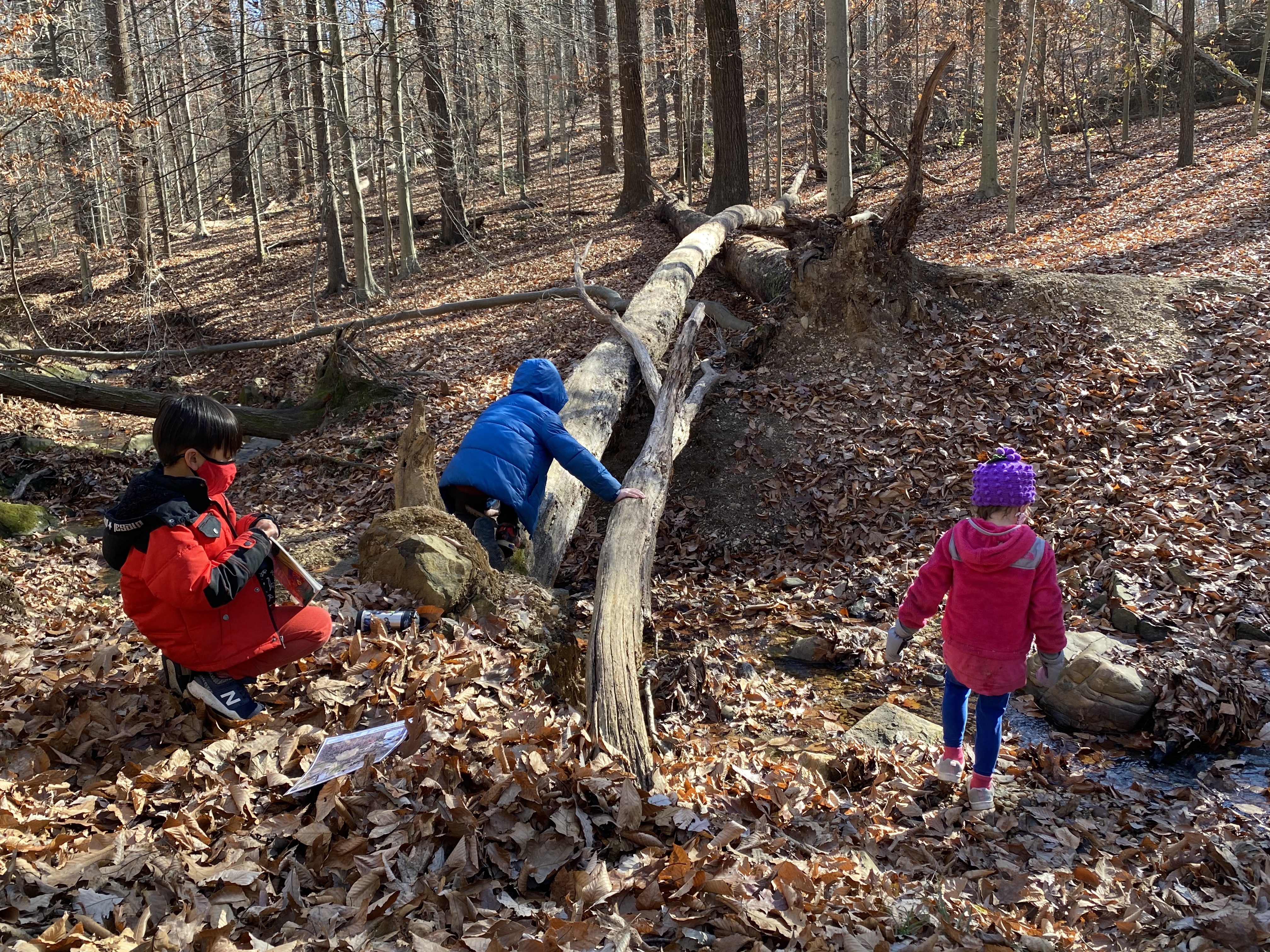
During a recent outing to Mason District Park, Village School heroes found their way to the creek. They stopped to play for a while by the shallow, meandering water. It was too cold for bare feet, but they scrambled across the stream—or lava as they imagined it—by balancing on log bridges or hopping from rock to rock. When they finally found a good spot, they set about stirring potions in the water.

After a while, one of the heroes turned to look at the five-foot bank on the opposite side. It was too steep to climb with his bare hands, but he found that if he grabbed an exposed root hanging down from the top he could use it as a sort of climbing rope to hoist himself up. When he reached the top, he called down, “Hey guys, look at this!” and offered to teach the other heroes how to follow him. They quickly abandoned the potions experiment to join him.

For the next 20 minutes, the heroes made it their mission to climb that ledge. It took some effort for them to find the right foot placement, keep their balance, and use their arms to heave their bodies up. But with advice and guidance from the first learner and a little perseverance, they all finally reached the top. “I did it!” they each shouted in turn, before they ran down the adjoining slope to the creek so they could try again.  “You OK over there?” “You can do it!” they called to one another as they worked.

The learners climbed that ledge over and over. When the first root broke, they found another that would help them up. Then they discovered a U-shaped one sturdy enough to hold them upside-down. With their newfound skills, they tried climbing other ledges, honing their climbing technique along the way.

It was a striking example of our learning process at The Village School. Both inside the studio and out on the playground, heroes are surrounded by intriguing challenges. They have space to wonder and follow their curiosity in order to find their own passions and set their own goals, which is essential if we want them to pursue their goals with interest and determination. They learn from each other and work together to solve problems. They struggle and sometimes fail, which develops resilience. There is little adult intervention, but plenty of help from peers. It’s with a genuine desire to help that they teach each other, and fervent joy and satisfaction that they celebrate victories.

Let’s go back to the creek for a moment and consider what might have happened under different circumstances. Would the heroes have been as eager to scale that ledge if their guide made it a goal? Probably not. Would they have figured out different ways to climb it if an adult had shown them the ‘right’ way to do it? Doubtful. Would they have taught, encouraged, and celebrated with one another if they were focused on beating each other to the top? Not a chance.

Certainly there is a time and place for contests, rewards, and guidance from adults (especially when it comes to safety). But that’s not the primary way we pursue knowledge at The Village School. One of our main goals is to foster an intrinsic love of learning that will translate into a lifelong hunger for knowledge. We also create a culture that values confidence, independence, leadership, and collaborative skills. Reading, writing, math—all these things matter, but they come as a result of developing those invaluable character traits. It’s all part of creating a learner-driven environment.

Heroes went home that day asking when they could go back to the park again. I wonder what challenges they will seek out next time?

Make your choice

“It seemed kind of flat,” critiqued the instructor.  There were immediately cries of protest from my fellow classmates, “That was what the other instructor told us to do!” One individual declared on behalf of the group, “We were just doing what we were told.”

This scene did not happen at The Village School. This class was a group of adults. It seems that no matter how old we are, our first reaction to feedback is defensive.

It is natural. We go about our lives trying our best. We want to get along and do well by others.

This teacher said, “I’m pretty sure the other instructor didn’t tell you to do it badly.” That nipped the excuses in the bud. He continued by saying, “Yes, use direction from other people but make your own choice what to do about it.”

TVS is unique because heroes have immense freedom. They make their own choices. And they often receive feedback on them before deciding on their next step. Either way, they own their decision. This skill is important beyond a learner-driven community.

Imagine life was a game and you could only make moves from someone else’s directions. You might win or lose the game, but either way, you are powerless to change the outcome. 

Alternatively, you play the game as the decision-maker. You choose a strategy and move forward boldly. You might win or lose but you always look forward to the next round.

Which would you prefer for your child? Which do you prefer for yourself?

Socratic Guide or Life Coach?

How would you describe the role of a Guide?

This question was posed to heroes in discovery studio recently. The hand of one of our founding heroes shot up. “A guide is a learning designer and life coach for kids”, he said confidently. Many heads nodded in agreement.

While it can be hard to explain the role of a Guide, this hero was able to pinpoint the two key “jobs” of a TVS Guide. Inspired by the Montessori approach, a guide’s role in a learner-driven environment is to set up the learning environment, to ensure all learners have the tools and materials they need to successfully direct their own learning, and to design engaging and meaningful learning experiences- ones that hopefully inspire them to explore even more outside of the school day.

But, there is also a second job. This is the job as “coach”- to listen, affirm, hold up the mirror, and guide learners to a deeper understanding of the obstacles they face and the potential solutions available to them.

Like a real coach or trainer, heroes have a standing appointment with their Guide each week. Here are some of the questions Guides and Heroes have discussed in their meetings this session.

How is your Passion Project going?

What excellent work would you like to present at Exhibition?

Let’s look at your Weekly tracker. Do you think you are on track to reach your goals by the end of the session? What are you stuck on?

What are you feeling really good about?

Which goal/badge feels like a “dragon”/puts you in your panic zone?

How can we break this big goal into smaller pieces? What else might help?

These guide “check-ins”, while seemingly small, provide the support young learners need on their journey of self-directed learning. As they grow in independence, they start to see the solutions available to them and gain confidence in their ability to act, create, and learn through their own practice of self-affirmation and experience.

Even now, in the second session of a new school year, these young learners are rightfully celebrating their hard work, naming their areas of challenge, and identifying strategies and actions they could take to accomplish their goals. Below are just a few of the “aha” moments that have occurred during Guide-hero meetings so far this year.

“I was stuck in my research. I couldn’t find what I was looking for. I could ask a fellow traveler next time if they had any ideas.” -TVS Hero, age 7

“Math is my dragon. I have not been doing 30 minutes a day or watching the videos. I should do this first- then see if someone who is really good at math can help me. One of the Middle Schoolers said she would tutor me.” -TVS Hero, age 10

“I need to do a better job in my writing. I think I just need to slow down. I’ll ask my squad leader to hold me accountable to this. I know they can help me.” -TVS Hero, age 9

“I have been avoiding Lexia. I need to set aside an hour to get into flow and get started.” -TVS Hero, age 11

“I don’t know what to read next. I’ll ask my fellow travelers for recommendations and pick my next badge book by the end of Session 2.” -TVS Hero, age 9

“I love reading so much that I sometimes forget to work on other things. I will do the other things first during morning work and set a timer. Then I can use the remaining time to read!” -TVS Hero, age 7

Guide meetings are constant reminders of how capable young people are. Whether viewed as a Socratic guides or Life Coaches, it is certain that our Guides are learning too and feel lucky they get to do so alongside this next generation of world changers.